
62 / A current from changing sky
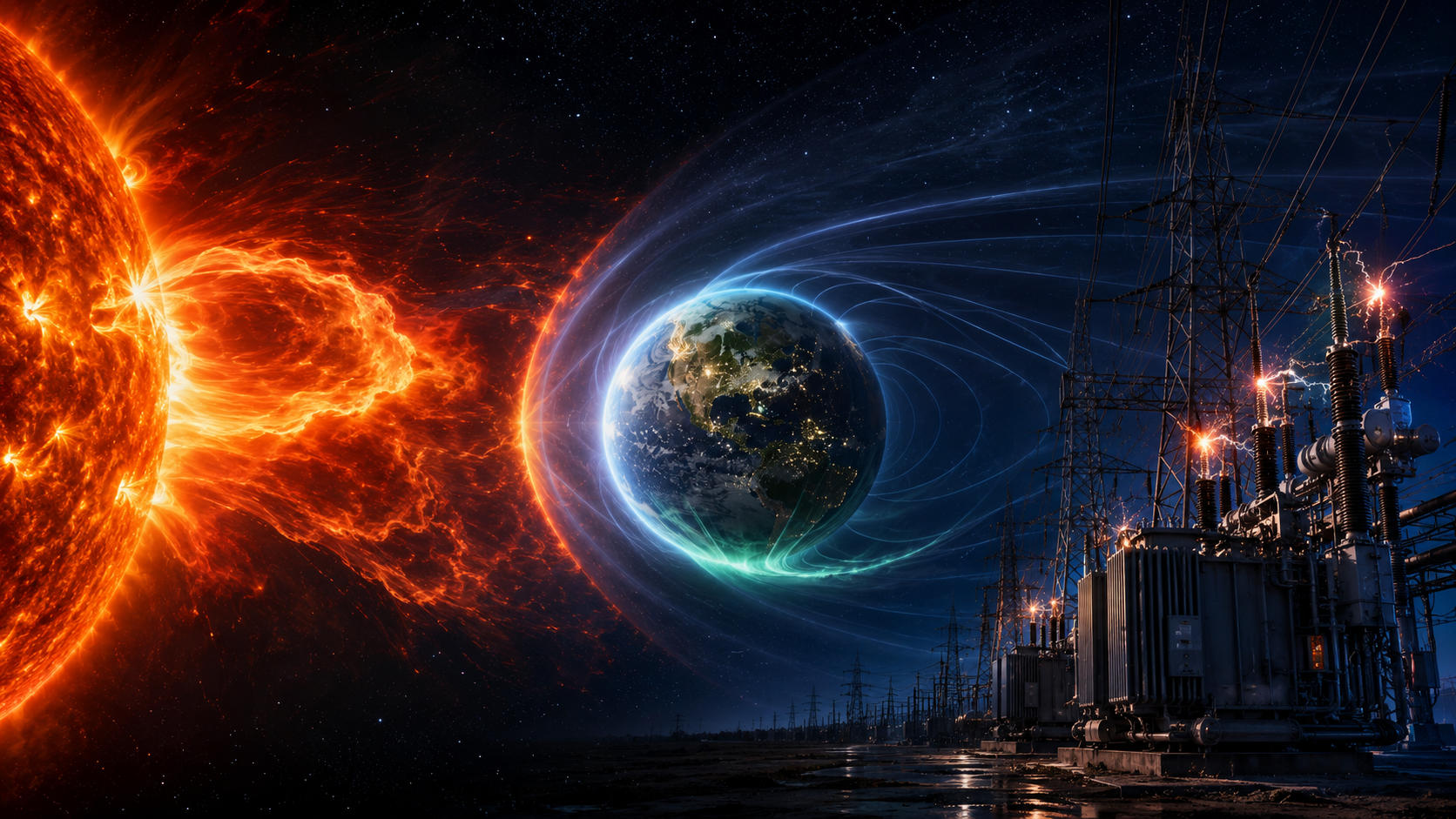
How a Solar Storm Reaches a Transformer
A geomagnetic storm changes Earth's magnetic field, inducing electric fields in the ground. Long conductors can then carry unwanted currents into the power grid.
A solar eruption does not fire a bolt directly into every household outlet. Its disturbance can interact with Earth's magnetic environment; changing fields induce electric currents along transmission networks. Those slow currents can push transformer cores toward saturation and complicate grid operation. NOAA monitors the conditions and provides forecasts, but the impact depends on the storm's orientation and strength, local geology, line geometry, and operator response. The right question is which parts of a particular network are exposed, not whether every light on Earth must go out together.
The full investigation continues with the evidence, illustrations, and sources at The Last Transmission on Substack.
Continue reading on SubstackTHE EVIDENCE / THE OPEN QUESTION
What we know.
NOAA describes geomagnetically induced currents and their effects on power transformers during storms. It issues geomagnetic disturbance information that grid operators can use while monitoring their own equipment and system conditions.
What remains open.
A storm alert is not a forecast of a specific transformer failure. Local current depends on Earth's electrical conductivity, the shape of the network, and how the magnetic field changes during the event.
Why it matters.
The vulnerability is a connection between sky, rock, and infrastructure. Understanding that chain helps turn a dramatic blackout scenario into a set of measurements and decisions utilities can prepare for.
FOLLOW THE EVIDENCE
Research behind the field note.
EXPLORE IN 3D / MAP 03
Start where the storm begins
Explore solar activity and follow the storm’s path from the Sun toward Earth’s magnetic environment.
Open Sun mapFOLLOW THE THREAD
Related signals.
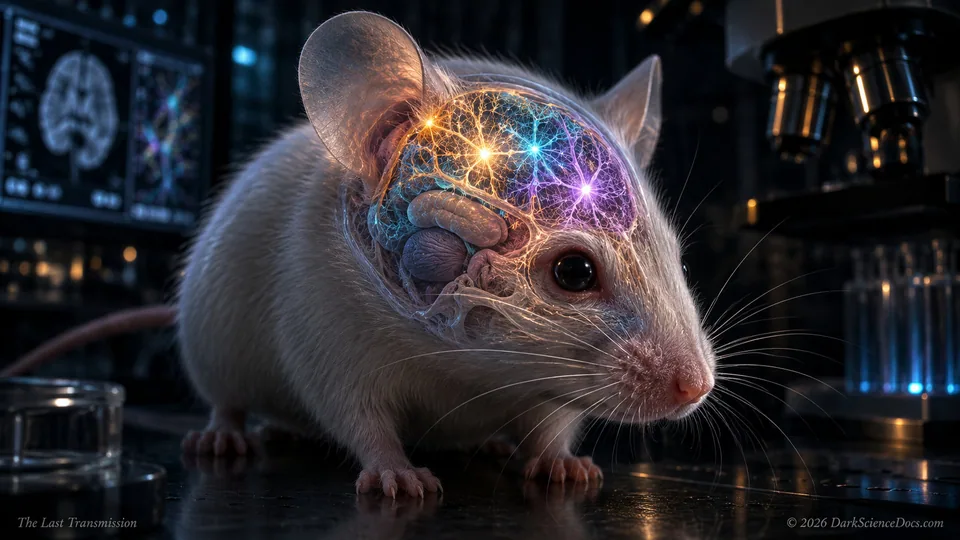
They Grew a Human Cortex Inside a Mouse. Then They Tested Its Memory.
Scientists created mice whose cortical tissue was almost entirely derived from human cells. The tissue grew, formed connections, generated electrical activity, and revealed something extraordinary.
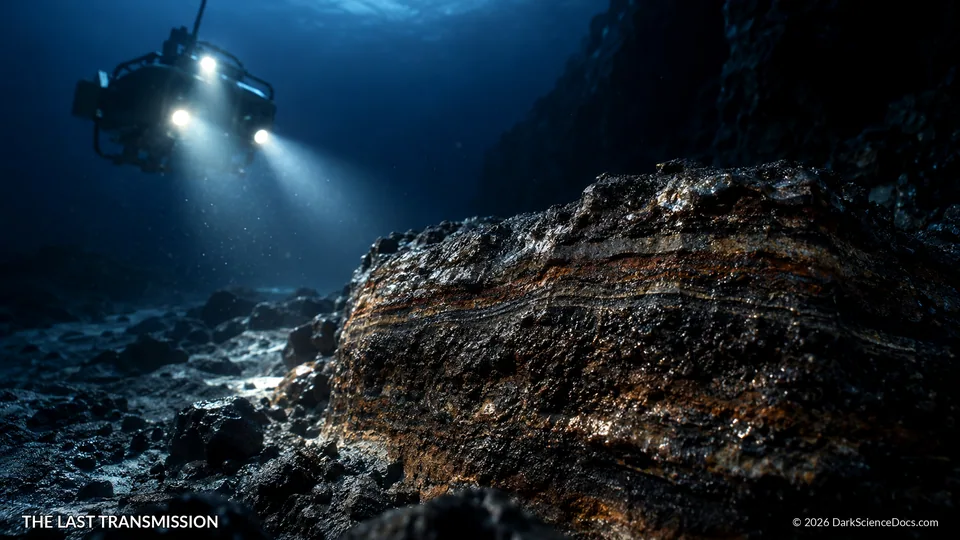
They Found Plutonium at the Bottom of the Pacific. The Explosion That Made It May Be Over 95 Million Years Old.
Deep beneath the ocean, scientists discovered radioactive debris from beyond Earth. The most disturbing clue was an element they could not find.
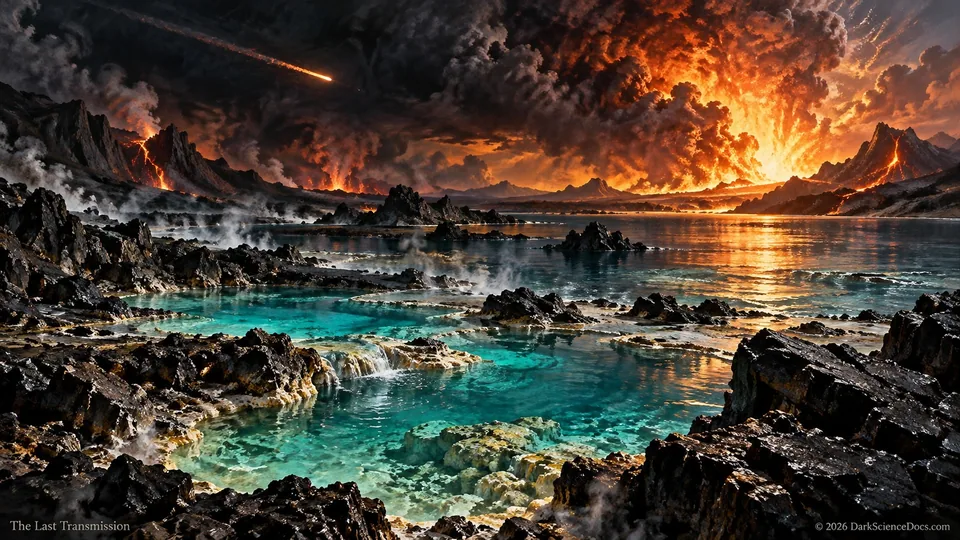
The Blows That Nearly Killed Earth May Have Helped Bring It to Life
A model identifies a window for life’s chemistry 4.33 billion years ago. The unsettling question is whether Earth was the only world to take advantage of it.