29 / The slow interior
Why Sunlight Takes the Long Way Out
Energy is made in the Sun's core, but its path through dense interior plasma is nothing like the final eight-minute flight from the solar surface to Earth.
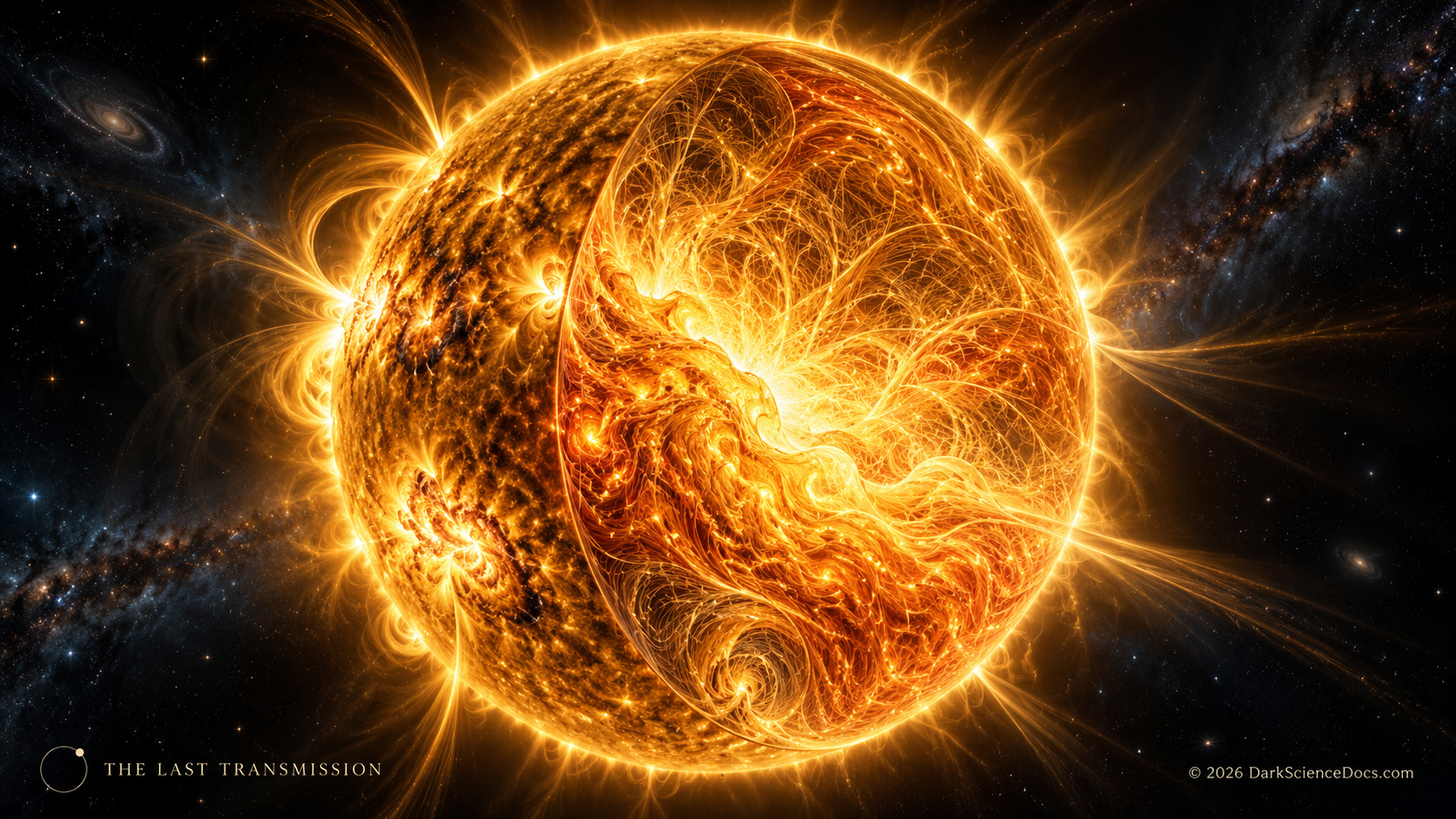
The beam warming a hand began as fusion energy deep inside a star. In the radiative interior, energy is repeatedly absorbed, emitted, and scattered; farther out, convection carries it toward the visible surface. Describing this as one photon wandering intact for a fixed number of years makes the process sound tidier than the physics allows. The useful picture is of energy slowly finding its way outward through changing forms and layers before newly emitted light can cross open space.
The full investigation continues with the evidence, illustrations, and sources at The Last Transmission on Substack.
Continue reading on SubstackTHE EVIDENCE / THE OPEN QUESTION
What we know.
Solar models, helioseismology, and observations of the Sun's surface constrain its internal structure and energy transport. Fusion in the core supplies the energy, while the radiative and convective zones move it outward in different ways.
What remains open.
A single exact travel time is model-dependent, and an individual photon need not preserve its identity from core to surface. The illustrated maze inside the Sun is a metaphor for interactions, not a measured track through the plasma.
Why it matters.
The Sun feels immediate because light takes only minutes to reach us once it escapes. The star's interior tells a much longer story, one that connects nuclear reactions to the changing atmosphere studied by solar spacecraft.
GO DEEPER / EVIDENCE FILE
How Do We Know the Life Cycle of a Star?
Read the evidence behind stellar evolution: measured starlight, cluster ages, binary companions, and the remnants of collapse. Follow the observations into the models, then explore stellar fates and black-hole gravity in 3D.
FOLLOW THE EVIDENCE
Research behind the field note.
EXPLORE IN 3D / MAP 03
Trace the Sun from surface to corona
Turn and zoom through the solar scene, then compare the visible photosphere with the energy’s long escape from below.
Open Sun mapWATCH THE RELATED DOCUMENTARY
The story in motion.
VISUAL EVIDENCE
Inside the investigation.
FOLLOW THE THREAD
Related signals.
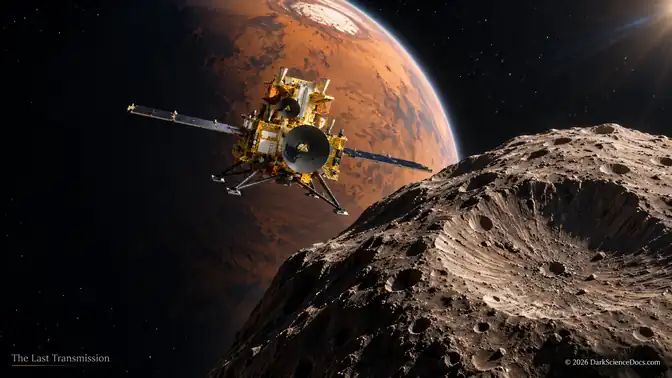
Phobos: The Moon That May Preserve Mars’s Past
MMX will investigate how Phobos formed and whether its dust contains fragments ejected from Mars. Follow the mission, the sample-return plan, and the limits of the evidence.

The People Who Cared for Laika Knew She Would Never Come Home
Before her one-way flight, a doctor brought her home to play with his children. That small kindness leaves us with a harder question about what it means to care.
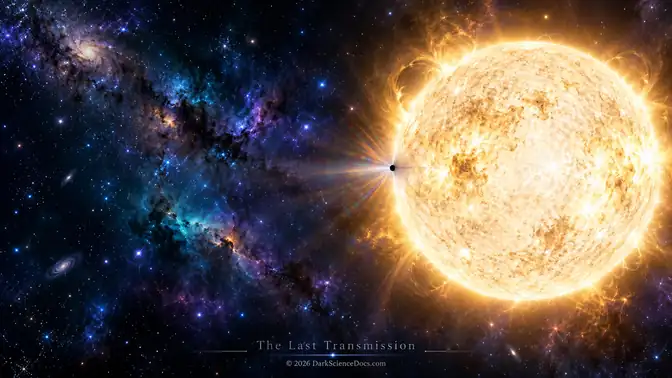
A Star Blinked Twice. Whatever Caused It May Be Much Closer to Earth.
Two nearly identical optical disturbances, 4.4 seconds apart, appeared in HD 89389’s light. Follow the unexplained record, a foreground diffraction hypothesis, and the synchronized telescopes proposed to test it.