
43 / A boundary that dissolves
The Core Jupiter Wouldn't Keep
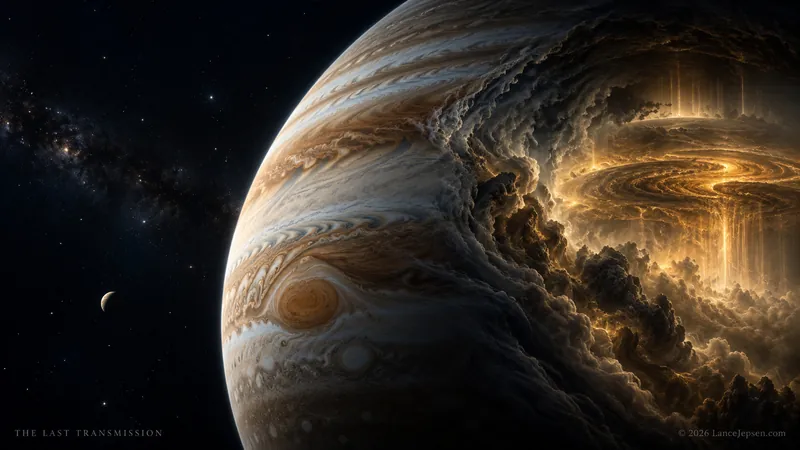
Juno's gravity measurements favor a broad, mixed interior over the tidy central core once drawn in textbooks. Even Jupiter's familiar outline has needed a measurement.
A giant planet has no surface where a visitor could plant a flag and declare the atmosphere finished. Its inner boundary is harder still. Juno listens to gravity through minute changes in its own motion, then researchers test which distributions of mass could have produced them. The resulting picture does not end at a neat ball of rock. Heavy material may be spread through a large region that grades into the surrounding hydrogen and helium. The unsettling part is how much of a planet can remain hidden while its clouds have been visible for millennia.
The full investigation continues with the evidence, illustrations, and sources at The Last Transmission on Substack.
Continue reading on SubstackTHE EVIDENCE / THE OPEN QUESTION
What we know.
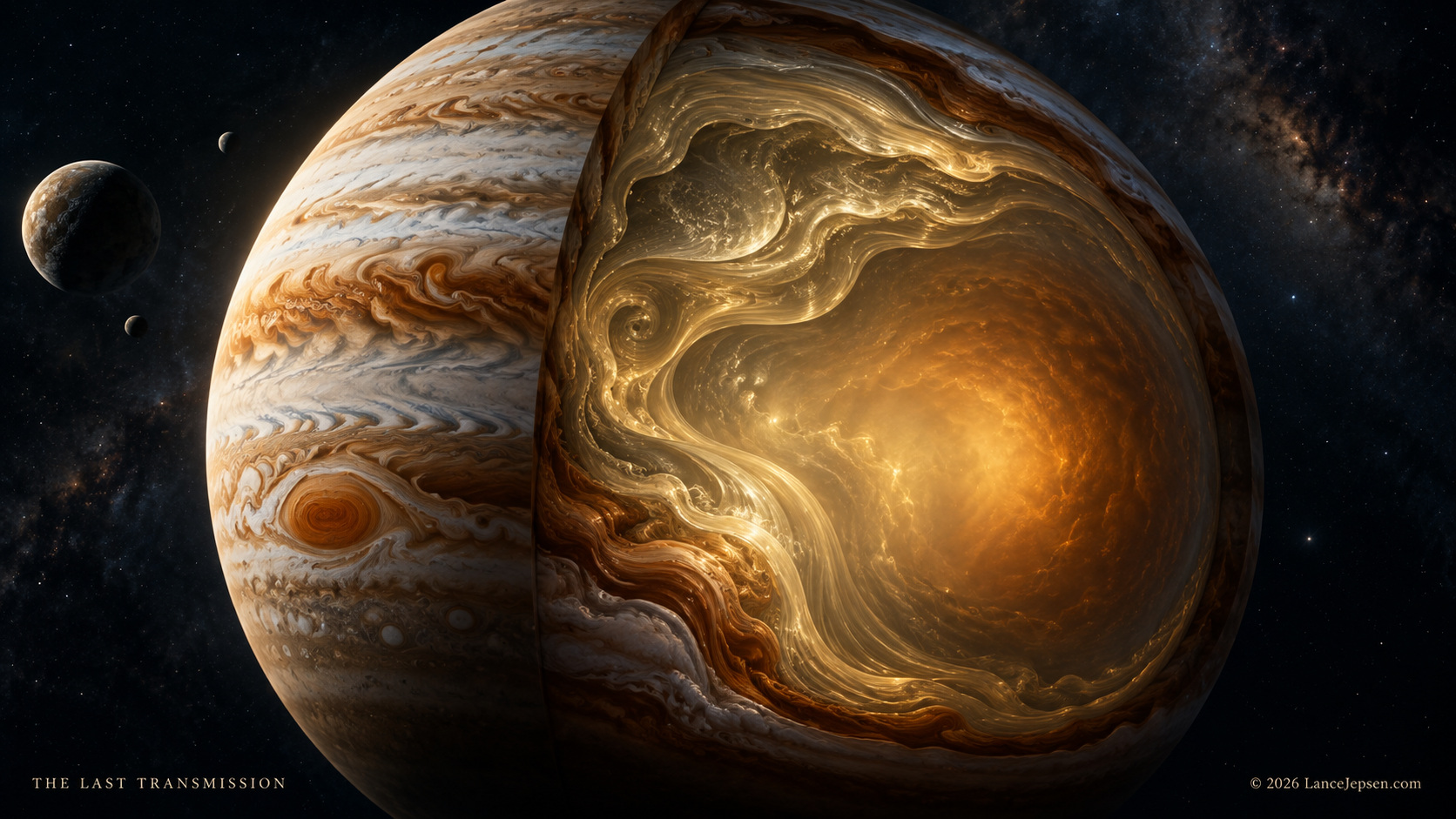
Juno's radio and gravity observations have sharpened both the measured shape of Jupiter and the models of its deep interior. One family of models places a dilute concentration of heavy elements across a broad central region. A 2026 analysis revised the giant's estimated equatorial diameter by roughly eight kilometers and its polar dimension by about twenty-four. Those corrections are small beside the planet itself, yet they show how precision measurements can unsettle a familiar drawing.
What remains open.
A diffuse core is inferred from gravity, not photographed. Different interior models can fit aspects of the data while disagreeing about exactly how far the heavy material extends. A giant collision once offered a vivid origin story, but newer impact simulations found that disrupted material could settle back inward rather than leave a lasting dilute core. That result tests one proposed route; it does not reconstruct Jupiter's entire formation history.
Why it matters.
Jupiter and Saturn may both hold broad transitions between heavy central material and their envelopes. If that pattern survives closer study, the question shifts from what happened to one planet to how giant planets form and evolve. Juno's faint changes in speed have become a way to interrogate processes no camera can reach.
GO DEEPER / EVIDENCE FILE
How Can Juno Detect a Core It Cannot See?
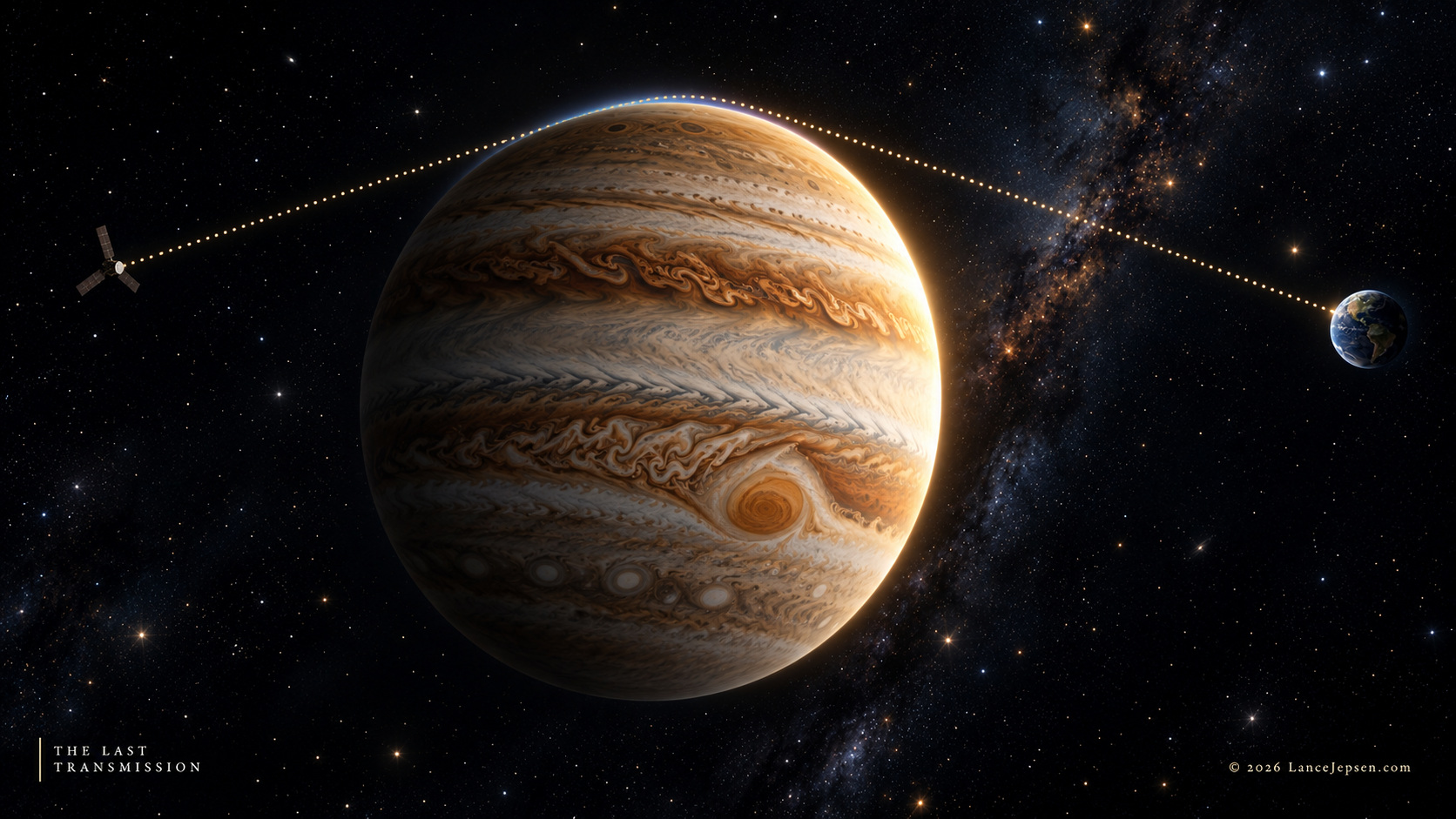
Juno measures Jupiter's gravity. Interior models that fit those measurements favor heavy elements spread through a broad region, while the origin of that distribution is disputed.
FOLLOW THE EVIDENCE
Research behind the field note.
EXPLORE IN 3D / MAP 02
Look beyond Jupiter’s clouds
Explore the giant planet and the Juno gravity question that reaches into its diffuse interior.
Open Jupiter system mapWATCH THE RELATED DOCUMENTARY
The story in motion.
VISUAL EVIDENCE
Inside the investigation.

FOLLOW THE THREAD
Related signals.
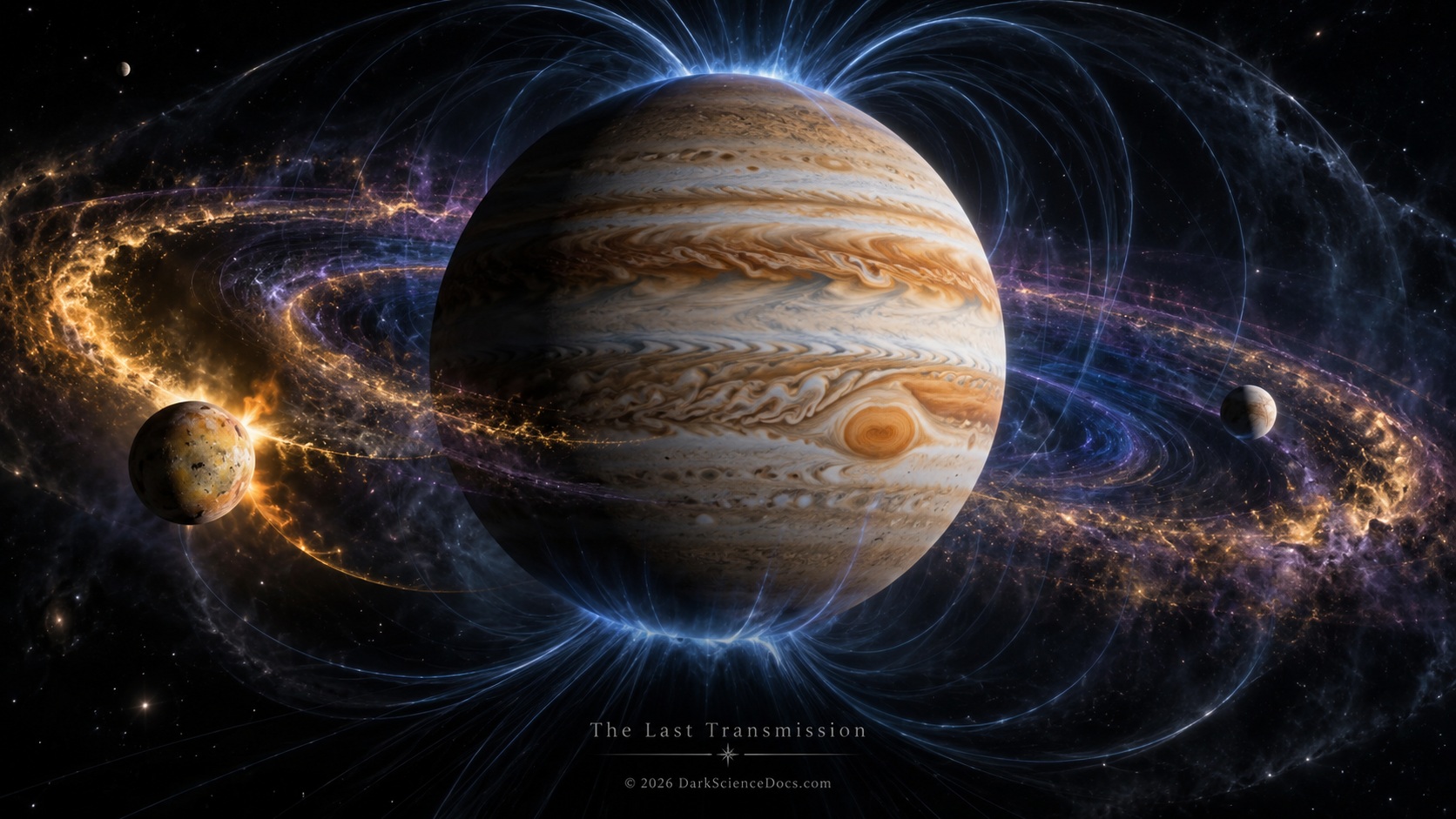
Jupiter Is a Machine Wearing the Face of a Planet
The prettiest giant in the night sky powers a self-reinforcing system of gravity, metallic hydrogen, volcanic plasma, radiation, and storms that destroy everything.
Read the illustrated article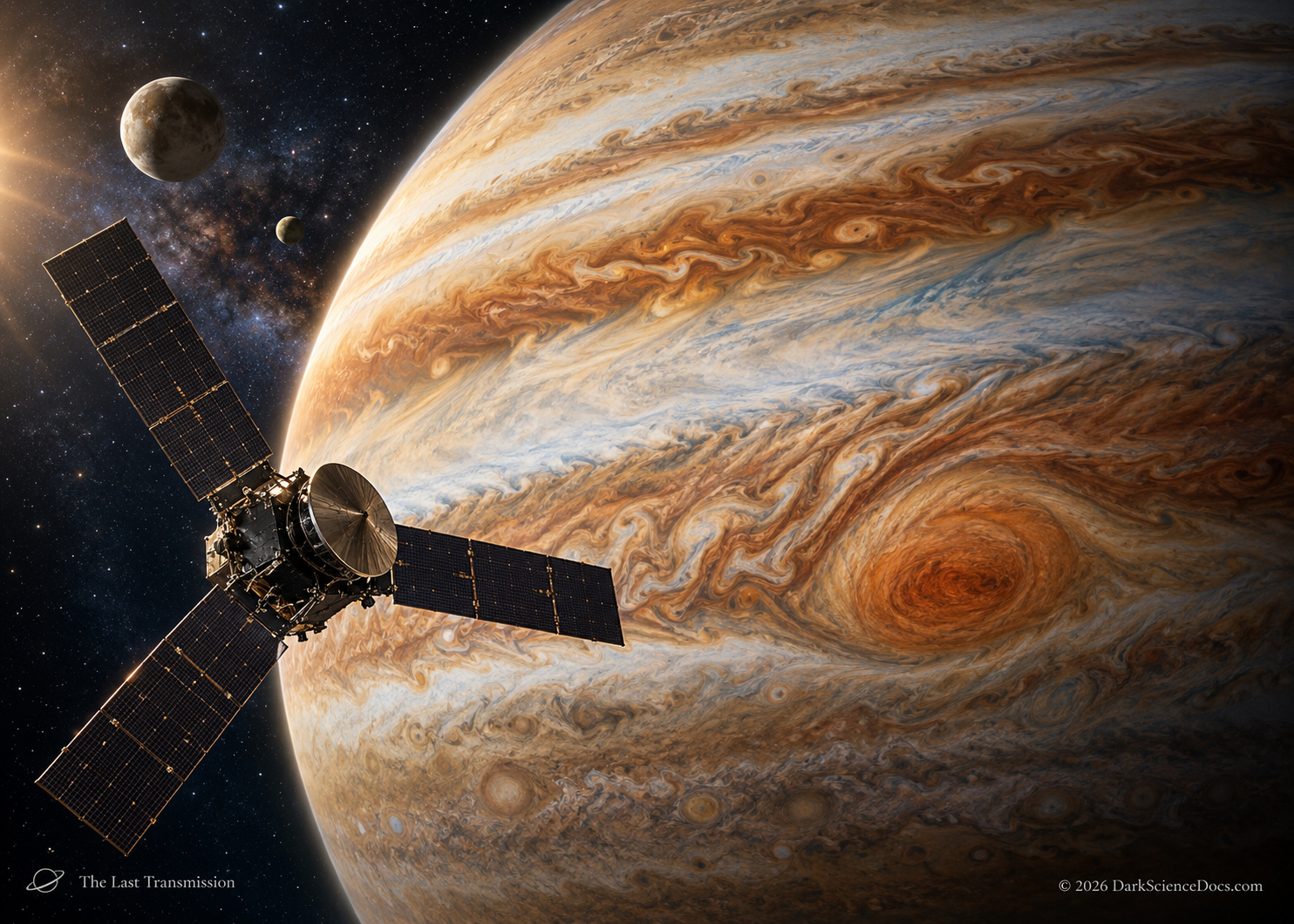
The Spacecraft That Was Supposed to Die at Jupiter Is Still Sending Back Secrets
Juno survived a place capable of destroying spacecraft electronics, discovered that Jupiter does not have the kind of core we thought a planet should have, and then kept flying.
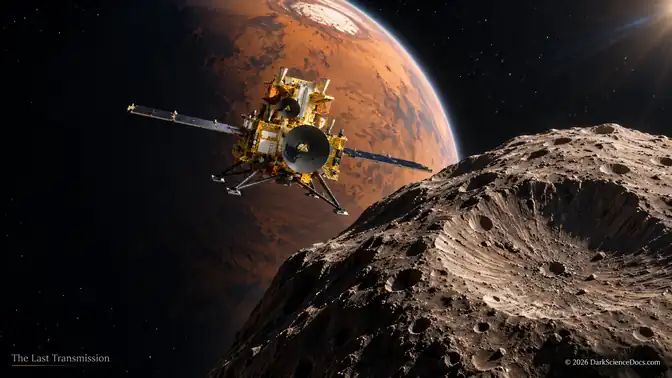
Phobos: The Moon That May Preserve Mars’s Past
MMX will investigate how Phobos formed and whether its dust contains fragments ejected from Mars. Follow the mission, the sample-return plan, and the limits of the evidence.