
14 / RESEARCH / OBSERVATION & INTERPRETATION
Stellar Ages and the Time Available in the Universe
Long-lived stars offer a test of proposed changes to cosmic history. Their inferred ages must be compared with cosmological ages while accounting for model assumptions and the time before stars formed.
Stellar ages are inferred from observables such as luminosity, temperature and composition using evolutionary models. Cosmological ages are also model-dependent inferences, and changing the expansion history changes the time available for stellar evolution. An apparently old star does not automatically predate the universe. Distance, composition, model physics, selection and systematic errors affect the comparison; a tension constrains explanations without identifying one uniquely correct model.
A star becomes a model-dependent clock
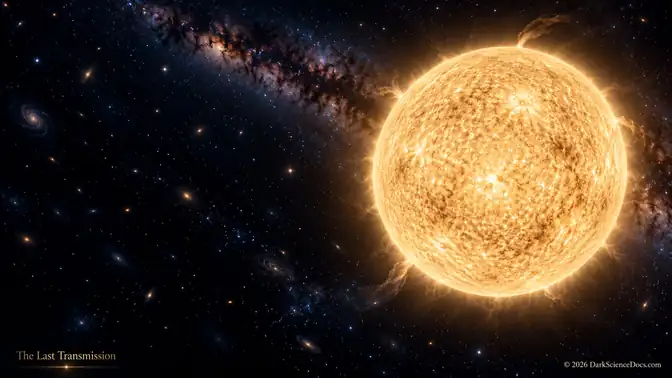
Imagine a modest star shining in the young Milky Way, long before the Sun existed. Over billions of years, the galaxy around it grows through encounters and mergers. Generations of stars enrich its gas. Eventually, one much younger star forms with a rocky planet that will develop oceans, life and people capable of asking when everything began. Such survivors are possible because a star’s lifetime depends strongly on its mass. A relatively low-mass star consumes its fuel slowly enough to remain luminous across most of cosmic history. The ancient subgiants relevant to this study have masses around eight-tenths that of the Sun.
Observables constrain an evolutionary history
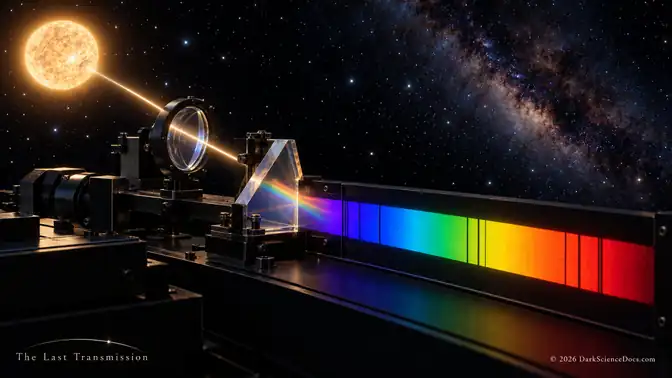
Astronomers cannot open a star and inspect a date stamped on its core. They estimate its age by comparing measurable properties with models of stellar evolution. Subgiants offer a particularly useful opportunity. These stars have exhausted the hydrogen at their centers and are moving away from the long, comparatively steady main-sequence phase. Their temperatures and luminosities change more rapidly with age, helping astronomers distinguish between evolutionary stages that would otherwise look frustratingly similar. The analysis builds on a catalogue assembled by Maosheng Xiang and Hans-Walter Rix. It combines low-resolution spectra from China’s LAMOST telescope with Gaia’s precise measurements of stellar positions and parallaxes.
A proposed repair has to leave enough time
Some attempts to resolve the Hubble tension introduce an extra ingredient in the early universe. Changing the physics before recombination can alter the size of the sound horizon, a scale used to interpret the microwave-background pattern, and therefore change the expansion rate inferred from it. But a proposed repair also has consequences for the rest of cosmic history. If the resulting expansion history reduces the available time too much, explaining the expansion measurements creates a problem with the stars. The authors argue that their stellar ages put pressure on solutions operating solely through physics beyond established models before recombination. That claim is more specific than saying the Hubble tension is solved, that all early-universe ideas are excluded, or that the local expansion measurements must be wrong.
Read the illustrated companion article for the full narrative and its source trail. The selected passages above follow that article’s investigation.
Continue reading on SubstackTHE EVIDENCE / THE OPEN QUESTION
What we know.
Stellar ages are inferred from observables such as luminosity, temperature and composition using evolutionary models. Cosmological ages are also model-dependent inferences, and changing the expansion history changes the time available for stellar evolution.
What remains open.
An apparently old star does not automatically predate the universe. Distance, composition, model physics, selection and systematic errors affect the comparison; a tension constrains explanations without identifying one uniquely correct model.
Why it matters.
Independent clocks can test whether a proposed solution to the expansion-rate disagreement leaves enough time for observed populations. The strength of the test depends on propagated uncertainties, not only on the oldest estimated value.
COMPARE THE QUESTIONS
Follow what the light reveals.
Follow the relevant evidence and teaching models. Each model explains a mechanism and retains its own stated assumptions and limits.
FOLLOW THE EVIDENCE
Research behind the field note.
EXPLORE IN 3D / MAP 12
Explore the related science model
Independent clocks can test whether a proposed solution to the expansion-rate disagreement leaves enough time for observed populations. The strength of the test depends on propagated uncertainties, not only on the oldest estimated value.
Open Milky Way mapVISUAL EVIDENCE
Inside the investigation.
FOLLOW THE THREAD
Related signals.
The Oldest Stars May Be Too Old for a Younger Universe
An analysis of 146,810 stars challenges attempts to solve cosmology’s expansion crisis by taking roughly a billion years out of cosmic history.
The Black Hole Hid Its Light. The Neutrinos Escaped.
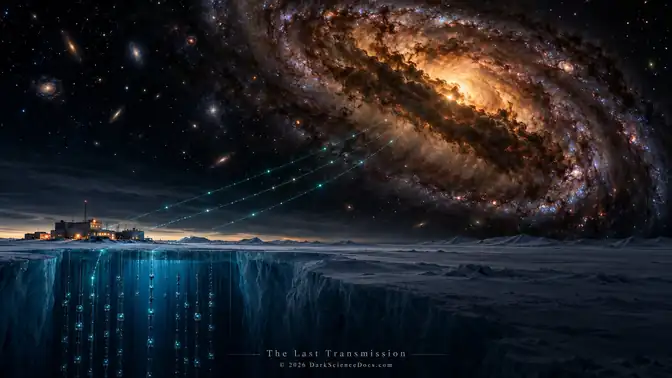
Scientists buried a telescope beneath Antarctica to catch particles from the universe’s most violent places. What they discovered is shocking.
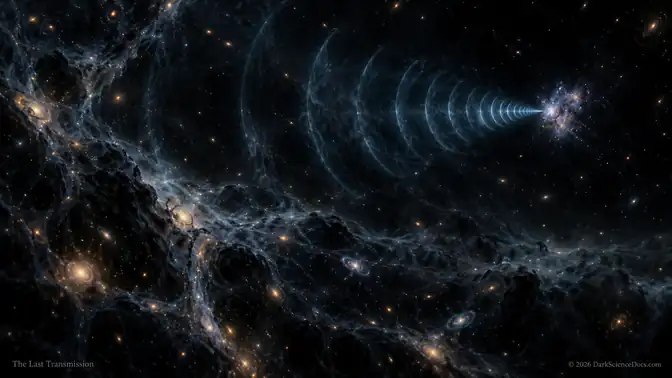
A Signal Crossed 10 Billion Years of Darkness. We Still Don't Know What Sent It.
The James Webb Space Telescope has traced an extraordinarily powerful radio flash to a galaxy so small that Earth's largest telescopes couldn't see it.