
COSMIC MYSTERIES / AI-GENERATED SCIENTIFIC ART
An Early Black Hole Inside a Gas Envelope
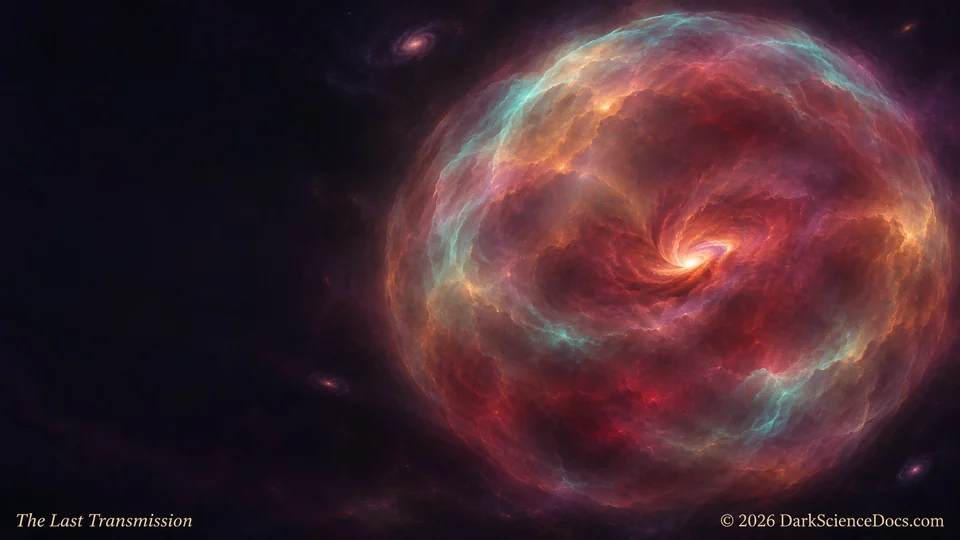
An early-universe black hole surrounded by a dense hydrogen envelope. The atmosphere can transform escaping radiation, complicating conventional mass estimates. AI-generated conceptual illustration; the structure is not directly resolved. © 2026 DarkScienceDocs.com
THE OBSERVATION
What the evidence can show.
An early-universe black hole surrounded by dense hydrogen can produce escaping radiation that is difficult to interpret with a simple exposed-source model. The article examines how that environment may affect inferred properties, including mass estimates. The evidence comes from light and its analysis, rather than a direct view of the central object inside its proposed envelope.
THE ILLUSTRATION
What the artwork imagines.
The luminous cocoon supplies an imagined exterior for material that has not been spatially resolved into this structure. The central glow, colors and swirling details are artistic. The phrase early-universe black hole here does not assert formation directly from primordial density fluctuations. The scene illustrates an envelope hypothesis without confirming the exact geometry or origin of its hidden central black hole.
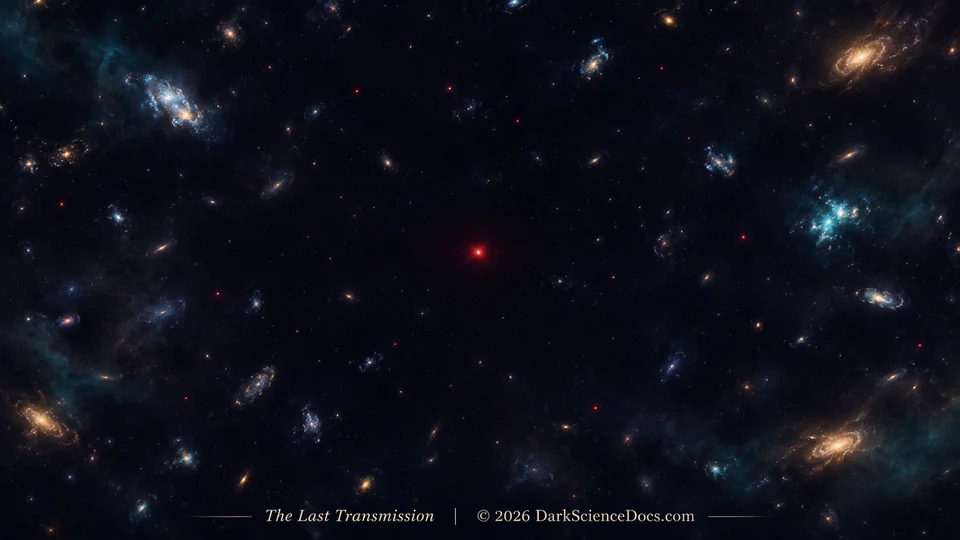 The Compact Red Sources in Webb’s Sky
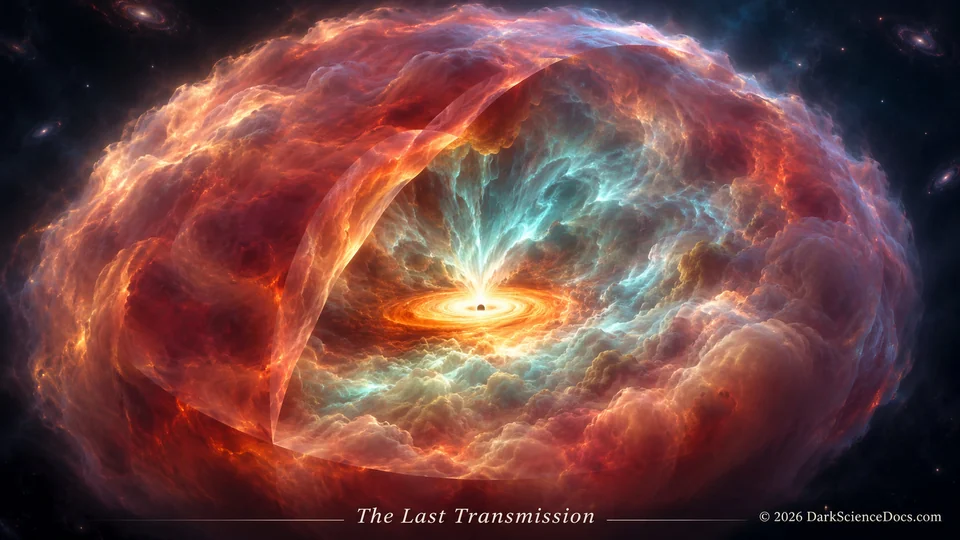 Inside a Proposed Black Hole Star
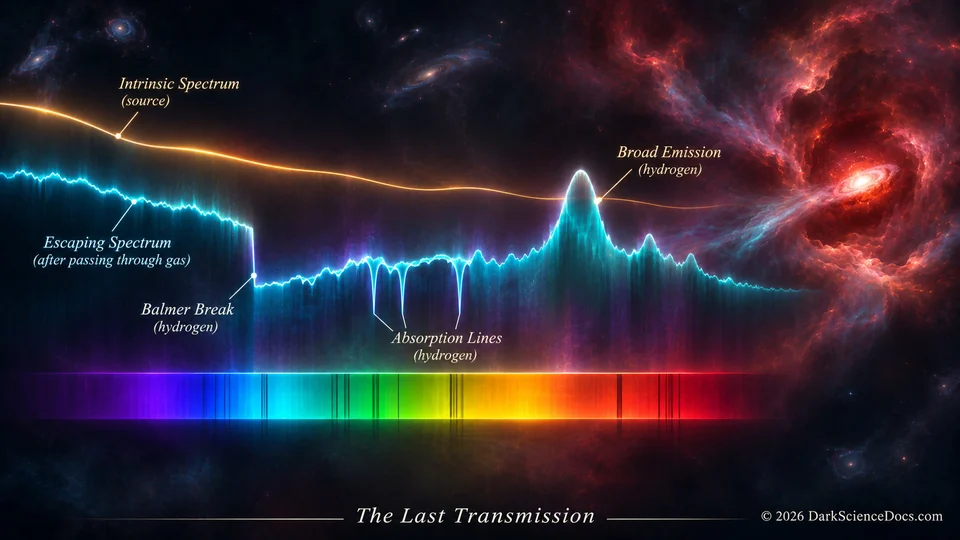 Hydrogen’s Imprint on Escaping Light