EVIDENCE FILE 15 / PLUTO’S UNRESOLVED INTERIOR
Does Pluto Have an Ocean? The Evidence and the Alternative
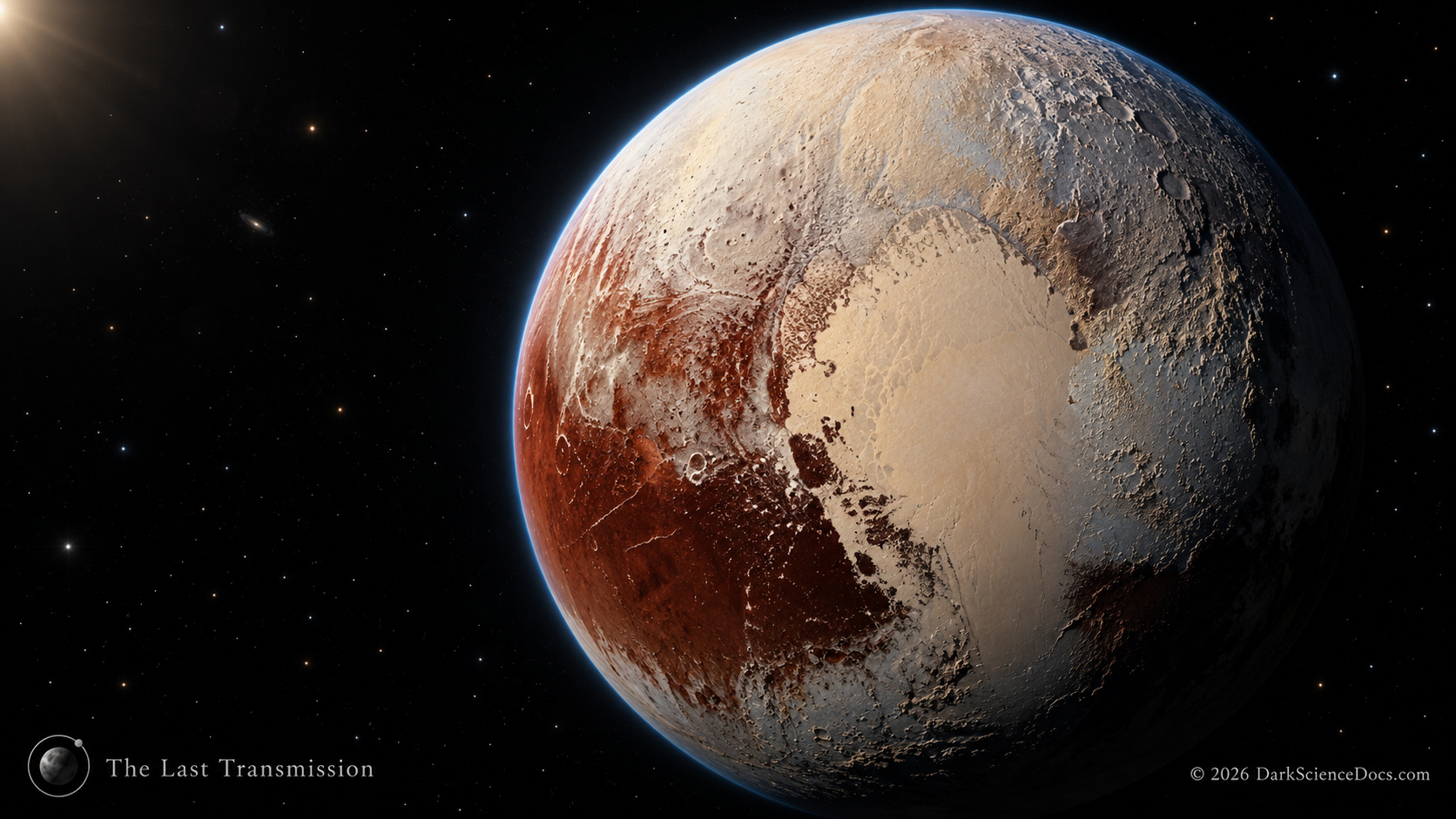
New Horizons photographed the surface. How far can that evidence take us beneath the heart-shaped terrain?
All Evidence FilesTHE SHORT ANSWER
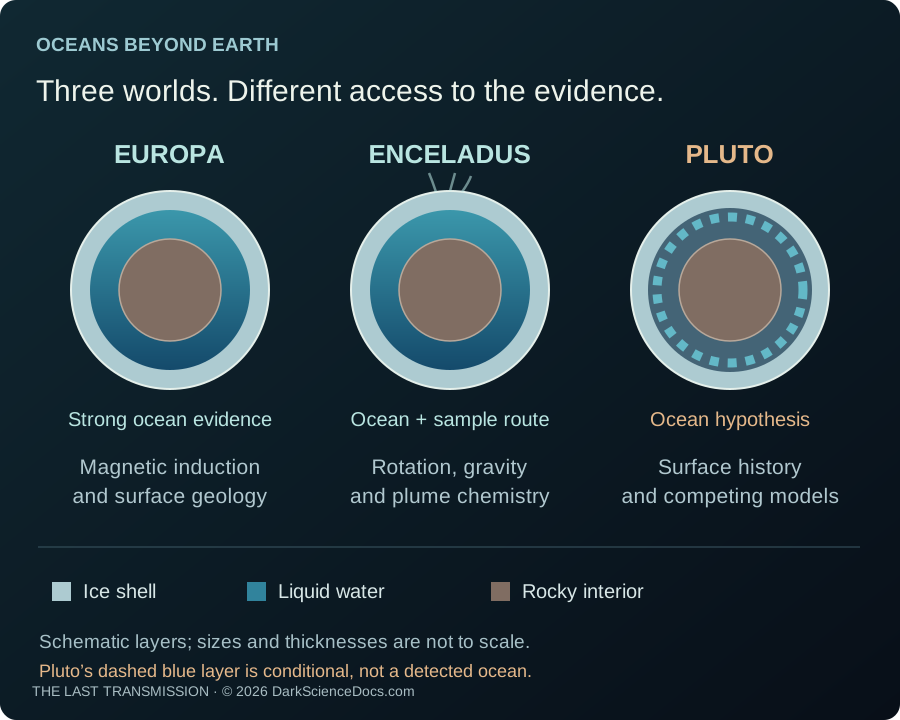
Pluto’s basin geometry, fractures, and thermal history support ocean interpretations through models. A competing impact calculation can explain important basin clues with buried rocky material in an oceanless interior. New Horizons established an active, complex surface; it did not directly detect a liquid-water ocean.
THE EVIDENCE MAP / PLUTO’S UNRESOLVED INTERIOR
From a bright heart to competing interiors
A successful basin model is one constraint on Pluto’s interior, not a direct sighting of liquid water.
- 01Measurement
Map the basin, orientation, and fractures
New Horizons recorded the geometry and geological features that ocean and impact models must explain. The renewing surface involves nitrogen ice, distinct from proposed deeper water.
- 02Interpretation
An ocean can alter mass and shell stresses
Ocean uplift beneath a thinned shell can contribute extra mass, while thermal evolution can account for extension. These conclusions follow from models fitted to surface evidence.
- 03Competing explanation
A buried rocky impactor can also add mass
An oblique-impact calculation can retain rocky material beneath the basin in an oceanless Pluto. It challenges the uniqueness of the ocean argument without settling every other clue.
- 04Open test
Require one interior to fit independent constraints
Compare basin, tectonic, thermal, shape, and future gravity or rotation constraints consistently. A shared fit would be stronger evidence than reproducing a single surface feature.
OBSERVATION / INFERENCE / LIMIT
Read the signal.
Sputnik Planitia
The bright nitrogen-ice plain, its terrain, and its position relative to Charon provide observations that interior models must explain.
Mass beneath the basin
An uplifted ocean beneath a thinned shell can provide excess mass, while a retained rocky impactor is a competing source.
No direct ocean detection
A plausible explanation of surface clues does not uniquely identify the present interior or show liquid water beneath the ice.
INSIDE THE EVIDENCE
The chain of reasoning.
Each step has a different level of certainty. Follow the measured result into the explanation, then see where the trail ends.
The young plain is a starting clue, not an ocean photograph
Sputnik Planitia’s polygonal nitrogen-ice terrain and scarcity of impact craters support a renewing surface. Solid nitrogen can overturn slowly under conditions very different from those of water ice. That observation establishes a physical process worth explaining, but the material at the surface is not the liquid-water ocean proposed below the shell. Keeping these layers separate prevents a common shortcut: evidence of movement in one kind of ice cannot, by itself, prove the existence of a deeper liquid layer.
NASA: solid nitrogen convection in Pluto’s heartThe basin’s position invites a question about hidden mass
One ocean argument concerns Sputnik Planitia’s location and its relationship to Pluto’s orientation relative to Charon. Models investigate how a large impact basin could move into that configuration through reorientation. Extra mass beneath a basin can matter to this process. If an impact thinned the ice shell above an ocean, denser liquid water could rise closer to the surface and contribute a mass excess. This is an interpretation linking geometry with interior physics, rather than a measurement of water itself.
NASA / New Horizons: Sputnik Planitia and the ocean interpretationFractures give the thermal history another test
An interior that melts or freezes can change the stresses in a surrounding shell. The hot-start study compared thermal calculations with Pluto’s surface structures and argued that early ocean formation could account for extension across its history. The sequence matters: a cold start followed by melting can predict a different pattern of contraction and expansion. Geological interpretation and model assumptions both enter that comparison. The argument becomes stronger when a proposed interior explains several independent features instead of one attractive clue.
A rocky remnant can answer part of the same puzzle
The 2024 impact study modeled an oblique encounter that could leave rocky impactor material beneath Sputnik Planitia. That buried material supplies a different route to an excess of mass, without requiring the substantial ocean used in some earlier basin models. Its value is the competing prediction: a feature once treated as an ocean clue may admit another physical explanation. The calculation does not prove that Pluto has no ocean. It shows why explaining the basin is not equivalent to uniquely identifying the interior.
The best next evidence would connect separate constraints
A decisive comparison would ask each model to explain the basin, fractures, shape, and thermal history under the same observational constraints. Additional measurements of gravity, rotation, and geology could narrow the allowed interior structures; that is a proposed testing strategy rather than a capability already achieved by the flyby. One model fitting one feature is useful, but several measurements agreeing with the same physical interior would be more persuasive. Until then, the ocean remains a scientific possibility with explicit alternatives.
THE EASY MISREADING
Pluto’s nitrogen glacier is not a surface water ocean. An illustrated blue layer beneath the shell is a hypothesis, and an oceanless model explaining the basin does not by itself settle every geological clue or prove the absence of all liquid water.
PRIMARY RESEARCH & MISSION RECORDS
Check the source.
These are the studies and mission records behind this explainer. The illustrated article and related research pages continue the investigation.
- NASA / New Horizons: Sputnik Planitia and the ocean interpretation
- Bierson, Nimmo & Stern (2020): a hot start and early ocean formation
- UC Santa Cruz: geological tests of the hot-start model
- Ballantyne et al. (2024): an impactor remnant in an oceanless Pluto
- Ballantyne et al.: open manuscript and model discussion
- NASA: solid nitrogen convection in Pluto’s heart
EXPLORE IN 3D / MAP 07
Examine the surface before the interior
Turn the Pluto and Charon globes and compare the visible terrain with the research clues. The explorer provides surface context without directly exposing or confirming a liquid-water ocean.
Open Pluto & Charon mapFOLLOW THE THREAD
Stay with the question.
Explore Pluto and Charon in the Atlas, then return to the illustrated article and its unconfirmed-ocean cutaway. The separate infrared Evidence File concerns surface chemistry on Titan and Pluto, not a detection of deep water.
MORE EVIDENCE FILES
Keep looking.
EVIDENCE FILE 01 / EUROPA
How Do We Know Europa Has an Ocean?
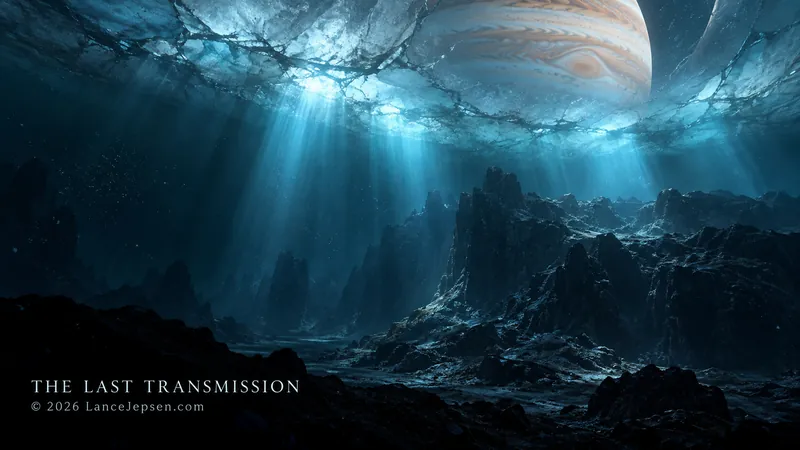
Galileo's magnetic measurements point to a conducting layer beneath Europa's ice. A salty ocean is the leading explanation. Its chemistry and seafloor activity remain open questions.
Read the evidence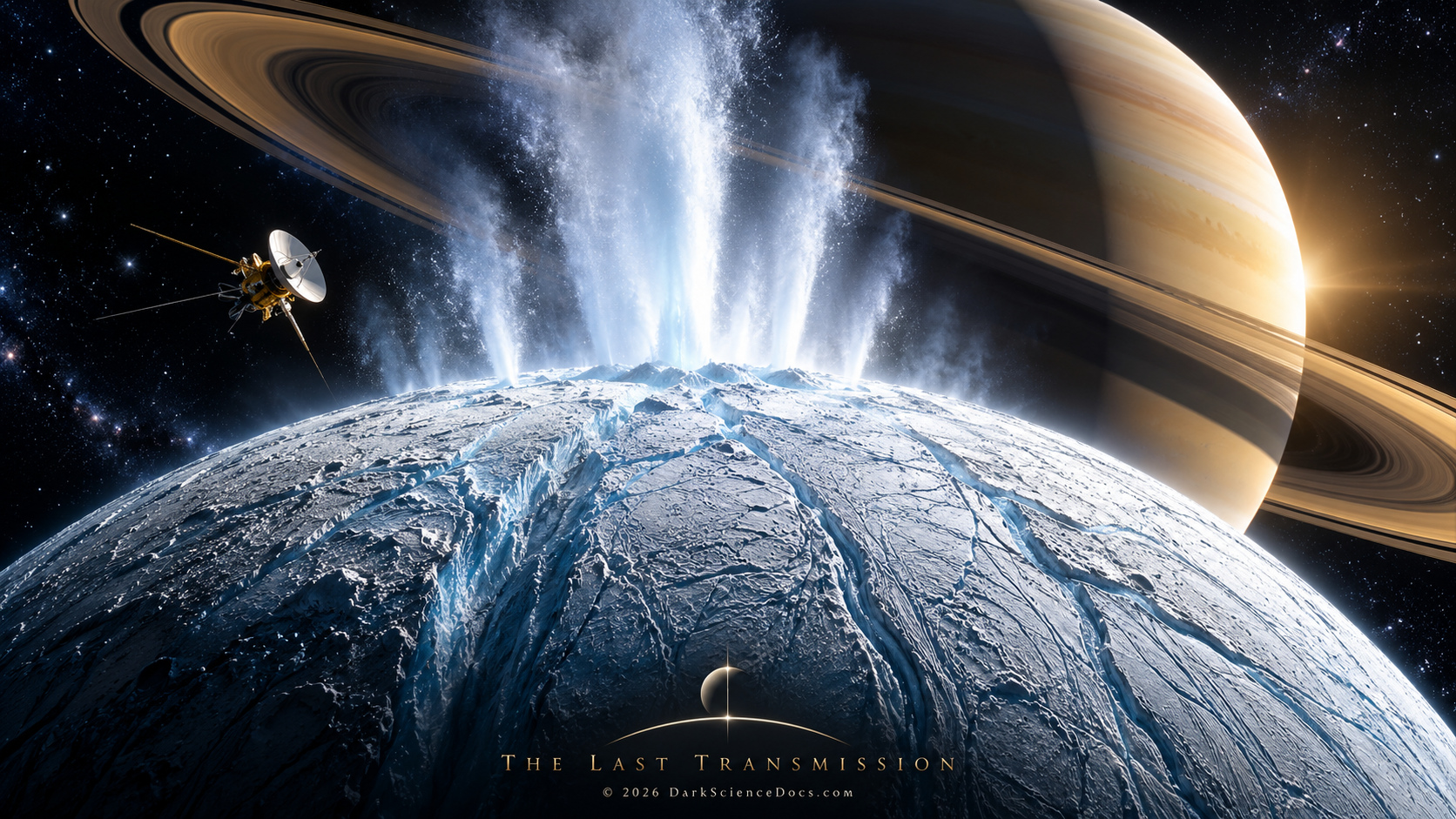
EVIDENCE FILE 13 / ENCELADUS OCEAN CHEMISTRY
What Do Enceladus’ Ice Grains Reveal About Its Ocean?
Follow fresh plume grains into Cassini’s mass spectra, laboratory comparisons, and the distinction between an organic inventory and evidence of life.
Read the evidence