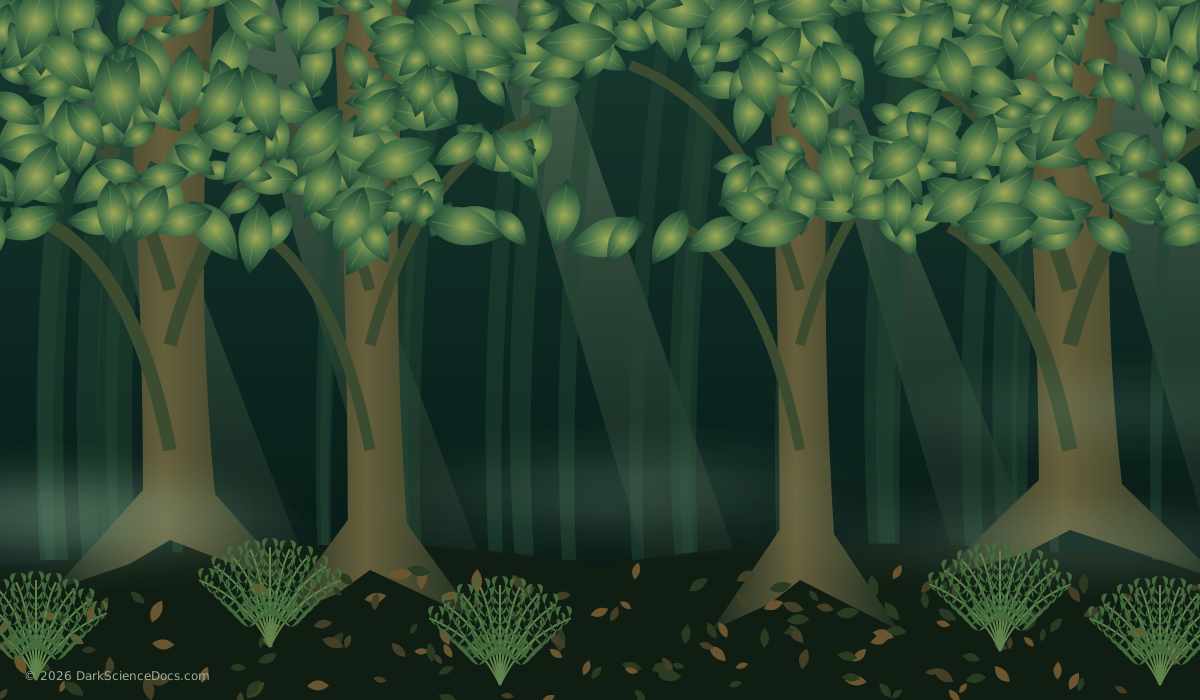
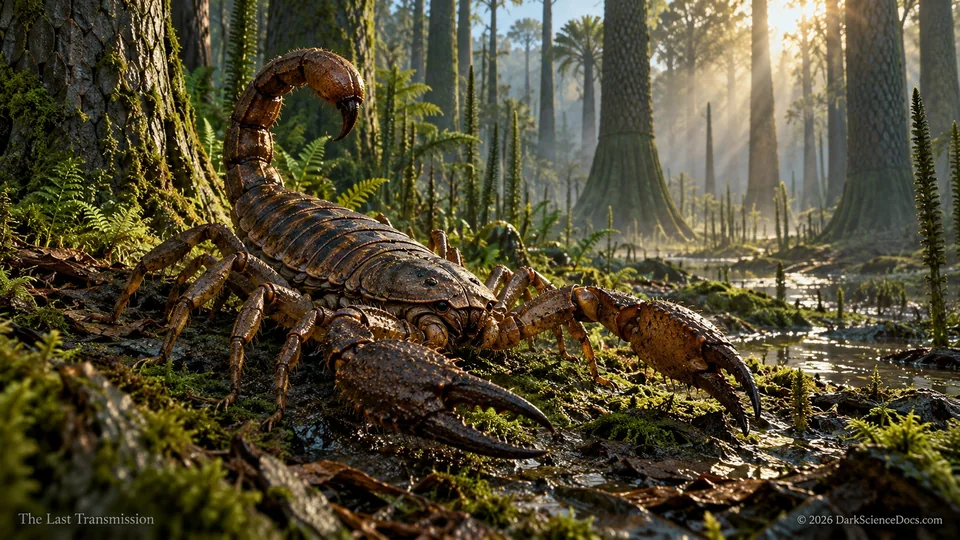
A roof of leaves. A river rising inside a tree. A second world beneath your feet. Explore one illustrated forest plot, follow water from rain to vapor, and open a gap in the canopy to see the light reach the floor. Or step back into a Carboniferous wetland and walk among the plants that helped build Earth’s coal deposits.
RAINFOREST / THE HIDDEN ENGINE ILLUSTRATIVE FOREST PLOT
ABOVE THE CANOPY
Choose a layer to explore the forest.
A SELECTED WATER ROUTE
From rainfall to transpiration0%
Start the journey to follow one possible water route. Dragging or zooming gives you camera control; use Follow camera to rejoin.
Closed canopyOpen patch
Mostly shaded
Changes the illustrated opening and light patch. It does not predict growth, temperature, or rainfall.
WALK THROUGH THE CARBONIFEROUS
Sunlit grove
Click or tap the forest first. Walk with W/A/S/D or arrow keys; drag to look around. On phones, hold the arrows inside the viewer to walk; use ↶ and ↷ to turn. On larger screens, the walking buttons are below. Scroll to change your field of view. Press Esc to leave the walking controls.
Start exploring at
Lycopsids tower overhead. Their patterned trunks and forked crowns belong to an ancient plant lineage.
Walked 0 m
Look low for Arthropleura-inspired crawlers and watch the clearings for griffinfly-inspired flyers. Choose Water’s edge, then look down or wade into the shallows to find lobe-finned swimmers and a four-legged bank visitor. Pause wildlife to inspect them. Look into the shafts of sunlight for drifting spores and fine particles.
An artistic reconstruction with AI-generated foliage and surface textures. Terrain, plant placement, light, and mist are imagined; this is not an actual Carboniferous landscape or a measured carbon budget. Both detail settings explore the same area.
01 / RAINFOREST FILE
Above the canopy
Light · interception · a canopy gap
What changes when the ceiling opens?
The upper leaves receive the strongest sunlight. Beneath them, shade shapes the opportunities available to seedlings. Open a gap with the slider and watch a sunlit patch appear below. In a real forest, a fallen tree also changes wind, heat, moisture, and the supply of dead wood. This experiment isolates the light change.
Rain can be intercepted by foliage, drip onto litter, infiltrate soil, or run away from the plot. Follow the Water selects one possible route into a root, up the xylem, and out of a leaf as vapor. Its glowing marker represents a parcel changing form and remains visible through bark. The sequence is compressed and gives no measured travel time. NASA’s southern-Amazon research connects transpired moisture with the onset of that region’s wet season; the result is specific to that setting.
Fallen leaves and wood become food and habitat for decomposers and small animals. Their activity helps release nutrients that plants can use again. The illustrated leaf fragments and gold markers follow that idea, without representing a chemical assay. In a canopy-trimming experiment in Puerto Rico, moisture and debris changed fungal connectivity and litter decomposition. More sunlight alone does not guarantee faster recycling.
Enter a magnified world of branching roots and delicate fungal threads. Curved woody roots sweep through the surrounding soil, dividing into finer roots as you move closer. Rotate to follow their junctions, or zoom out to see the wider web of living structures. Many plants form mycorrhizal partnerships: fungi can help acquire mineral nutrients while receiving plant carbon. The network drawn here shows that type of association. Claims about widespread tree-to-tree resource sharing, deliberate messages, or a forest acting as one mind require their own evidence. The linked Thismia story concerns a mycoheterotrophic flower from Thailand; its specific fungal partners and carbon route remain open questions.
What happens when a forest stores its fallen carbon?
Step into an imagined tropical wetland about 310 million years ago. Walk beneath spreading lycopsid crowns, past fern trees, Calamites horsetail relatives, and seed-fern thickets. Deep shade opens into small pools of warm sunlight. Sunlight builds plant matter; waterlogged soils slow its return to the atmosphere. Choose a starting place, then follow the carbon story below. The plants, terrain, and fossil-inspired animals are an artistic composite, not a reconstruction of one fossil locality.
Explore a composite tropical coal-swamp forest from roughly 310 million years ago. The Carboniferous lasted about 359–299 million years ago; its landscapes changed across places and through time. This wetland scene represents one kind of environment, not the whole ancient planet.
01 / BUILD
A forest gathers carbon.
Photosynthesis uses carbon dioxide to build organic matter. Tall lycopsids, tree ferns, seed ferns, and horsetail relatives contributed to Carboniferous wetland vegetation. Modern flowering trees, flowers, and lawn grasses do not belong in this scene.
Most fallen plant matter eventually decomposes. In waterlogged, oxygen-poor soils, slower decay can let partly decomposed material accumulate as peat. Microbes still work there: preservation means some carbon survives, not that decomposition stops.
Later sediment can bury peat. Compaction, heat, and chemical change over geological time can transform it into coal. Climate, basin subsidence, sediment supply, and preservation all matter. Coal formation is not explained simply by saying fungi had not learned to decay wood.
A dense forest needs more than tall trunks. This imagined wetland layers spreading crowns, younger trees, and low thickets, with small openings for sunlight. Its spacing and shade are artistic choices, not measured conditions at a fossil site.
FOUR PLANT FORMS
A forest before flowers.
Scale-patterned lycopsids rise above smaller fern trees. Calamites, an extinct horsetail relative, supplies tiered stems and foliage. Seed ferns add spreading fronds to the lower story. These fern-like seed plants were distinct from true ferns; the foliage here suggests their forms rather than identifying an exact fossil species.
The drifting flecks represent spores or fine particles catching sunlight. They do not glow on their own. Firefly research places the group's origins far later than the Carboniferous, so this scene includes no prehistoric fireflies or invented glowing fungi.
This imagined wetland brings together animals known from the later Carboniferous. Their colors, routes, and walking and wingbeat rhythms are artistic choices; their presence together is not a claim about one fossil site.
ON THE FOREST FLOOR
A many-legged visitor.
Arthropleura was a millipede-like arthropod, not an insect. Some grew longer than two metres. Armoured body plates and many paired legs inspired these slow crawlers. Fossils have revealed its head, but its diet and aspects of its way of life remain uncertain.
Griffinflies were extinct relatives of dragonflies. Meganeura monyi, known from late-Carboniferous fossils, had a wingspan of about 70 centimetres. Four veined wings inspired these flyers. Giant animals were striking exceptions; many Carboniferous arthropods were small.
Look through the rippled surface for fish, then watch an early four-legged visitor enter and leave the shallows. Fossils guide their broad forms; colors, sizes, paths, and movement are invented for this composite wetland.
BENEATH THE SURFACE
A fish with fleshy fins.
Megalichthyids were extinct lobe-finned fishes found in freshwater swamp and lake environments. Megalichthys and its relatives inspire these swimmers, with broad heads, patterned bodies, paired fins, and swaying tails. They are artistic models rather than exact reconstructions of a named species.
Pholiderpeton, known from a roughly 315-million-year-old fossil, inspires the long-bodied bank visitor. Its four limbs and tail let this illustration move from the margin into shallow water. The route and gait are imagined; fossils do not record this particular behavior. This is an early tetrapod, not a modern crocodile or frog.
Fossils support the plant lineages and wetland interpretation. The artwork combines those clues into an explorable scene; it does not reproduce a single fossil forest.
Fungi sense and respond to their surroundings. The documentary explores what those abilities mean and where the language of intelligence becomes debatable.
This is an original schematic forest scene, with composite trees, enlarged leaves and fungal threads, and compressed distances. It represents processes rather than a surveyed location or a particular species community. The underground view magnifies branching roots and fungal growth into an open inspection scene. Its sparse soil grains, root spacing, and depth are arranged for exploration; they do not depict a measured soil profile. The water marker changes from a visible drop to a symbolic parcel in tissue and vapor. Its playback time is unrelated to actual water residence times. Leaf fragments and nutrient markers are visual explanations; they are not measured decomposition rates or tracer data.
The canopy slider changes one patch of light. Fungal threads illustrate partnerships; forest-wide communication and deliberate resource sharing require separate evidence.
Arachnids were hunting on land long before the first forests appeared. The fossils behind their story reveal an ancient invasion and remarkable inventions.
Changing a canopy gap isolates only part of the story.
The view highlights a selected relationship among light, water, and living systems. It does not calculate an entire forest’s response to clearing. Check the geographic and experimental context of each linked study before combining them into one causal account.
Ask yourself What evidence connects the proposed cause to the effect beyond their appearing together?
THE SIGNAL CONTINUES
Some discoveries stay with you.
Get the illustrated investigations delivered to your inbox. Then follow the questions that refuse to leave.