

44 / The planet inside the clock
The Hidden Torque in Earth's Day
A millisecond change in the length of a day may carry evidence of how Earth's inner core and mantle exchange angular momentum across thousands of kilometers.
A clock is steady enough to notice that the planet beneath it is not. After researchers remove familiar contributions from tides, winds, and other processes, a broad multidecadal variation remains in the measured length of Earth's day. A recent model connects that slow change to a gravitational pull between the solid inner core and the mantle. The idea is strangely intimate: a slight misalignment deep inside Earth could alter the turning of the ground beneath every observatory that measures it.
The full investigation continues with the evidence, illustrations, and sources at The Last Transmission on Substack.
Continue reading on SubstackTHE EVIDENCE / THE OPEN QUESTION
What we know.
Atomic time and astronomical observations show that the rotating Earth does not complete every day in precisely 86,400 uniform seconds. A study of the 1964–2019 record found that a modeled gravitational torque from a slightly misaligned inner core follows the timing of a slow day-length variation. In that reconstruction, electromagnetic and boundary-related torques tend to oppose the movement over the same interval.
What remains open.
The proposed mechanism depends on reconstructions of inner-core rotation from seismic measurements and fluid motion inferred from magnetic observations. The model fits better if the solid inner-core boundary can deform over years rather than behave as a perfectly rigid sphere. It does not explain every seasonal or short-term change in Earth's rotation, and the earlier record is too uncertain to promise that the long cycle repeats forever.
Why it matters.
Timing the planet can become a way to investigate a region that cannot be visited. A missing millisecond is not a practical disruption to daily life; it is a measurement of coupled layers with enormous mass and subtle forces. The study turns an apparent imperfection in our clock into a probe of Earth's deepest structure.
FOLLOW THE EVIDENCE
Research behind the field note.
EXPLORE IN 3D / MAP 06
Find Earth’s hidden clock
Explore Earth and the Moon, then open the Deep Clock file on the planet’s interior and rotation.
Open Earth & Moon mapWATCH THE RELATED DOCUMENTARY
The story in motion.
VISUAL EVIDENCE
Inside the investigation.
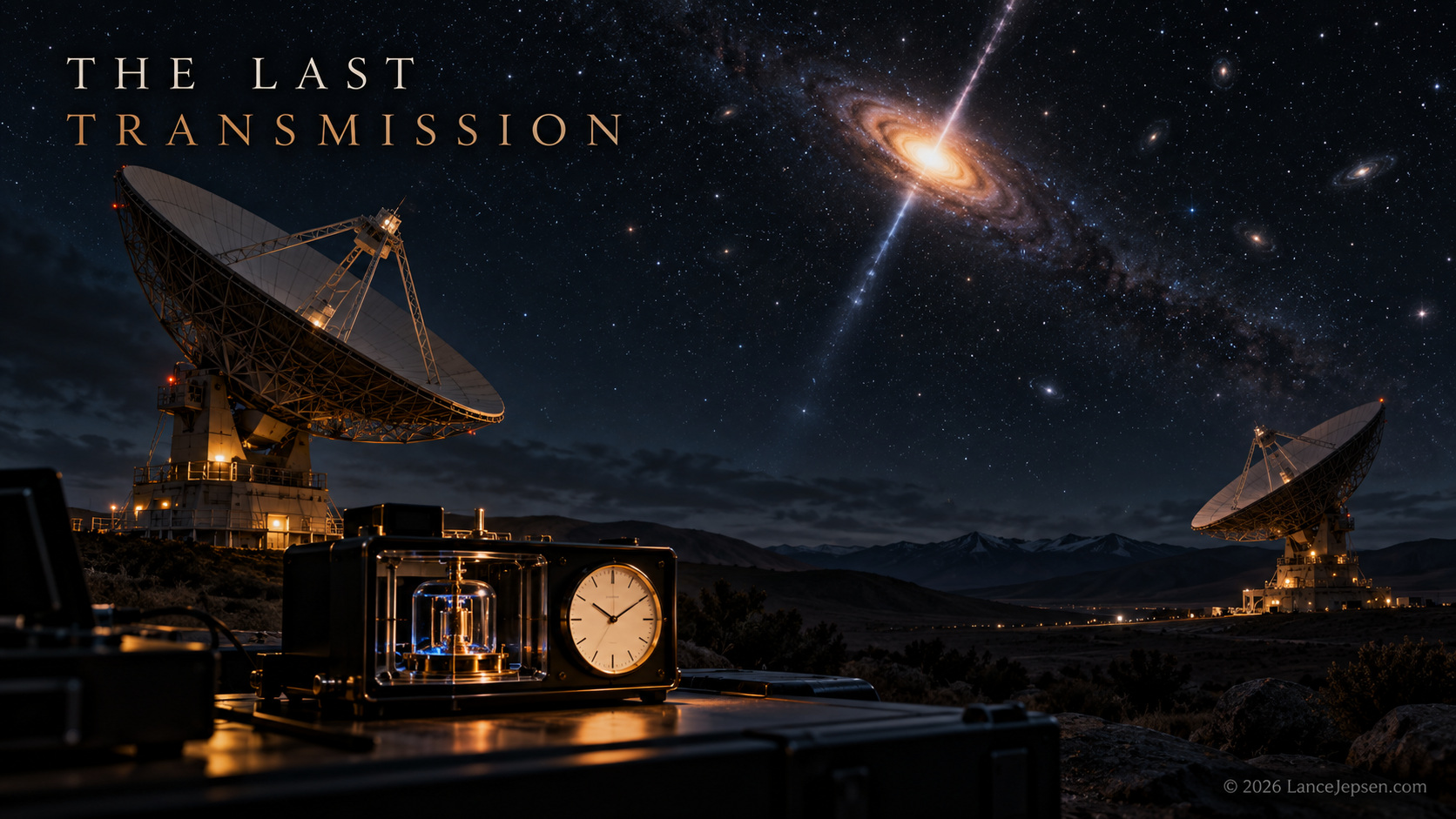

FOLLOW THE THREAD
Related signals.

The First Nuclear Clock Has Started Ticking
Humanity has spent centuries building better clocks. In 2026, physicists finally moved the ticking mechanism into the heart of the atom itself.

They Grew a Human Cortex Inside a Mouse. Then They Tested Its Memory.
Scientists created mice whose cortical tissue was almost entirely derived from human cells. The tissue grew, formed connections, generated electrical activity, and revealed something extraordinary.
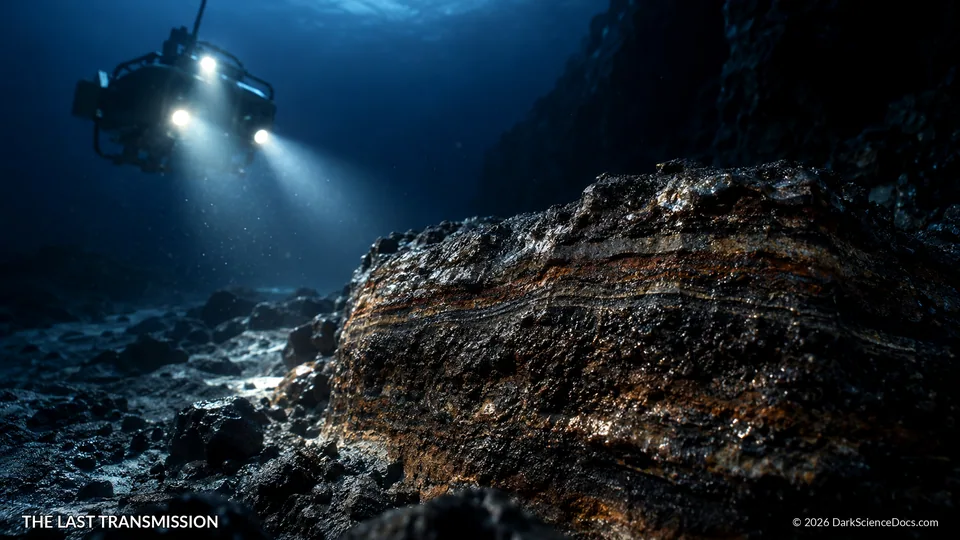
They Found Plutonium at the Bottom of the Pacific. The Explosion That Made It May Be Over 95 Million Years Old.
Deep beneath the ocean, scientists discovered radioactive debris from beyond Earth. The most disturbing clue was an element they could not find.