
95 / ALIEN WORLDS & LIFE / RESEARCH
Europa’s Radar Echo: The Ice Above the Ocean
Investigate Europa’s bright radar return, the ice-scattering explanation, and the next measurements Europa Clipper can make above a hidden ocean.
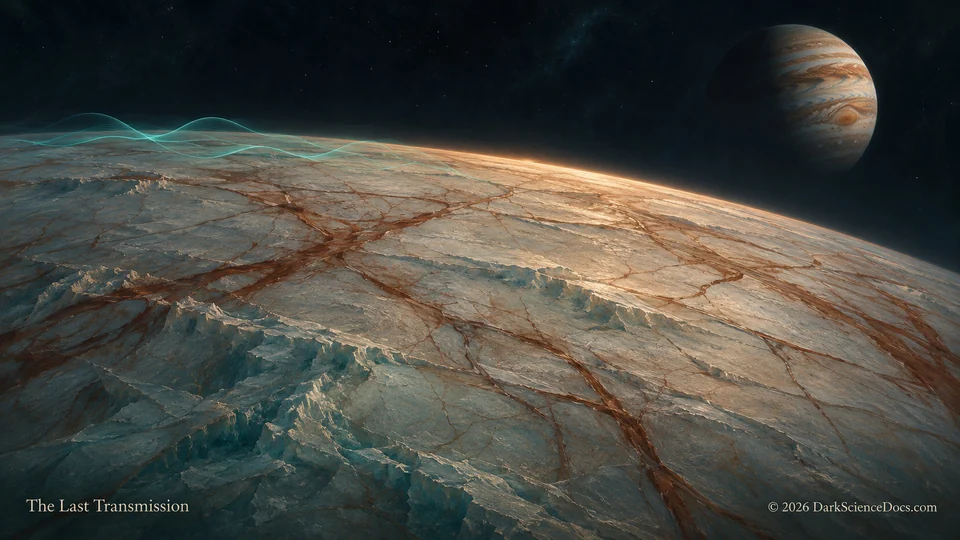
The signal began on Earth. The mystery is what Europa’s ice did to it before it came back.
A moon with a hidden ocean invites an extraordinary question: what can reach the water below? The new article and documentary begin above that ocean, with a radar echo whose brightness carries information about the frozen material it encountered.
A signal with a known sender
“Ghost signal” is a name for an unusual radar return. Researchers transmitted radio waves toward Europa and studied the echo with the Goldstone and Green Bank facilities. The campaign spans 2011–2024. No unknown transmitter is required: the scientific puzzle concerns scattering within the ice.
Follow the echo into the ice
Small irregularities can scatter a wave many times before some energy returns toward Earth. Waves following reciprocal routes can reinforce one another close to the backward direction. This coherent-backscatter explanation connects the echo’s strength and polarization with a relatively transparent medium containing scatterers.
The enticing word is “porous.” Here it concerns the material involved in radar scattering. It does not establish an open passage through the entire shell, or tell us that nutrients are reaching the ocean.
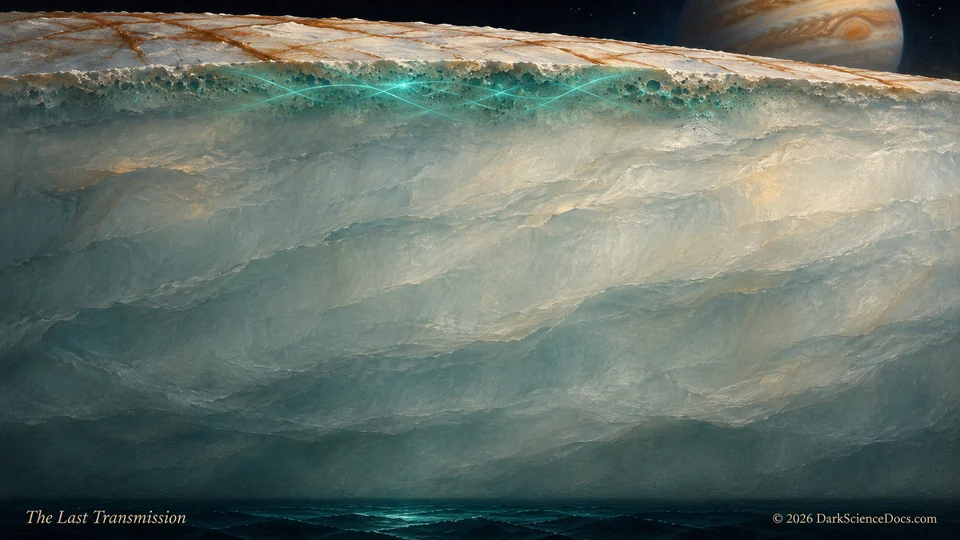
Three depths, three different questions
The Earth-based study places a model-dependent upper bound of about 105 feet (32 meters) on the mean penetration depth associated with radar waves with a wavelength of about 1.4 inches (3.5 centimeters). That number describes this radar-scattering interpretation. It is neither the thickness of Europa’s shell nor the depth of its ocean.
Juno’s microwave analysis addresses a different scale. In the region it observed, a pure-water-ice model gives about 18 miles (29 kilometers) of cold ice through which heat is conducted. Composition and a possible warmer layer affect what that means for the complete shell. Europa Clipper’s longer-wavelength radar will ask further questions with different capabilities and limitations.
Habitability needs a route between ingredients
Water alone does not answer the life question. Surface chemistry, usable energy, rock-water reactions and transport could shape whether Europa offers habitable settings. An ocean inferred from magnetic evidence and an ice structure inferred from radar each supply part of that investigation.
The existing Europa ocean file follows the magnetic clue. This radar file follows a separate measurement, so neither line of evidence has to carry a claim it cannot support.
Compare the magnetic evidence for an oceanThe next questions travel with Europa Clipper
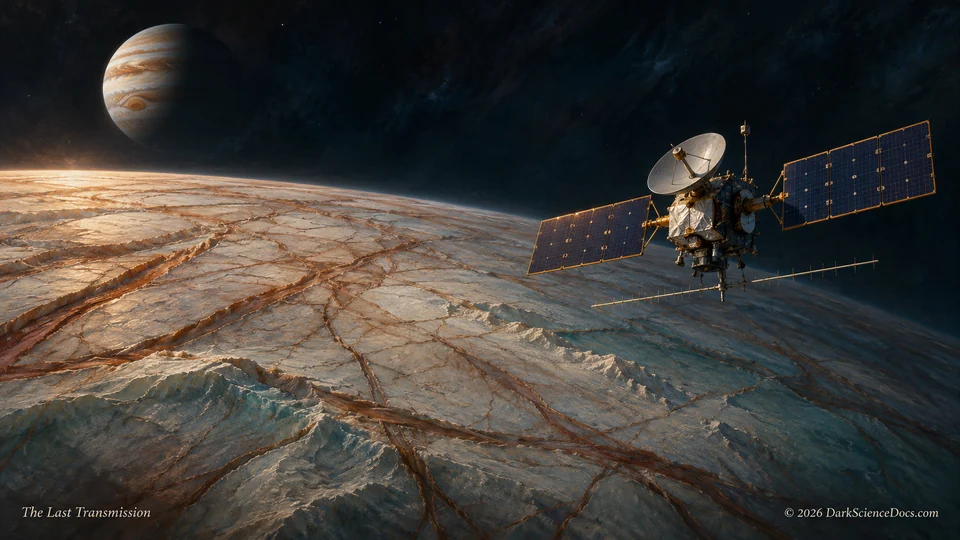
The mission’s Earth gravity assist is planned for December 2026, with arrival at Jupiter in April 2030. Repeated Europa flybys will follow. REASON will investigate the icy shell; its reach depends on the material the radio waves encounter. Favorable sounding conditions are not a promise that every flyby will find an ocean boundary.
Watch the film with one question in mind: which claim comes from the returning signal, and which still needs a new instrument or a future mission?
Check the research
- Xie et al. (2026): Radar Observations of Europa in 2011–2024
- NRAO: Europa radar campaign and coherent backscatter
- NASA: Europa facts and ocean evidence
- NASA: Juno’s regional ice-shell measurement and model assumptions
- Nature Astronomy: Juno microwave analysis of Europa’s ice shell
- NASA: the REASON radar instrument
- NASA: Europa Clipper mission timeline
- NASA/JPL: REASON’s Mars rehearsal
- NASA: the ingredients for habitability