
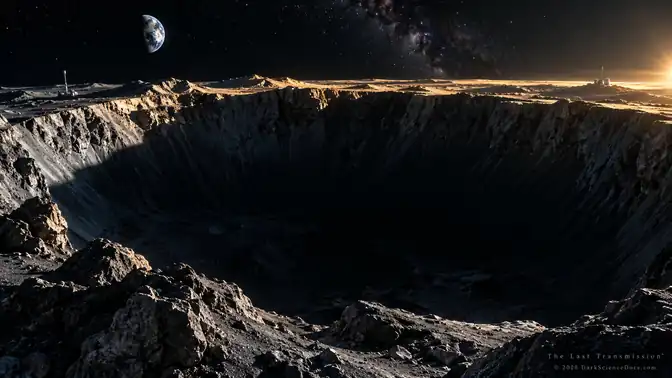
07 / Lunar south pole / evidence and access
The Moon’s Valuable Shadows
Sunlit ridges and deeply shadowed crater floors make the lunar south pole scientifically valuable and operationally difficult. Evidence for ice is a starting point, rather than a proven inventory of usable fuel.
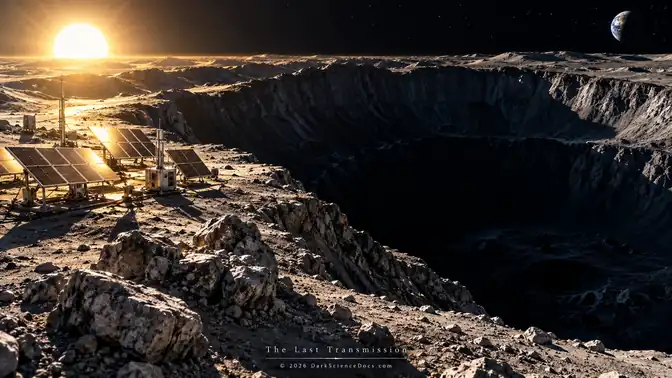
The article connects the Moon’s polar environment with the challenge of exploring and using it. Terrain affects sunlight, temperature, communications and access. Those constraints can make particular places attractive to multiple missions, while measurements of hydrogen and surface ice still leave questions about abundance, depth and recoverability.
The full investigation continues with the evidence, illustrations, and sources at The Last Transmission on Substack.
Continue reading on SubstackTHE EVIDENCE / THE OPEN QUESTION
What we know.
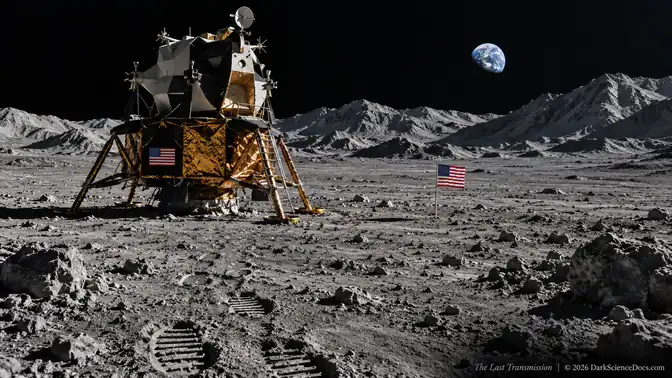
Lunar observations support the presence of water ice in cold polar environments. Orbital maps and images reveal temperature and terrain, while neutron measurements provide indirect evidence related to hydrogen. A detailed local resource estimate requires measurements at the scale and depth relevant to surface operations.
What remains open.
Neither a cold shadow nor a hydrogen signal proves that a particular landing site contains readily extractable ice. Missions must establish local composition, concentration and engineering feasibility. Proposed installations and competing interests do not themselves demonstrate ownership of lunar ground.
Why it matters.
Separate a scientific detection from an economically usable deposit and from a claim of territorial control. That distinction keeps the question useful even as mission schedules and exploration plans change.
GO DEEPER / EVIDENCE FILE
Does evidence of lunar polar ice establish a usable resource?
Sunlit ridges and deeply shadowed crater floors make the lunar south pole scientifically valuable and operationally difficult. Evidence for ice is a starting point, rather than a proven inventory of usable fuel.
COMPARE THE QUESTIONS
Follow what the light reveals.
These related routes explain different phenomena. They do not establish a common cause for the optical pulses.
FOLLOW THE EVIDENCE
Research behind the field note.
VISUAL EVIDENCE
Inside the investigation.
FOLLOW THE THREAD
Related signals.
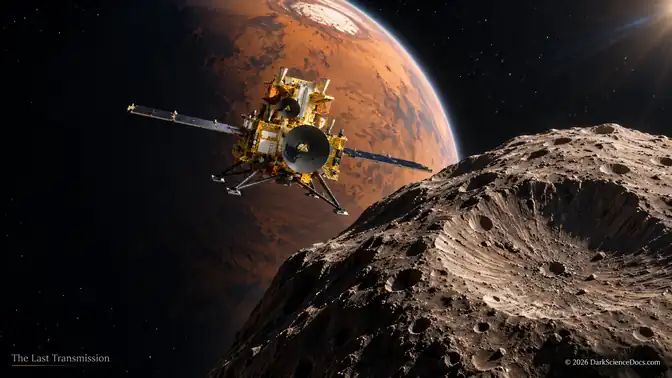
Phobos: The Moon That May Preserve Mars’s Past
MMX will investigate how Phobos formed and whether its dust contains fragments ejected from Mars. Follow the mission, the sample-return plan, and the limits of the evidence.

The People Who Cared for Laika Knew She Would Never Come Home
Before her one-way flight, a doctor brought her home to play with his children. That small kindness leaves us with a harder question about what it means to care.
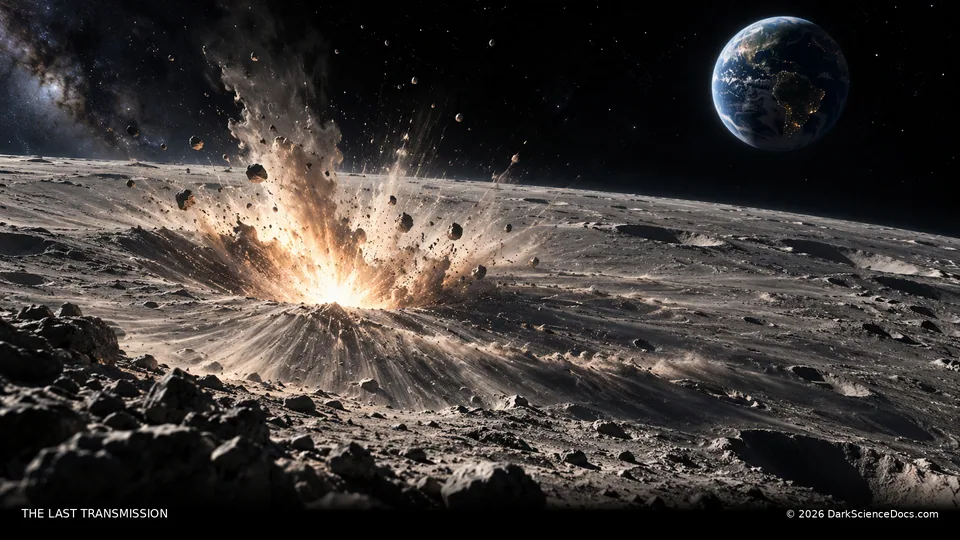
The Moon Was Hit. The Damage Reached 140 Kilometers.
In the spring of 2024, something struck the Moon hard enough to leave an impact crater. When scientists finally discovered the impact, they found that its effects reached astonishing distances.