
46 / The exposed traveler
The Spores That Came Back from Open Space
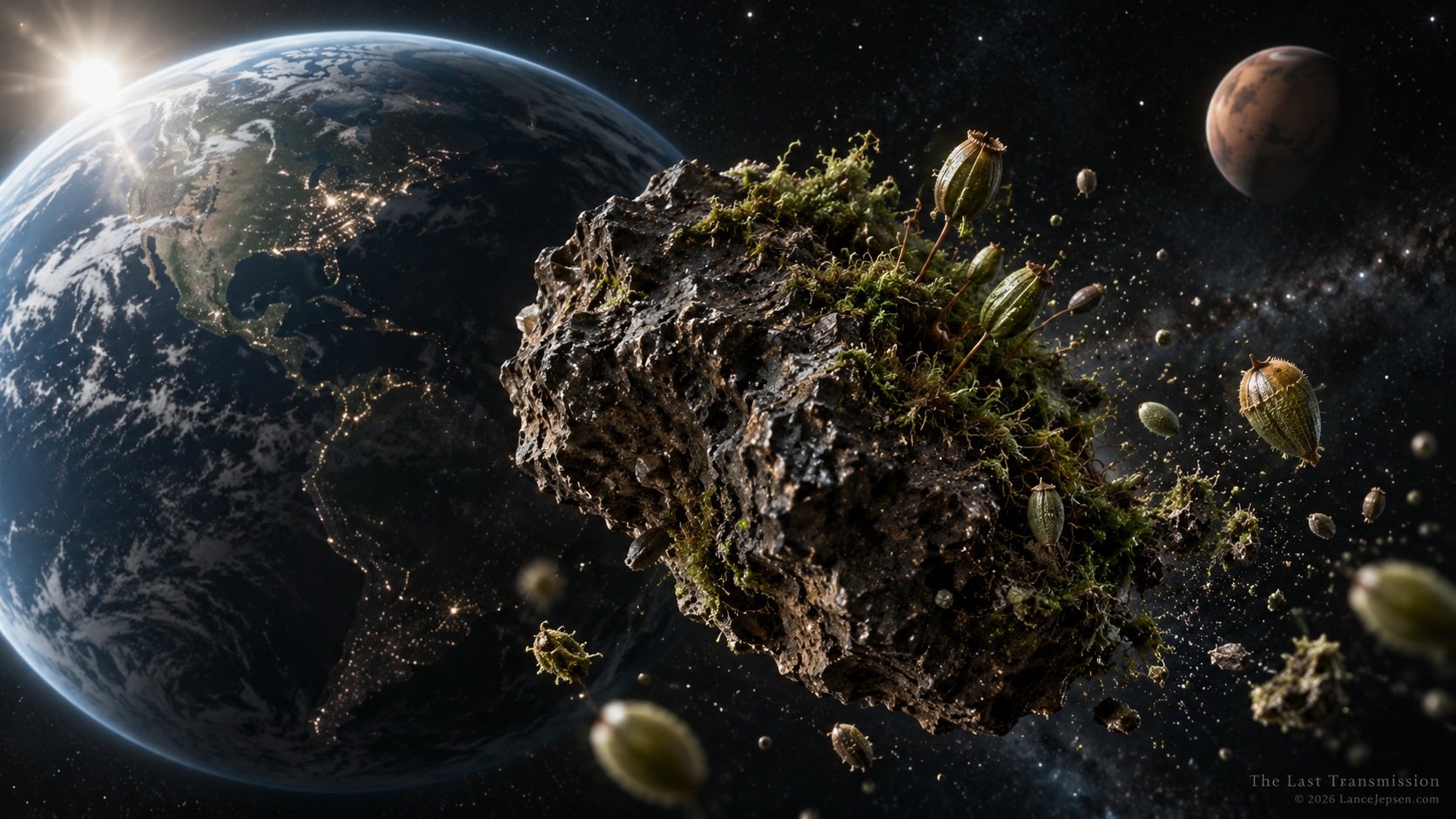
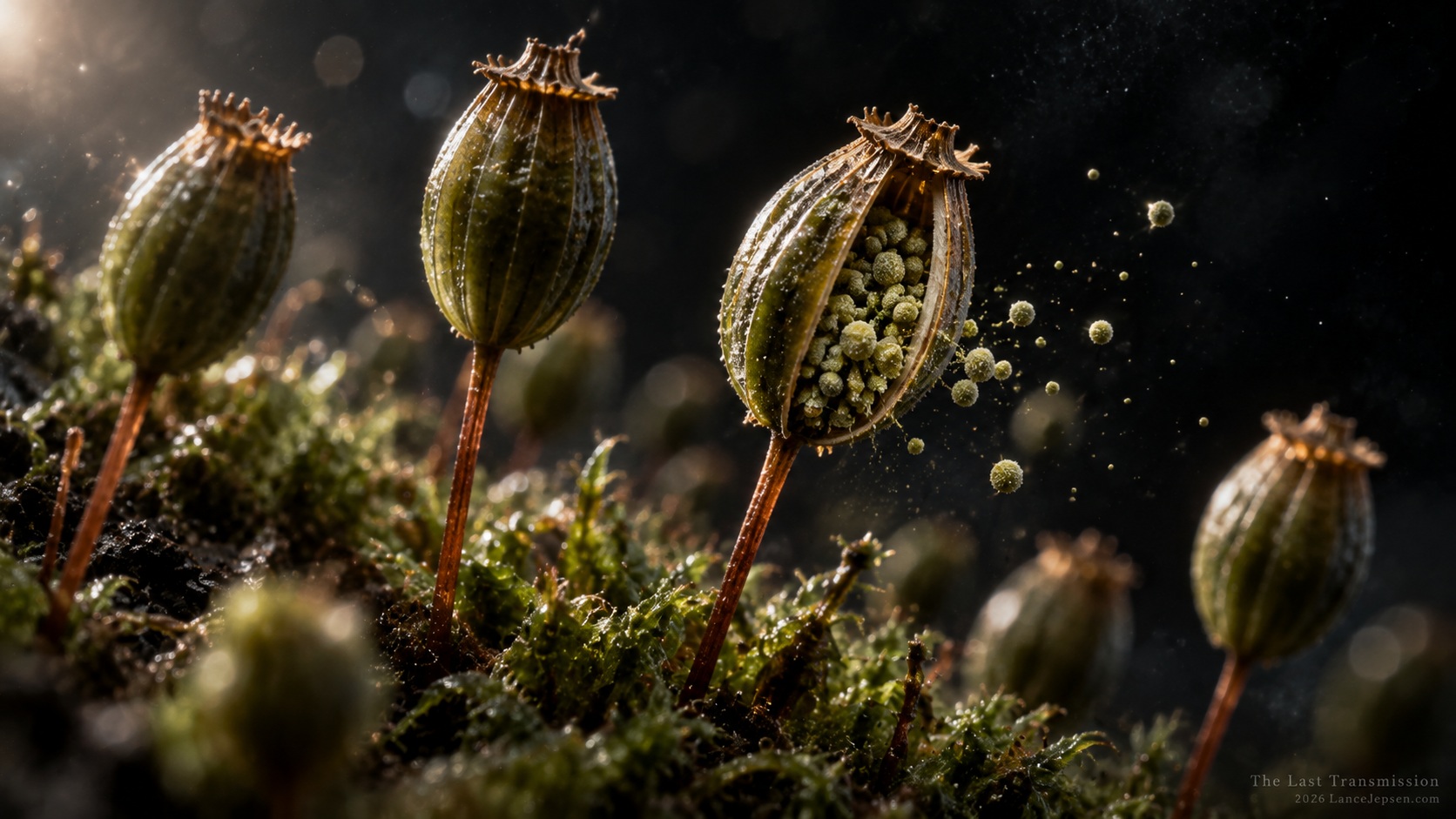
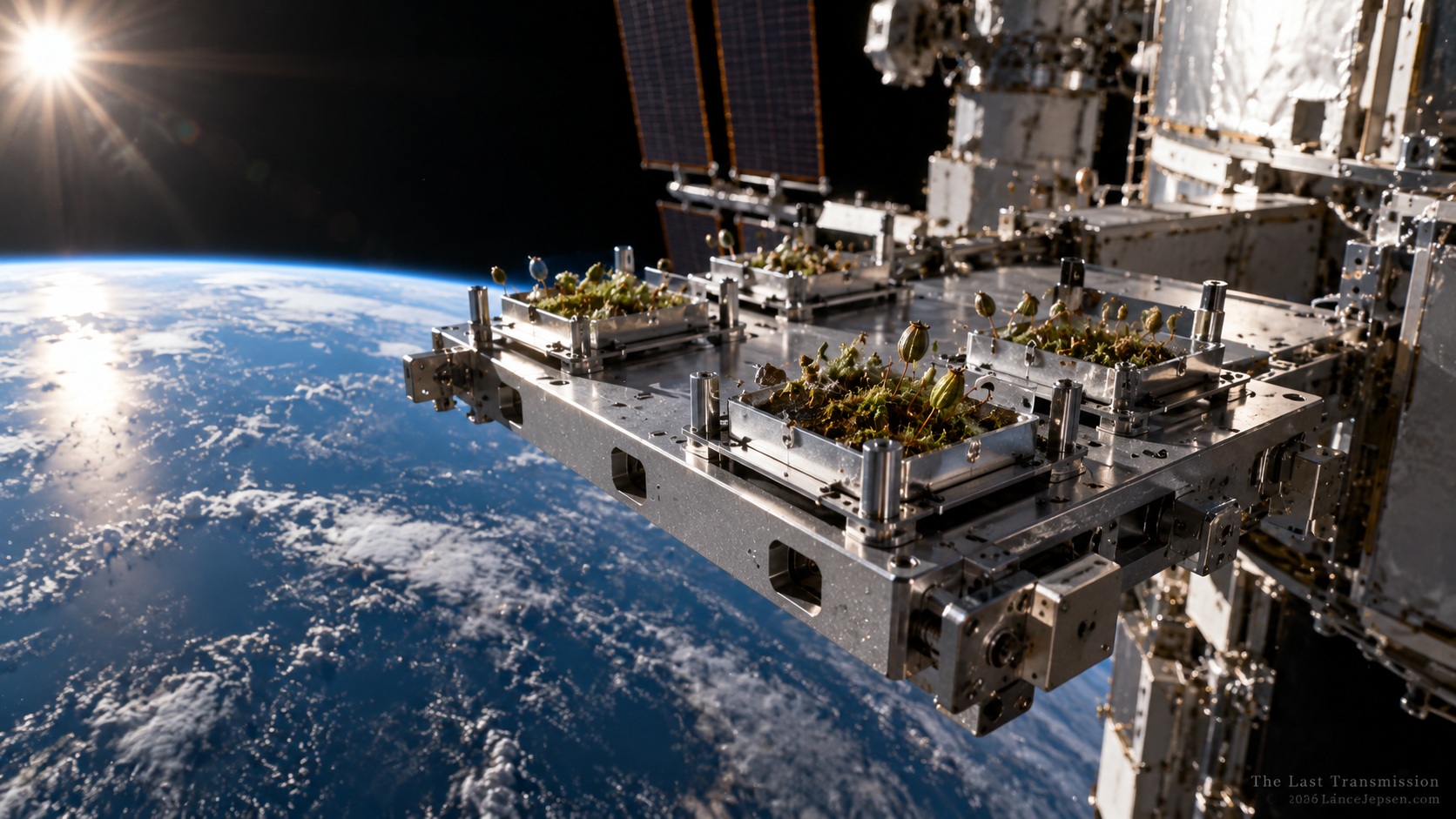
Moss spores spent 283 days outside the space station and many still germinated. Survival is one link in a possible journey between worlds; launch, transit, landing, and growth remain separate tests.
The experiment placed Physcomitrium patens spores in an exposed orbital environment, recovered them, and tested whether they could germinate. The result is striking because a dormant structure endured conditions that would ruin much ordinary plant tissue. But the hardware did the launching and returning. No spore had to survive ejection from a planet, a long unshielded interplanetary passage, atmospheric entry, or the chemistry of a world. A real panspermia claim needs evidence across that entire chain, not a leap from one successful exposure test to a seeded planet.
The full investigation continues with the evidence, illustrations, and sources at The Last Transmission on Substack.
Continue reading on SubstackTHE EVIDENCE / THE OPEN QUESTION
What we know.
The researchers report 283 days of exposure and substantial postflight germination of the recovered spores. Laboratory comparisons tested how different moss tissues tolerated stress. Germination demonstrates biological viability under the tested conditions, while leaving the journey's other stages unmeasured.
What remains open.
An orbital platform is not a free-floating rock in transit to Mars, and the exposure time cannot establish survival over millions of years. The protective sporangium may help, but how well that protection translates to impact ejection and entry is untested here.
Why it matters.
The useful question becomes narrower and more testable: which parts of a planetary transfer are survivable for which organisms? The result opens a research path while preserving the difference between a possible mechanism and evidence that life actually traveled it.
FOLLOW THE EVIDENCE
Research behind the field note.
WATCH THE RELATED DOCUMENTARY
The story in motion.
VISUAL EVIDENCE
Inside the investigation.
FOLLOW THE THREAD
Related signals.
The Planets That Could Be Better Than Earth Have One Terrifying Problem
Scientists have identified distant worlds that may offer life conditions more favorable than our own. Some could have warmer oceans, longer-lived suns, and billions of extra years for evolution.
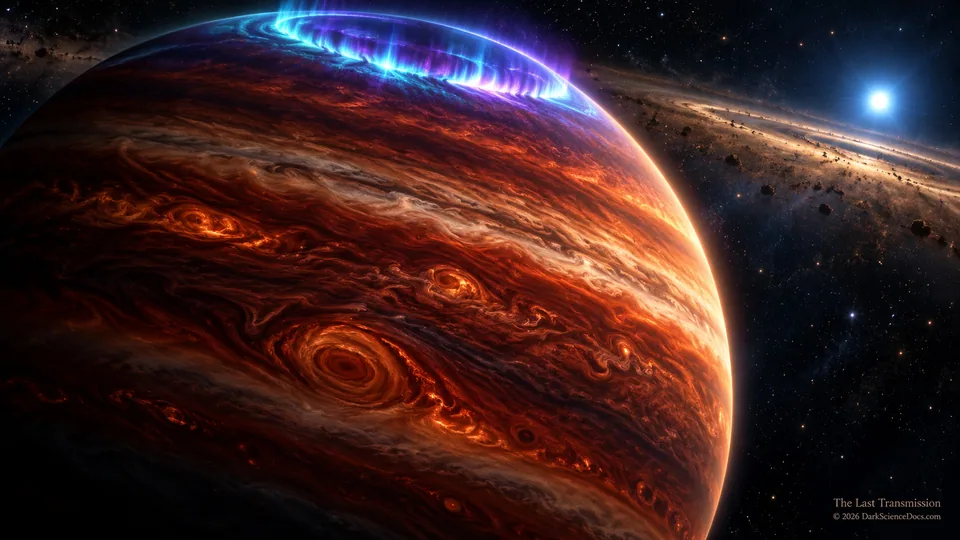
A Planet 64 Light-Years Away Is Firing Radio Bursts Into Space
A study traces the signal to a young giant planet and infers a magnetic field of at least 1,250 gauss where the bursts originate. The discovery could open a way to investigate worlds.

The Blows That Nearly Killed Earth May Have Helped Bring It to Life
A model identifies a window for life’s chemistry 4.33 billion years ago. The unsettling question is whether Earth was the only world to take advantage of it.