
17 / Origins / catastrophe and opportunity
After the Impact, Could Chemistry Find Continuity?
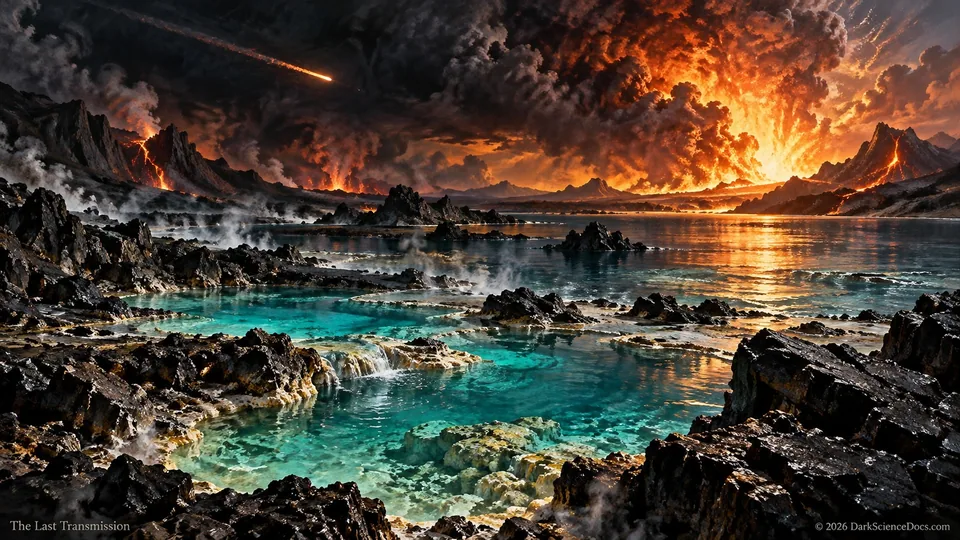
Large impacts can destroy favorable conditions and later create heated, water-bearing environments. Models of early Earth ask whether some chemical refuges could persist through that history, without locating the actual birthplace of life.
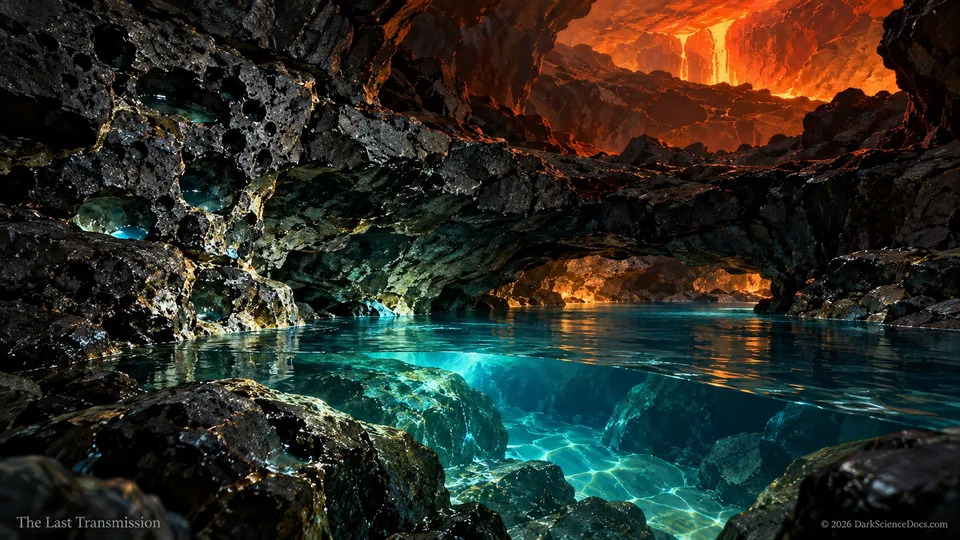
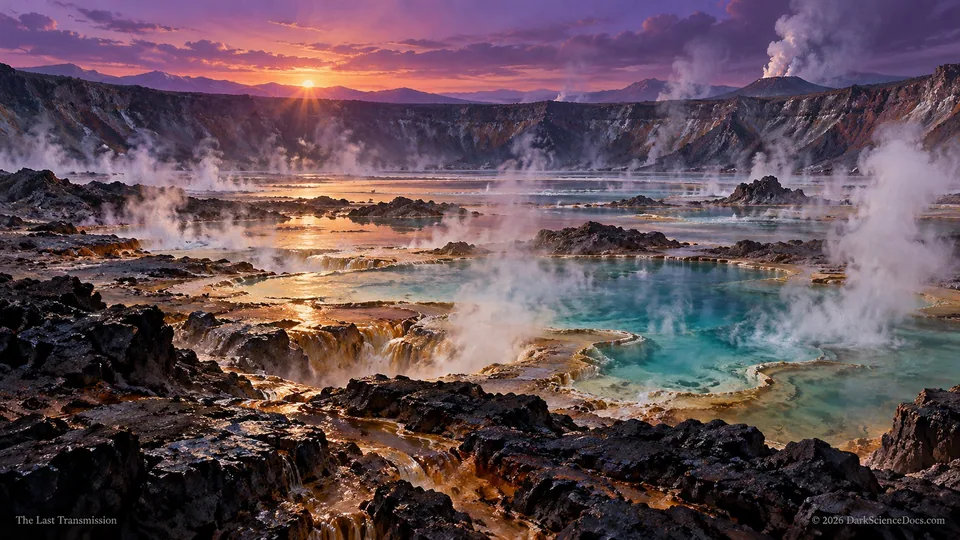
An origin-of-life scenario needs more than an energy source. Molecules must form, survive, encounter useful partners and participate in reactions that can persist. An impact can interrupt that continuity at the surface while residual heat drives water through fractured rock afterward. Global thermal calculations therefore examine which regions exceed specified thresholds and which remain potentially favorable. Much younger impact structures, including Chicxulub, demonstrate the geological possibility of long-lived hydrothermal circulation. They do not place the origin of life in their own craters or reproduce every condition on Hadean Earth.
The full investigation continues with the evidence, illustrations, and sources at The Last Transmission on Substack.
Continue reading on SubstackTHE EVIDENCE / THE OPEN QUESTION
What we know.
The cited Hadean modeling identifies possible windows for biomolecule stability and hydrothermal opportunity during late accretion. A proposed RNA-world interval near 4.33 billion years ago is derived from that modeled history. Laboratory advances in RNA chemistry and geological evidence for hydrothermal systems address separate links in a much longer chain.
What remains open.
A modeled region that remains below a temperature threshold does not prove organisms existed there. Successful copying reactions in controlled experiments do not demonstrate an autonomous first life or establish the path Earth followed. The abundance of impacts, their environmental consequences and the chemistry of natural settings all influence which proposed refuges were actually usable.
Why it matters.
The strongest future experiments will connect realistic environmental cycles with chemistry that remains functional across them. That approach can test whether catastrophe creates opportunity without treating opportunity as proof of an origin. Mars and other ancient environments offer additional records to examine, with their biological histories still unresolved.
WATCH THE DOCUMENTARY
Did Life Begin Twice on Earth? The Discovery Transforming Astrobiology
Two deep branches of life invite a difficult question about common ancestry and the machinery cells use to copy information.
FOLLOW THE EVIDENCE
Research behind the field note.
EXPLORE IN 3D / ATLAS H-01
Enter an illustrative ocean environment
Explore a vertical Earth-ocean teaching model. It is not a reconstruction of a verified origin-of-life site.
Explore Ocean Descent in 3DVISUAL EVIDENCE
Inside the investigation.
FOLLOW THE THREAD
Related signals.
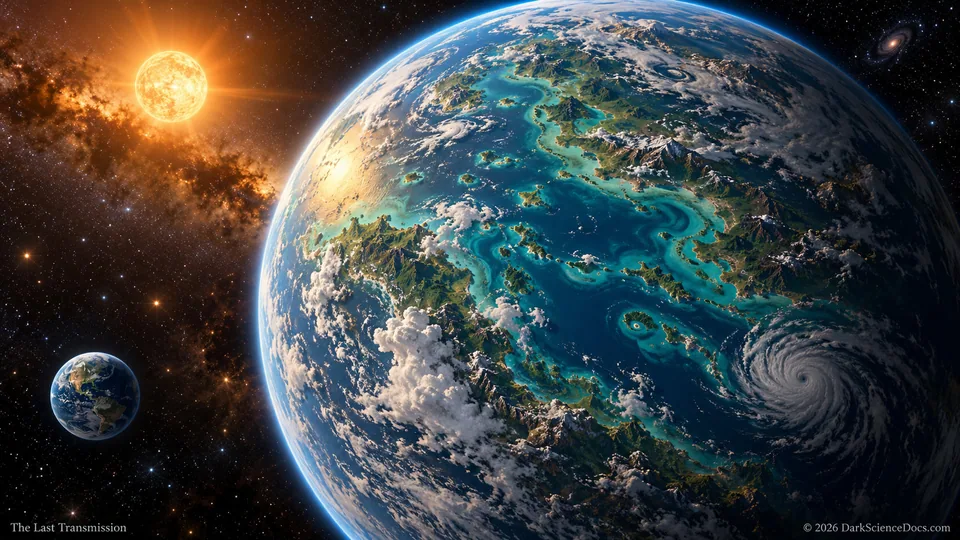
The Planets That Could Be Better Than Earth Have One Terrifying Problem
Scientists have identified distant worlds that may offer life conditions more favorable than our own. Some could have warmer oceans, longer-lived suns, and billions of extra years for evolution.
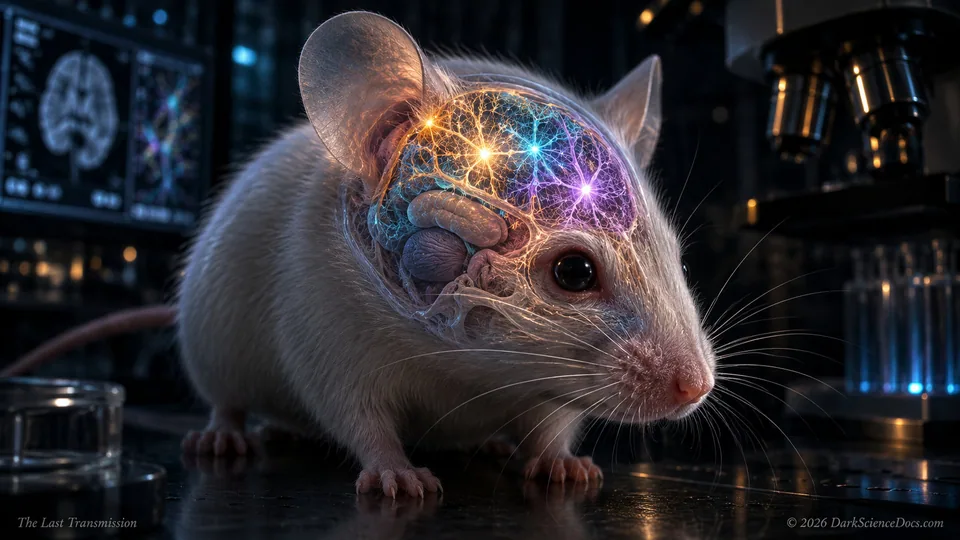
They Grew a Human Cortex Inside a Mouse. Then They Tested Its Memory.
Scientists created mice whose cortical tissue was almost entirely derived from human cells. The tissue grew, formed connections, generated electrical activity, and revealed something extraordinary.
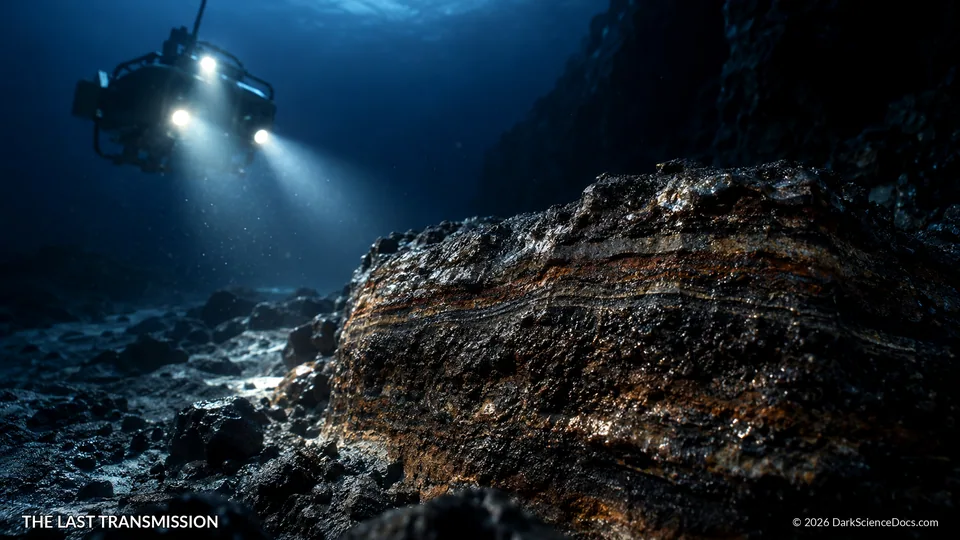
They Found Plutonium at the Bottom of the Pacific. The Explosion That Made It May Be Over 95 Million Years Old.
Deep beneath the ocean, scientists discovered radioactive debris from beyond Earth. The most disturbing clue was an element they could not find.