

34 / A repeated tempo
Why So Many Signals Keep the Same Pace
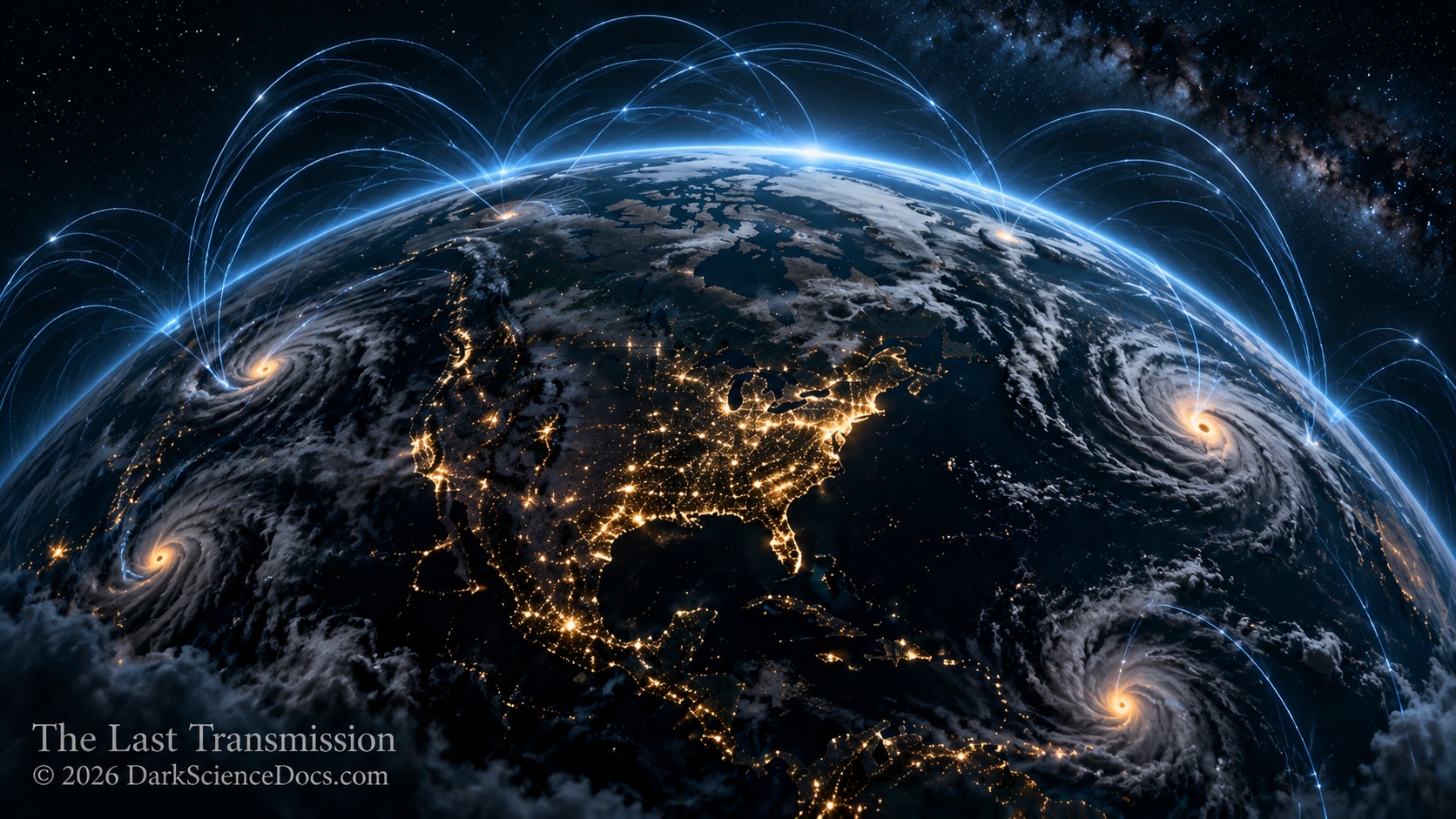
Communicating animals use wildly different sounds, flashes, and gestures, yet a comparative study finds recurring slow rhythmic ranges. A shared pace is a clue to test, not a universal language.
A flash from a firefly and a call from a whale have almost nothing in common as physical signals. Timing provides another way to compare them. When researchers bring many communication patterns onto the same temporal scale, concentrations can emerge across lineages and senses. One possible explanation concerns the time nervous systems need to integrate information and prepare a response. That possibility is richer than simply saying every species has found the same beat: the sample, the measurement method, and the behavior being counted all shape the comparison.
The full investigation continues with the evidence, illustrations, and sources at The Last Transmission on Substack.
Continue reading on SubstackTHE EVIDENCE / THE OPEN QUESTION
What we know.
The comparative analysis assembles communication rates across diverse animals and reports recurring ranges. It documents a pattern in measured signaling behavior, while mechanisms in the brain and ecology remain questions for further study.
What remains open.
The pattern does not establish an extraterrestrial communication frequency, a hidden planetary signal, or a single cause shared by all species. An image of lights and animals pulsing together is an interpretive metaphor rather than a recorded synchronized event.
Why it matters.
A rhythm can be investigated across very different bodies without treating those bodies as identical. The next step is to ask what changes when perception, environment, and experimental definitions change.
FOLLOW THE EVIDENCE
Research behind the field note.
WATCH THE RELATED DOCUMENTARY
The story in motion.
VISUAL EVIDENCE
Inside the investigation.

FOLLOW THE THREAD
Related signals.

The Planets That Could Be Better Than Earth Have One Terrifying Problem
Scientists have identified distant worlds that may offer life conditions more favorable than our own. Some could have warmer oceans, longer-lived suns, and billions of extra years for evolution.
They Grew a Human Cortex Inside a Mouse. Then They Tested Its Memory.
Scientists created mice whose cortical tissue was almost entirely derived from human cells. The tissue grew, formed connections, generated electrical activity, and revealed something extraordinary.
They Found Plutonium at the Bottom of the Pacific. The Explosion That Made It May Be Over 95 Million Years Old.
Deep beneath the ocean, scientists discovered radioactive debris from beyond Earth. The most disturbing clue was an element they could not find.