DOCUMENTARIES / THE LAST TRANSMISSION
Tabby’s Star: The Complete Story of the Alien Megastructure Mystery
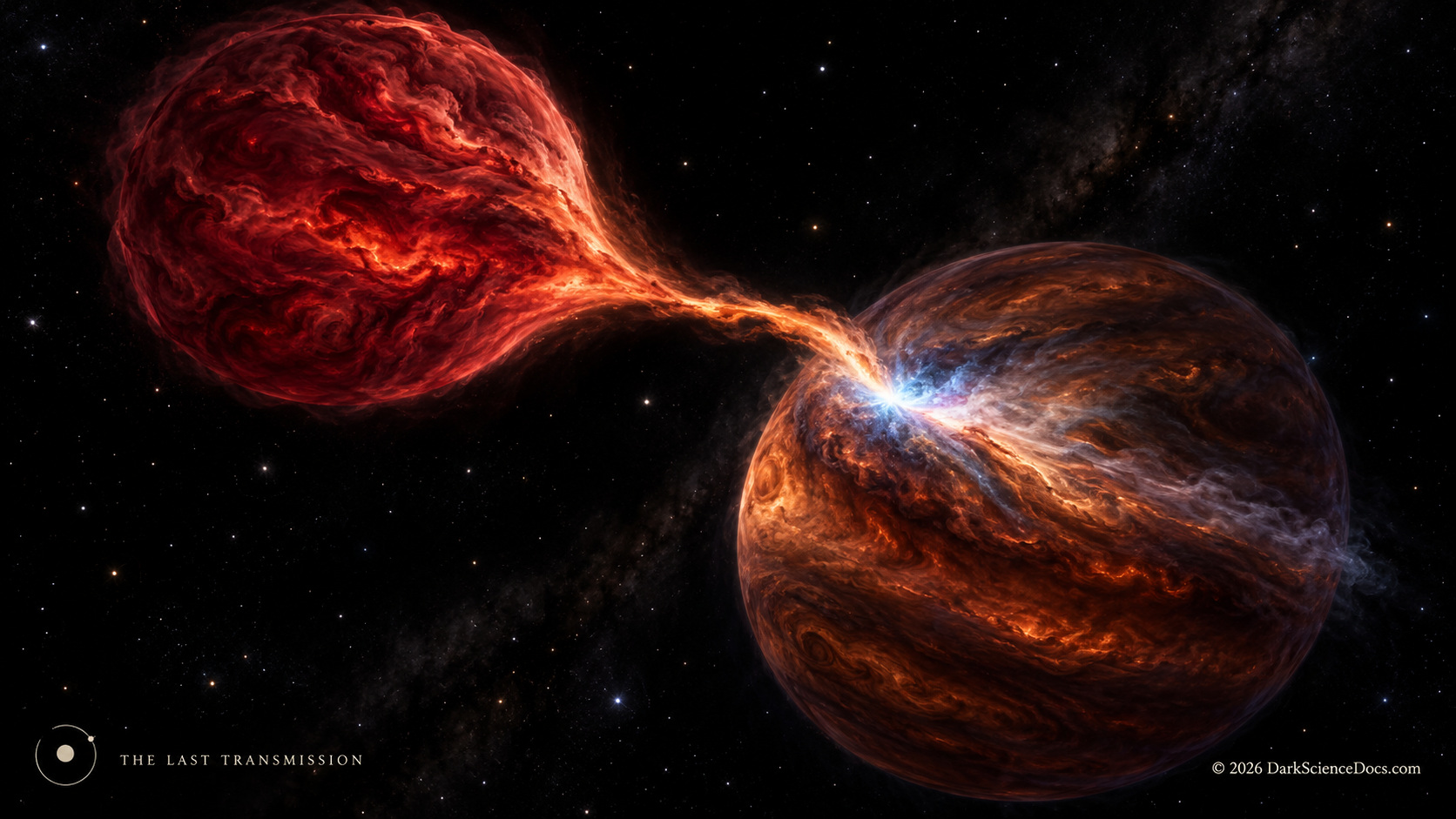
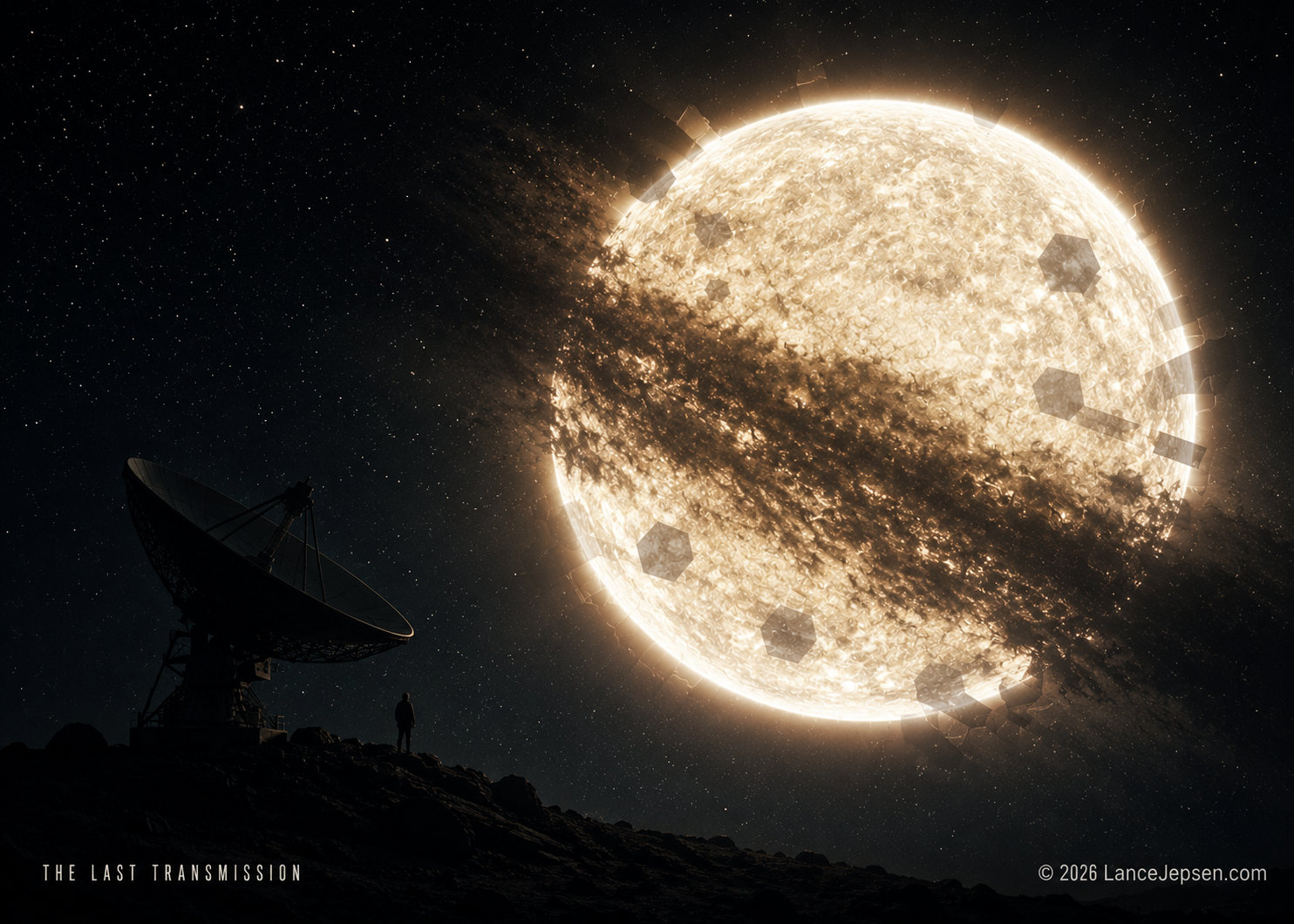
Kepler saw a star dim in irregular ways. The mystery drew thousands of observers, a provocative engineering hypothesis, and more measurements of the light itself.
If the player is unavailable, watch directly on YouTube ↗
THE QUESTION BEHIND THE FILM
What does the color of missing starlight tell us about what passed in front of a star?
ORIGINAL VIEWING GUIDE
Look closer.
An anomaly worth a second look
Citizen observers flagged unusual dips in the Kepler light curve of KIC 8462852. The irregular shape prompted follow-up work because a simple planet crossing the star did not explain the pattern.
The light favors dust
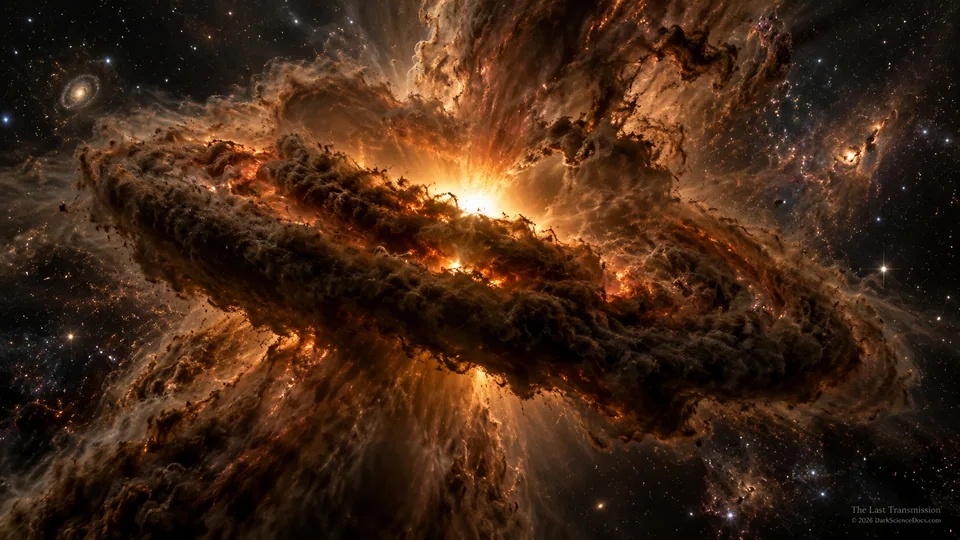
Different wavelengths were dimmed by different amounts. That color dependence fits small particles better than an opaque megastructure. It narrows the explanation without specifying the exact distribution or origin of the dust.
Stay with the unresolved part
The famous alien-engineering idea was a possibility people discussed, not an observed structure. The enduring story is how astronomers tested an extraordinary suggestion by gathering better light curves.
THE EVIDENCE TRAIL / RESEARCH COMPANION
What the record says.
Tabby's Star became famous because its light did not behave like a routine planetary transit. The most useful clue arrived when observers asked not only how much light disappeared, but which colors faded most.
CHOOSE A CLUE / FOLLOW THE RECORD
These are research waypoints, not video timestamps. Explore them in any order, then return to the film.
The Kepler light curve raised the question
Observed or documented
Kepler recorded irregular, unusually deep dimming from KIC 8462852. Its timing and shape were not the neat, repeatable pattern expected from a single ordinary planet passing across its star.
What it suggests
The mismatch justified follow-up observations and competing physical explanations. An unexplained light curve is an invitation to test models; it is not a direct image of whatever blocked the light.
Where the claim stops
The initial measurement alone cannot identify a dust cloud, comet fragments, an intrinsic stellar change, or a constructed object. Each proposal predicts additional observations that can be checked.
Different colors changed by different amounts
Observed or documented
During later dips, ground-based observers measured more dimming in blue light than in red light. The published follow-up describes several dips of about one to a few percent and wavelength-dependent extinction.
What it suggests
Small particles can scatter or absorb different wavelengths differently. Optically thin dust is therefore a better match for those observed dips than a simple, fully opaque object blocking the same fraction of every color.
Where the claim stops
A color signature favors a class of explanations; it does not reveal a unique dust source or prove that every episode in the star's record has the same cause.
The dust itself may be complicated
Observed or documented
Additional multi-band photometry found that color dependence can vary between dimming events. Measurements across filters give researchers more than a single brightness number to fit.
What it suggests
A changing mixture, grain size, geometry, or location of material may be needed to explain the data. That is why 'dust' is a useful direction for research but is less specific than an identified physical source and orbit.
Where the claim stops
Follow-up data narrow the search without reconstructing a complete three-dimensional map around the star. Different processes could contribute to short dips and longer trends.
The extraordinary idea faced a test
Observed or documented
An alien megastructure was discussed as a speculative possibility, but no structure was observed. NASA's summary of follow-up work points to dust as a more plausible explanation for the measured color-dependent dimming.
What it suggests
The useful lesson is methodological: an unusual hypothesis should make predictions about incoming data. The color of missing light gave observers a practical way to compare an opaque blocker with small-particle material.
Where the claim stops
It is stronger to say that particular opaque-object models conflict with the color data than to say astronomers have solved every aspect of this star's variability.
What material distribution and history can account for both the brief dips and the longer changes in brightness?
FOLLOW THE EVIDENCE
Keep the question open.
Watch the documentary, check the research, and continue into the illustrated archive.
MORE DOCUMENTARIES
 Did Life Begin Twice on Earth? The Discovery Transforming Astrobiology
 The Fungal Mind: Can Intelligence Exist Without a Brain?
 The Fermi Paradox: Is Alien Information Hidden in Our DNA? | Bio-Archive Hypothesis