
41 / A life beneath sunlight
The Flower That Abandoned Sunlight
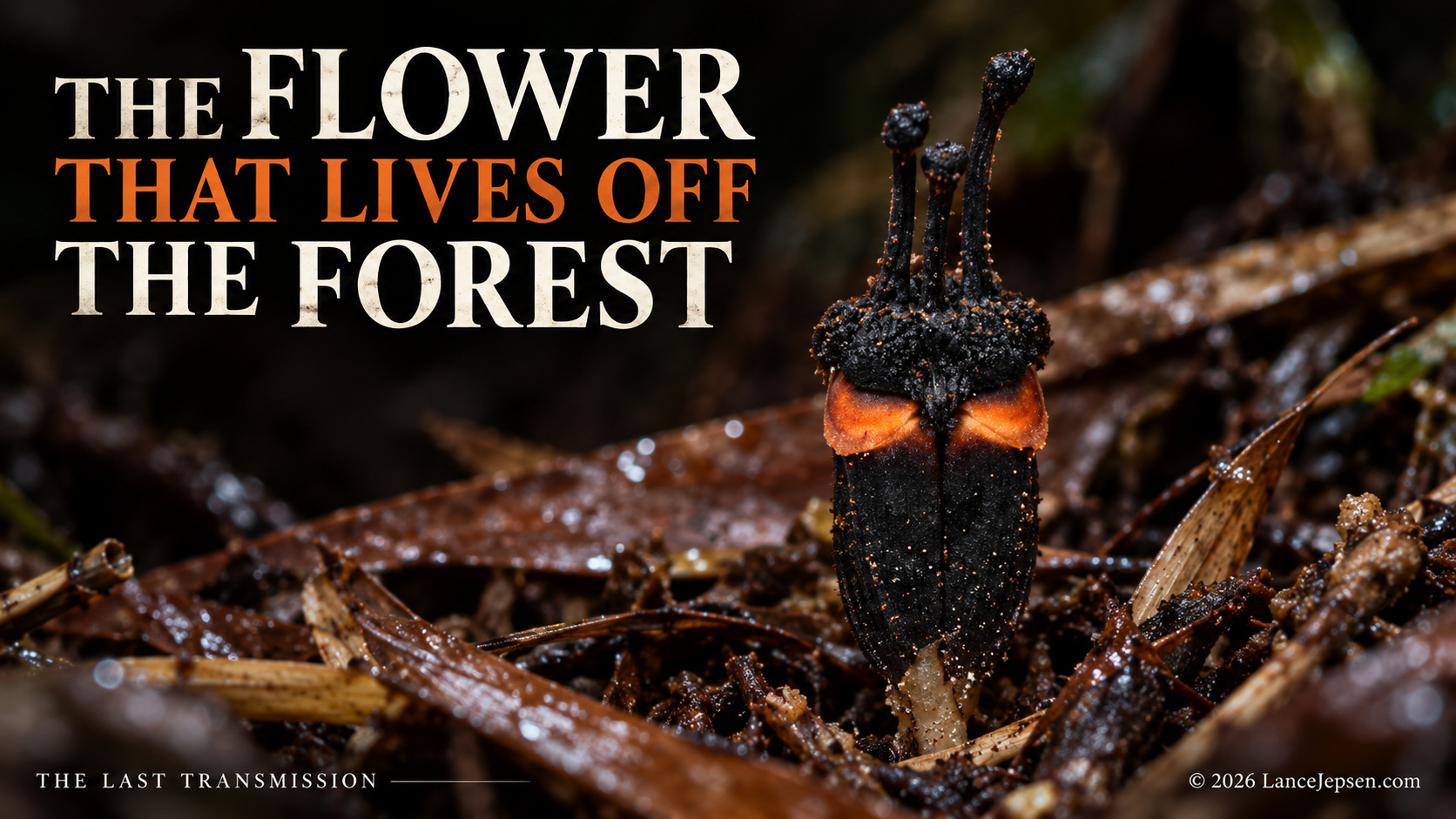
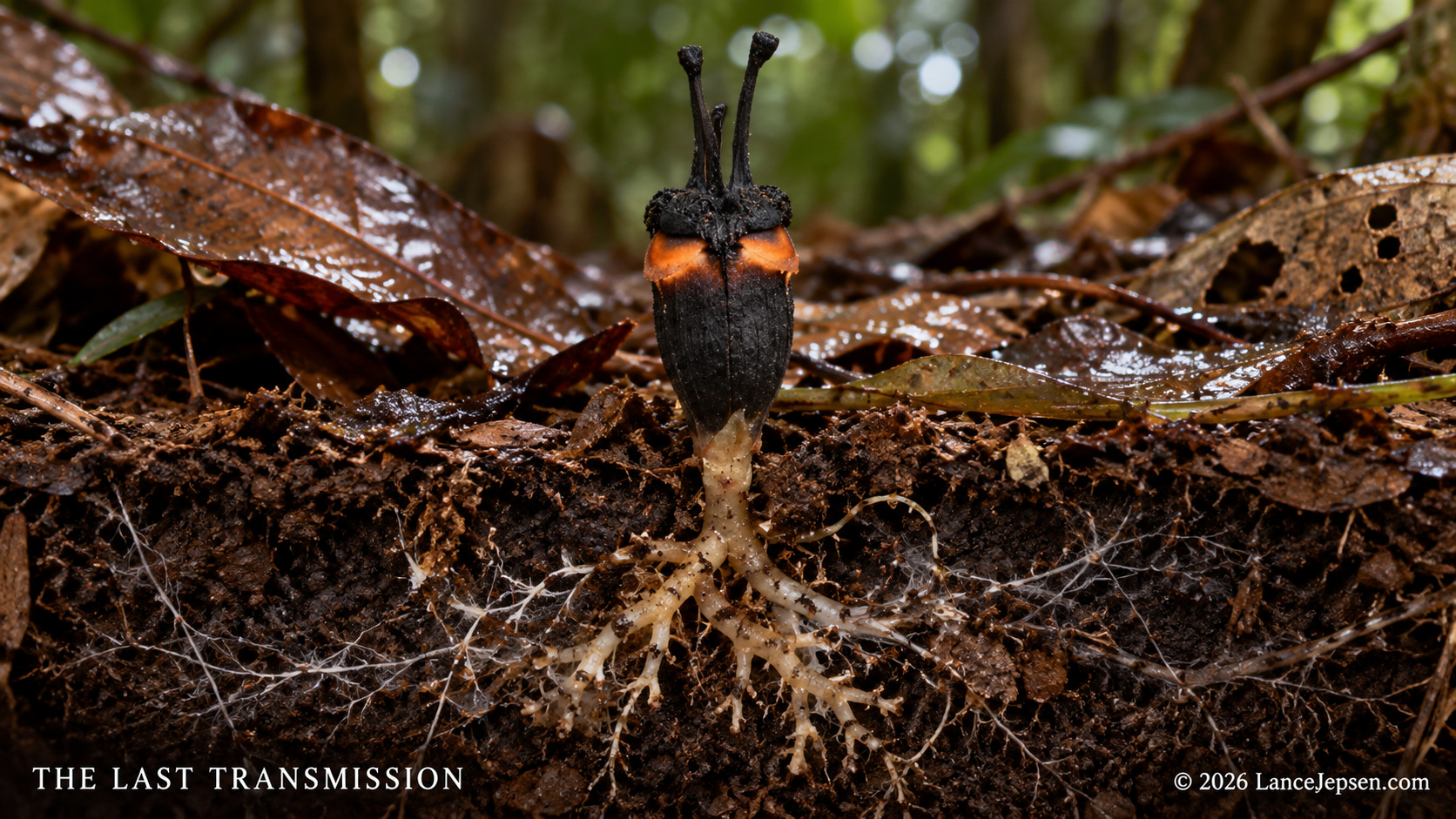
Thismia daemona briefly appears above the forest floor in Thailand. Without chlorophyll, its hidden life depends on an underground relationship with fungi.
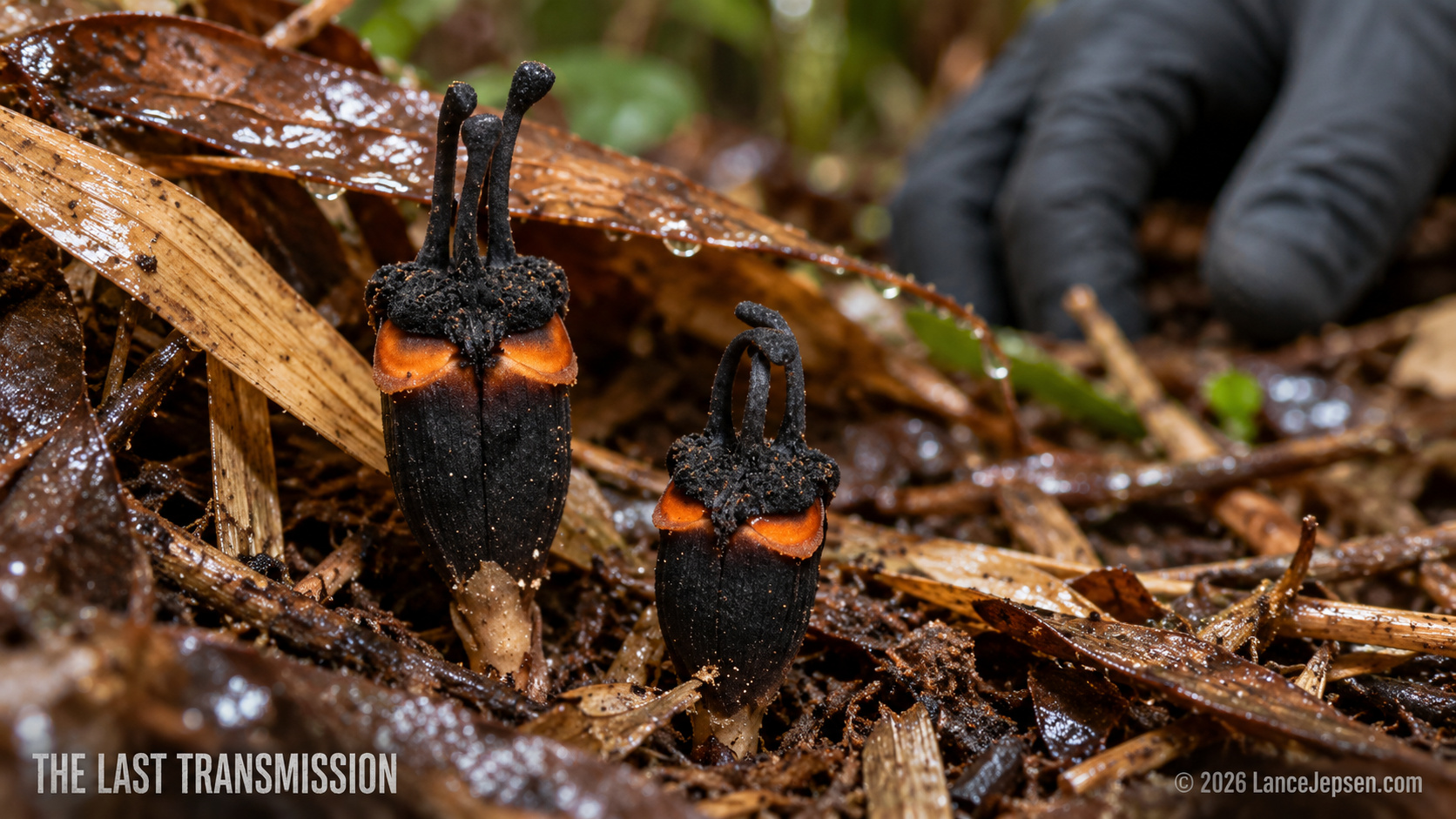
Most plants announce themselves with leaves. This one can spend nearly its whole life out of sight and then surface as a tiny, dark flower among fallen bamboo leaves. Botanists found it in a mountain forest in western Thailand in 2025 and formally described it in 2026. Its name refers to its strange, almost horned appearance, but the more surprising feature is its absence of green. It has abandoned the familiar bargain between leaves and sunlight while remaining a flowering plant.
The full investigation continues with the evidence, illustrations, and sources at The Last Transmission on Substack.
Continue reading on SubstackTHE EVIDENCE / THE OPEN QUESTION
What we know.
Thismia daemona lacks chlorophyll and cannot make its own sugars through photosynthesis. Members of its genus are mycoheterotrophs: they obtain carbon and other resources through fungal associations underground. Its reproductive structure is visible only briefly above the litter. The species description records its anatomy and the habitat where it was found, rather than a complete map of every connection beneath that ground.
What remains open.
The particular fungal partners of this species and the exact path of its carbon have not been fully established. It is tempting to picture a single coordinated forestwide network feeding the flower, but the evidence does not require that simplified story. A small plant can depend on fungi without every thread, tree, or transfer in its local ecosystem having been traced.
Why it matters.
The discovery changes the scale at which we pay attention. A plant without leaves can live almost entirely below the surface and still produce a flower intricate enough to identify as a species. Understanding that dependence may also matter for protecting habitats where a species can vanish from sight for most of the year.
FOLLOW THE EVIDENCE
Research behind the field note.
EXPLORE IN 3D / ATLAS I-05
Explore the photosynthesis this flower gave up
Step inside a representative chloroplast to see the light-capturing system most green plants use, then return to the separate fungal relationship that sustains Thismia.
Explore Chloroplast in 3DWATCH THE RELATED DOCUMENTARY
The story in motion.
VISUAL EVIDENCE
Inside the investigation.
FOLLOW THE THREAD
Related signals.
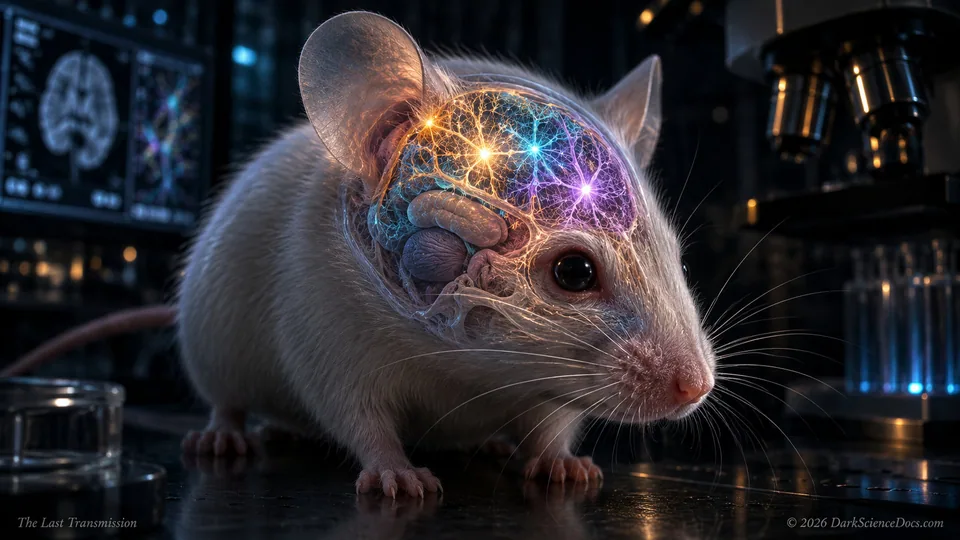
They Grew a Human Cortex Inside a Mouse. Then They Tested Its Memory.
Scientists created mice whose cortical tissue was almost entirely derived from human cells. The tissue grew, formed connections, generated electrical activity, and revealed something extraordinary.
They Found Plutonium at the Bottom of the Pacific. The Explosion That Made It May Be Over 95 Million Years Old.
Deep beneath the ocean, scientists discovered radioactive debris from beyond Earth. The most disturbing clue was an element they could not find.
The Blows That Nearly Killed Earth May Have Helped Bring It to Life
A model identifies a window for life’s chemistry 4.33 billion years ago. The unsettling question is whether Earth was the only world to take advantage of it.