
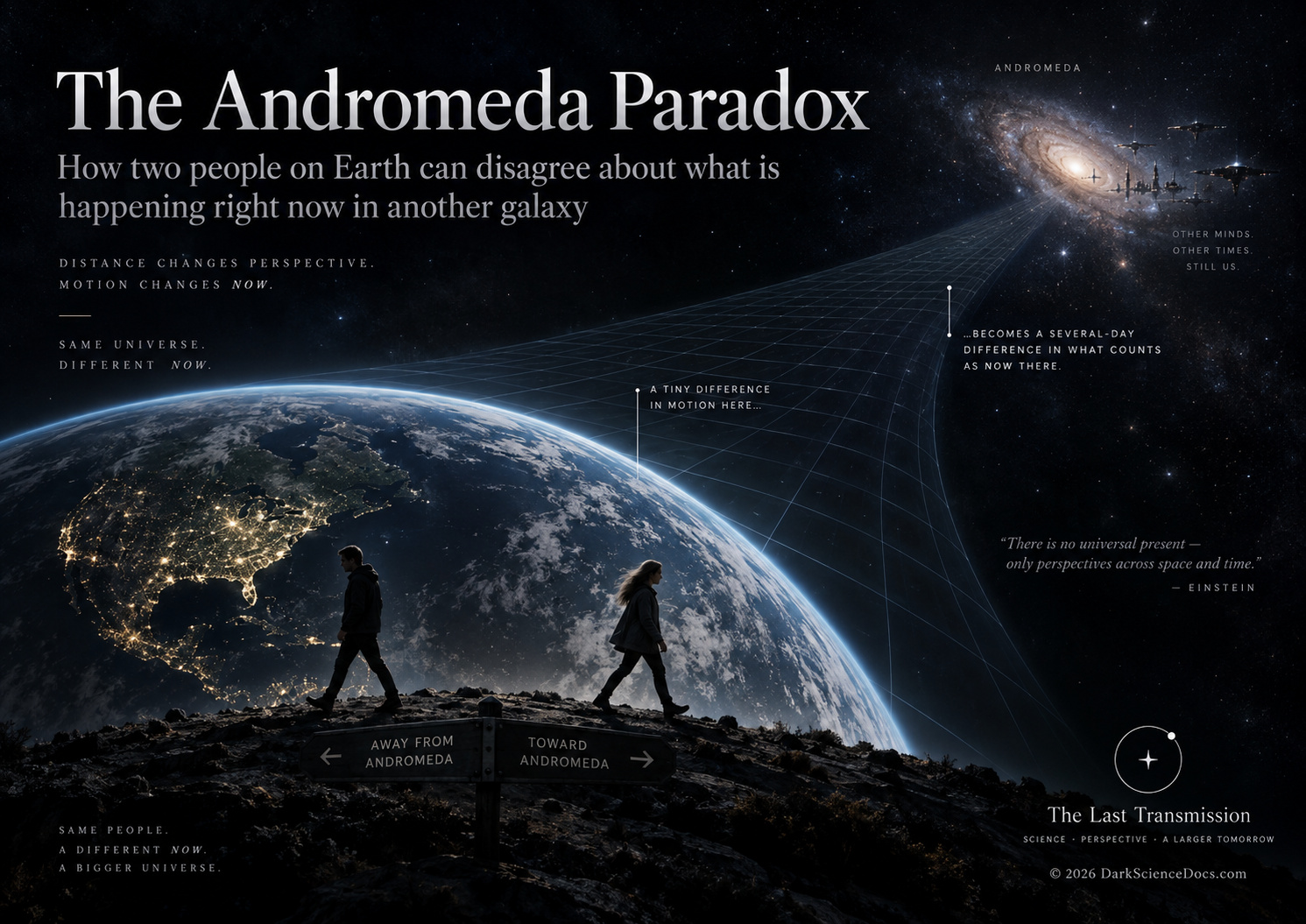
31 / The distant present
What Does 'Now' Mean in Andromeda?
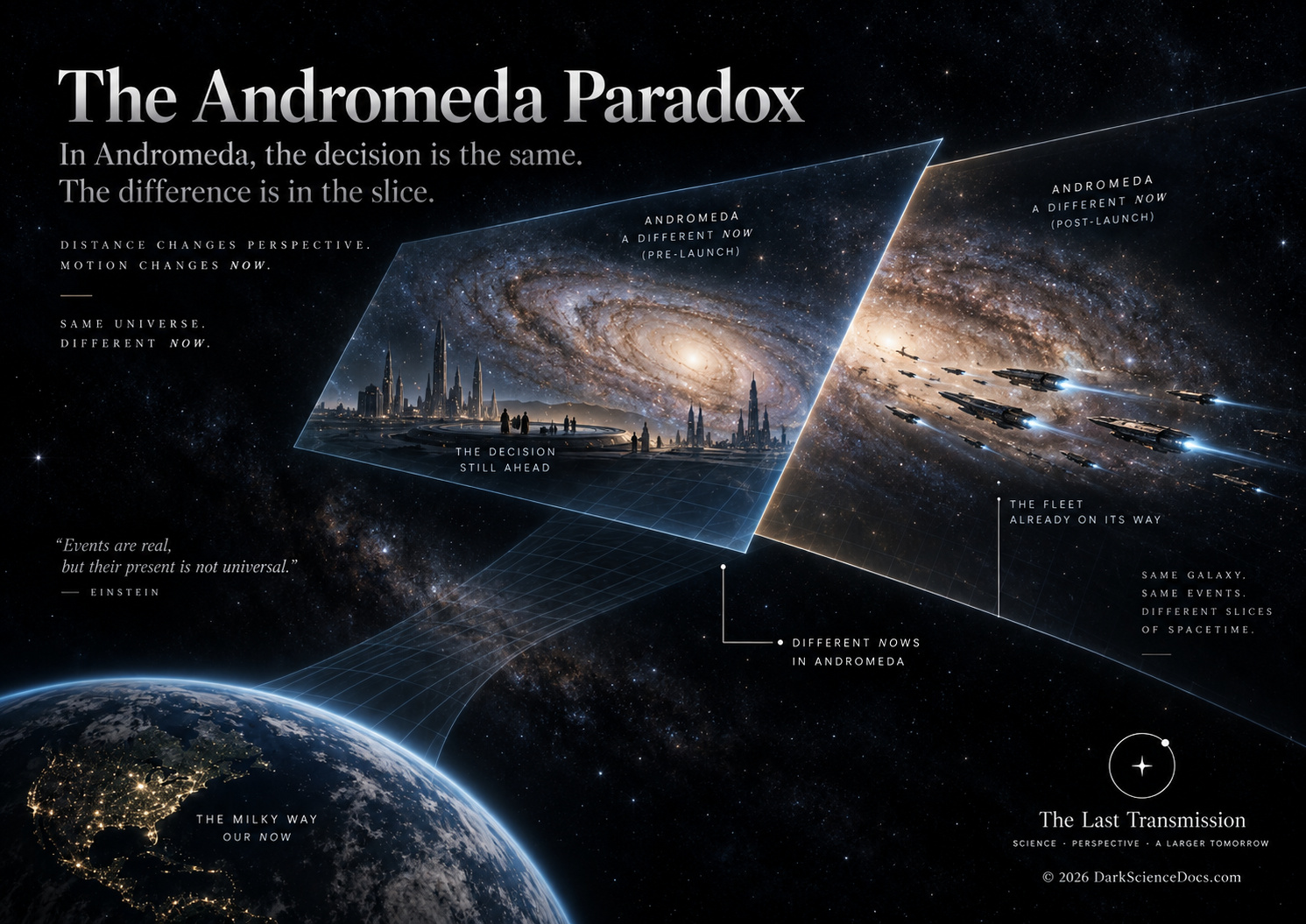
Two observers moving differently can assign different distant events to the same local moment. That disagreement concerns simultaneity, not a telescope suddenly showing two different images.
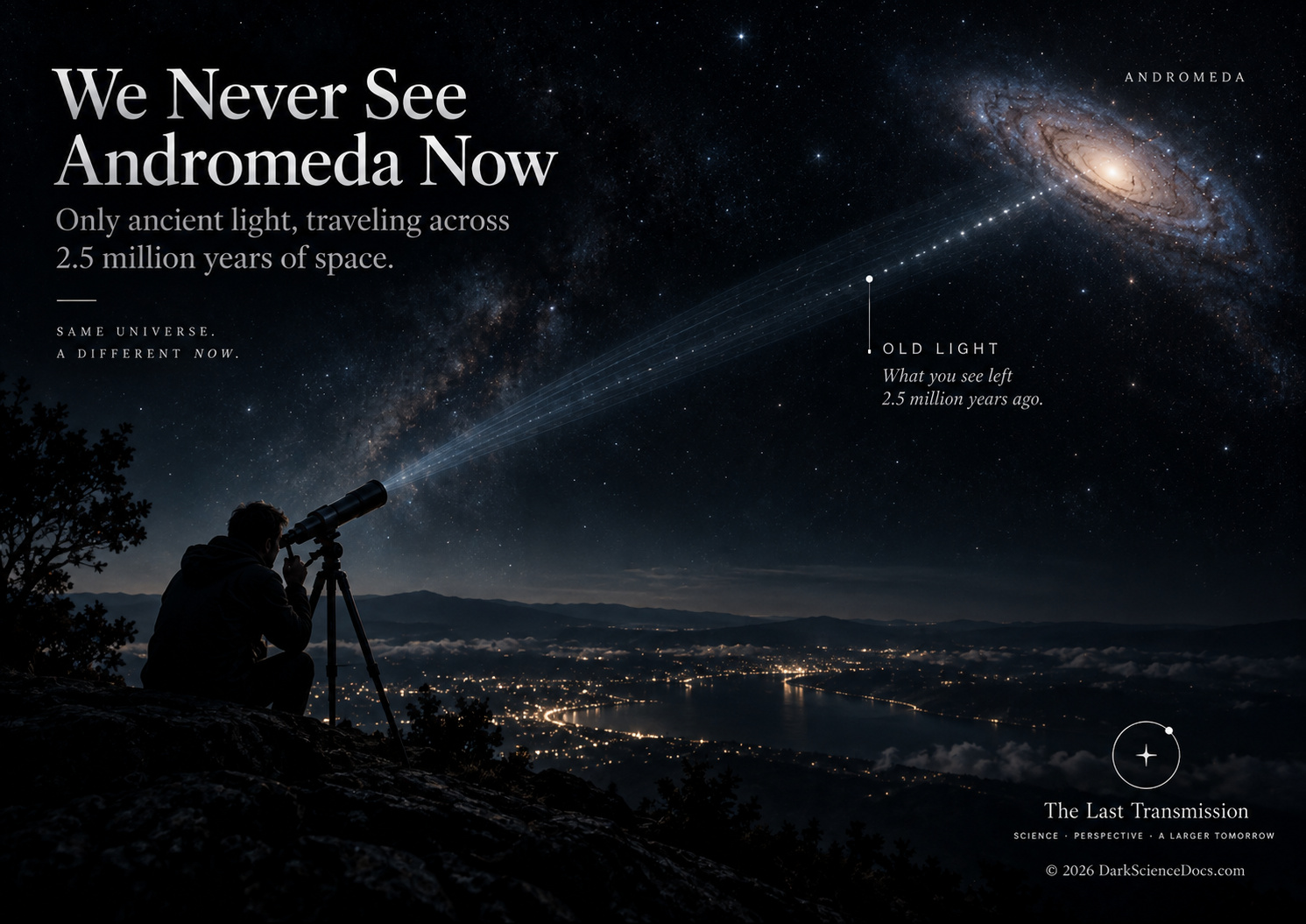
Imagine two people passing each other on Earth and asking which event in Andromeda is happening right now. Special relativity gives each moving observer a different slice through distant spacetime when they synchronize faraway clocks. Across millions of light-years, a small difference in motion can produce a surprisingly large difference in assigned time. Both people still receive old light from Andromeda. If they stand together and look at the galaxy, the paradox does not make one see a future collision that the other cannot see.
The full investigation continues with the evidence, illustrations, and sources at The Last Transmission on Substack.
Continue reading on SubstackTHE EVIDENCE / THE OPEN QUESTION
What we know.
The relativity of simultaneity follows from the rules for synchronizing distant clocks in different inertial frames. Andromeda's visible light has been traveling for roughly 2.5 million years before reaching Earth.
What remains open.
The thought experiment does not let either observer learn about a remote event faster than light. A distant 'now' depends on the chosen frame, while causal relationships and the light arriving at the shared local event remain consistent.
Why it matters.
The idea feels uncanny because ordinary language treats the present as a universal sheet. The physics asks us to distinguish an observation from an assigned coordinate in a model of spacetime.
FOLLOW THE EVIDENCE
Research behind the field note.
EXPLORE IN 3D / MAP 13
Find Andromeda beyond our galaxy
Move between the Milky Way and Andromeda, then return to the question of what a distant ‘now’ can mean.
Open Universe mapWATCH THE RELATED DOCUMENTARY
The story in motion.
VISUAL EVIDENCE
Inside the investigation.
FOLLOW THE THREAD
Related signals.
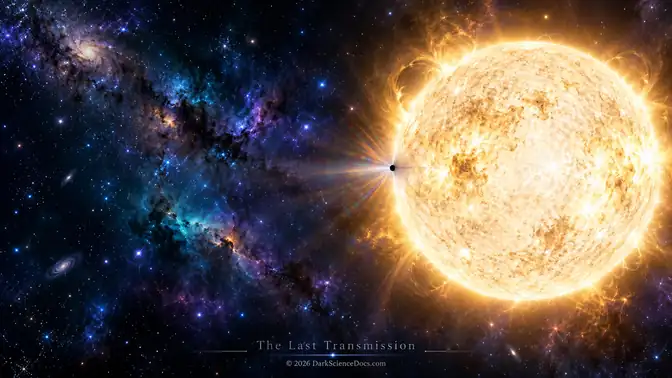
A Star Blinked Twice. Whatever Caused It May Be Much Closer to Earth.
Two nearly identical optical disturbances, 4.4 seconds apart, appeared in HD 89389’s light. Follow the unexplained record, a foreground diffraction hypothesis, and the synchronized telescopes proposed to test it.
What If the Universe Is Accelerating Because Stars Die?
For nearly three decades, scientists have struggled to identify the mysterious force accelerating the expansion of the universe. Now a radical theory suggests the answer.
A Star Died 6.5 Billion Years Ago. Its Explosion Is About to Arrive Again.
NASA is watching for a supernova we have already seen. When that light finally reaches Earth, it could help answer one of the most troubling questions in modern cosmology.