
53 / A beacon after silence
What Parker's Beacon Actually Told Earth
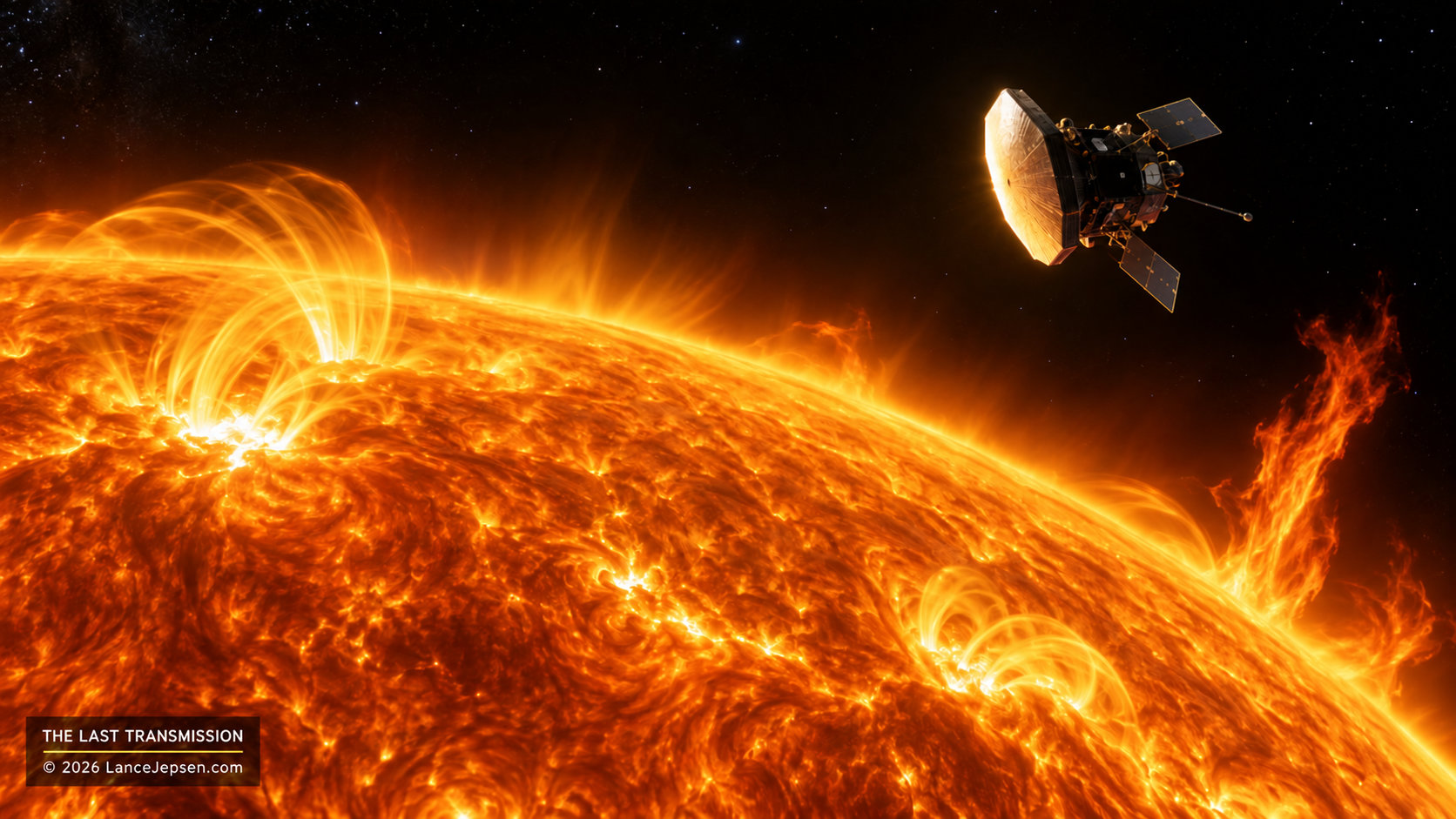
After Parker Solar Probe's closest solar encounter, a beacon confirmed the craft had survived. The detailed science required a later data return, and its namesake was no longer here to receive it.
At closest approach, mission operators could not hold an ordinary conversation with the probe. Its heat shield, trajectory, and planned communications windows shaped when Earth could hear from it. The post-encounter beacon was deliberately spare: an engineering statement that the spacecraft remained healthy after the pass. It was not a packet containing every answer about solar-wind acceleration. Eugene Parker had proposed the solar wind in 1958 and lived to see a mission carry his name, a copy of that paper, and more than a million names toward the Sun. The later signal closes one engineering loop while opening the next scientific analysis.
The full investigation continues with the evidence, illustrations, and sources at The Last Transmission on Substack.
Continue reading on SubstackTHE EVIDENCE / THE OPEN QUESTION
What we know.
NASA reported a beacon after the December 2024 close approach indicating normal spacecraft health. The probe carries a plaque and a memory card with Parker's 1958 paper and public names; its instruments sample particles and magnetic fields close to the Sun.
What remains open.
A beacon tone alone cannot establish every instrument's scientific result from that encounter. The exact mechanism of coronal heating and the acceleration of the solar wind require interpretation across many measurements and passes.
Why it matters.
A signal can be both small and consequential. The moment the craft answered Earth marked the survival of an experiment Parker had imagined long before a machine could perform it.
FOLLOW THE EVIDENCE
Research behind the field note.
EXPLORE IN 3D / MAP 03
Follow Parker toward the Sun
Explore the corona and Parker Solar Probe’s close passes, then return to what the beacon actually reported.
Open Sun mapFOLLOW THE THREAD
Related signals.
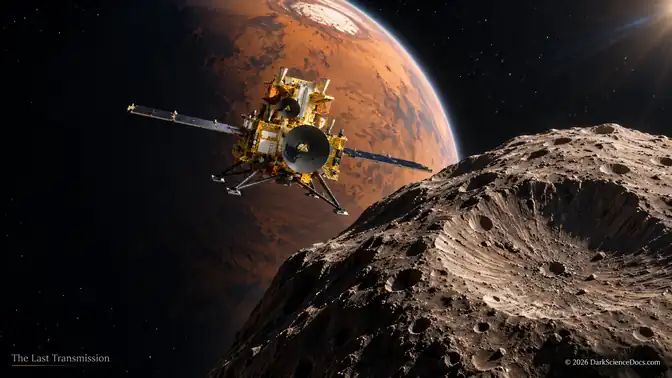
Phobos: The Moon That May Preserve Mars’s Past
MMX will investigate how Phobos formed and whether its dust contains fragments ejected from Mars. Follow the mission, the sample-return plan, and the limits of the evidence.

The People Who Cared for Laika Knew She Would Never Come Home
Before her one-way flight, a doctor brought her home to play with his children. That small kindness leaves us with a harder question about what it means to care.
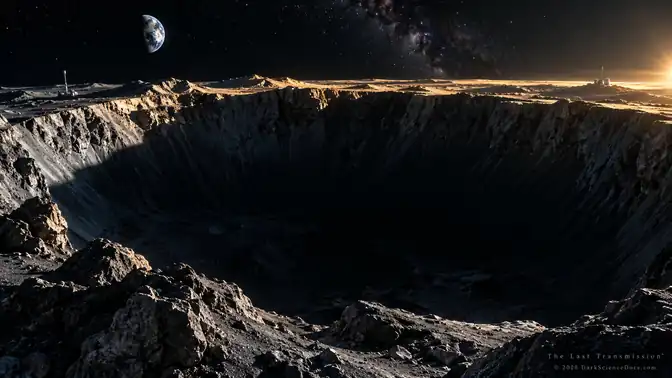
The Moon Has No Owner. Its Most Valuable Ground Is Already Being Contested.
Two space powers are racing toward a crater where the Sun has barely touched the ground for billions of years. What lies in the darkness could determine humanity's future on the Moon.