36 / An unidentified signature
The Same Mark on Two Frozen Worlds
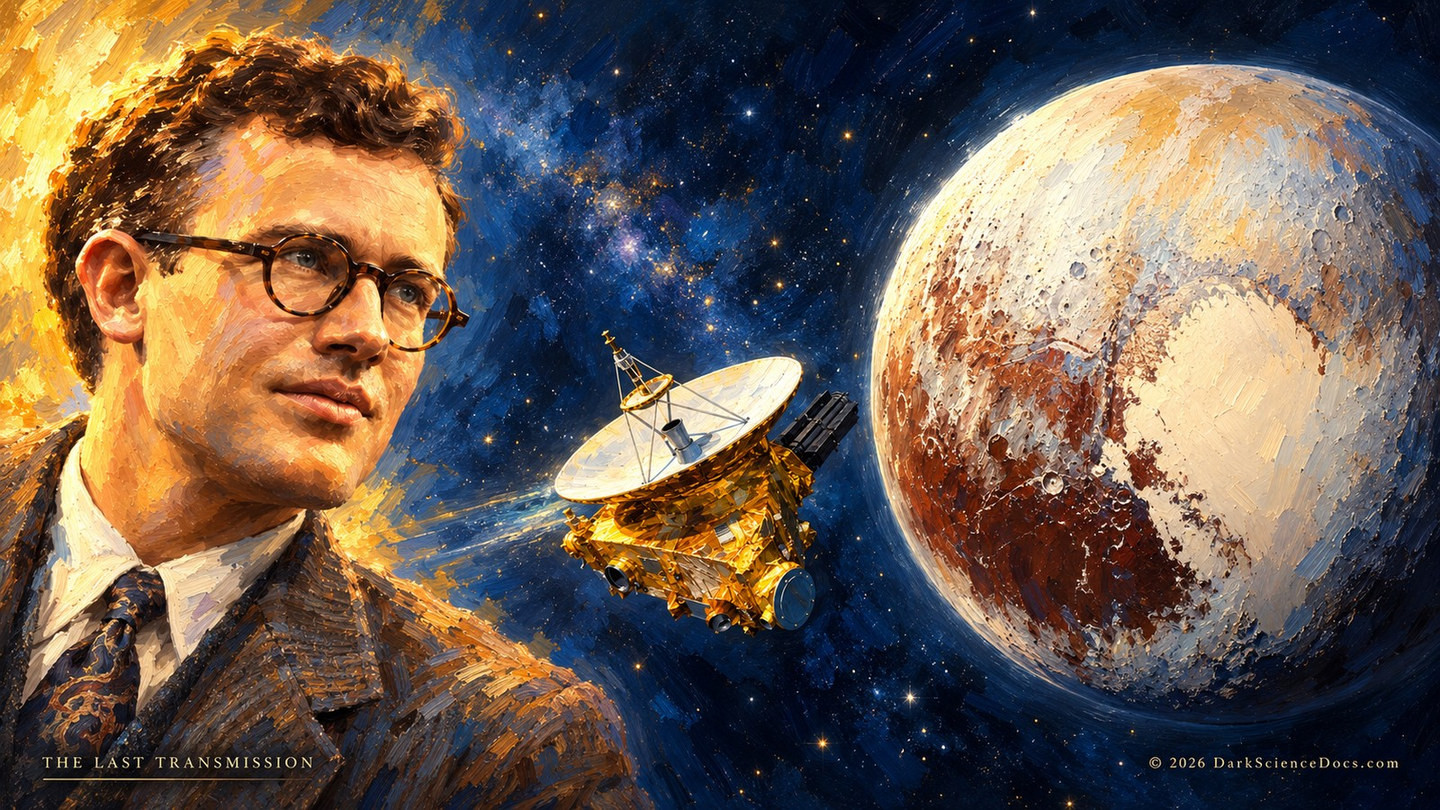
Webb found a narrow absorption feature near the same infrared wavelength in observations of Titan and Pluto. The instrument can measure the missing light. The chemistry behind it remains uncertain.
The discovery invites a powerful image: two worlds separated by billions of kilometers carrying an identical mark. But an absorption feature is not a message passed between them. It is light removed at a particular wavelength, and several chemical paths could lead to similar signatures. The investigation follows the measurement, the limits of laboratory comparisons, and the uneasy space between an observation and its explanation.
The full investigation continues with the evidence, illustrations, and sources at The Last Transmission on Substack.
Continue reading on SubstackTHE EVIDENCE / THE OPEN QUESTION
What we know.
Webb recorded a feature near 5.11 micrometers in infrared observations of both Titan and Pluto. That wavelength is an observation, not an identification. The atmospheres and surfaces of these worlds are very different, so the apparent match gives researchers an unusually interesting comparison to pursue.
What remains open.
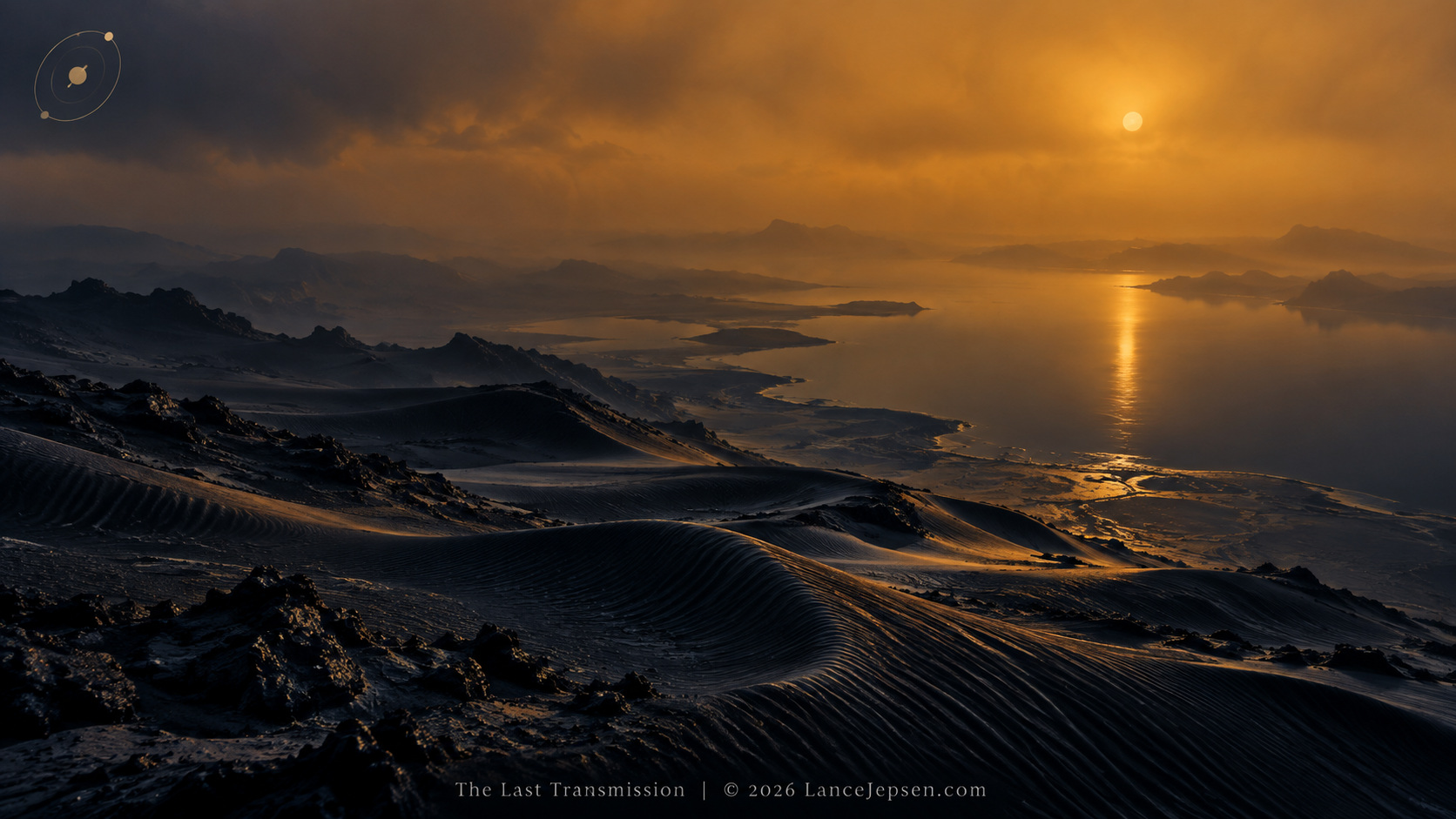
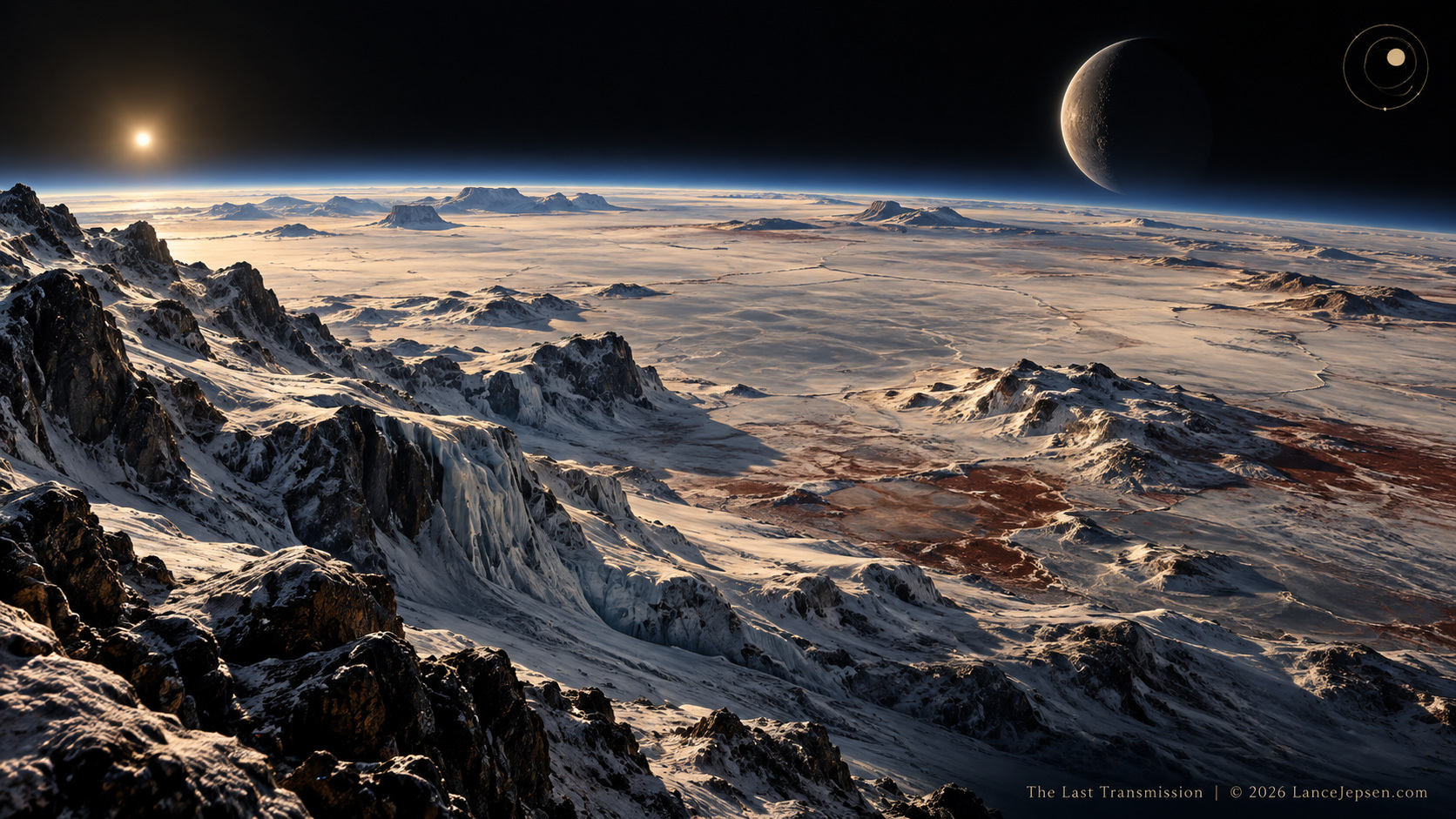
The substance responsible has not been confidently identified from the available spectra and laboratory comparisons. An artistic scene of a frosted surface or orange haze can help us imagine these places, but the color and shape of the unseen absorber are not measured by the feature.
Why it matters.
The result shows how much can be detected remotely and how carefully a detection must be interpreted. A tiny absence in returned light can open a chemical question across the solar system without answering that question on its own.
GO DEEPER / EVIDENCE FILE
What Is the 5.11-Micrometer Mark on Titan and Pluto?
The 5.11-micrometer absorption is measured on both worlds, but the Pluto feature is broader. A shared wavelength is a clue to investigate, not a chemical identification.
FOLLOW THE EVIDENCE
Research behind the field note.
EXPLORE IN 3D / MAP 01
Follow Titan through the Saturn system
Move from the disputed spectral feature to Titan’s haze, surface, and place among Saturn’s moons.
Open Saturn system mapWATCH THE RELATED DOCUMENTARY
The story in motion.
VISUAL EVIDENCE
Inside the investigation.
FOLLOW THE THREAD
Related signals.
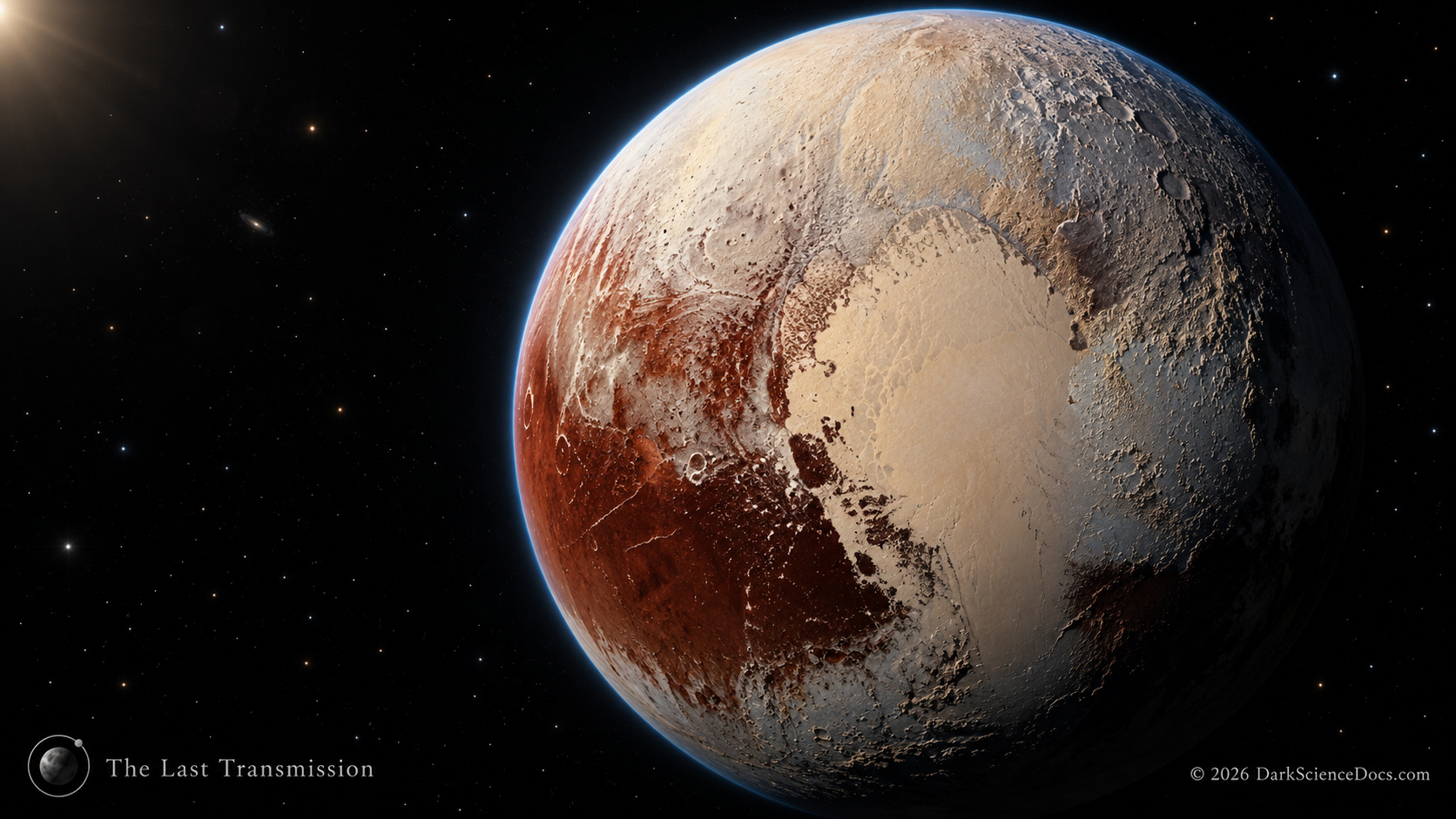
Pluto May Be Hiding an Ocean Beneath Its Heart
A glacier that renews itself, mountains that may float, and possible ice volcanoes reveal a world that has kept changing in the cold.
A Star Blinked Twice. Whatever Caused It May Be Much Closer to Earth.
Two nearly identical optical disturbances, 4.4 seconds apart, appeared in HD 89389’s light. Follow the unexplained record, a foreground diffraction hypothesis, and the synchronized telescopes proposed to test it.
What If the Universe Is Accelerating Because Stars Die?
For nearly three decades, scientists have struggled to identify the mysterious force accelerating the expansion of the universe. Now a radical theory suggests the answer.