
COSMIC MYSTERIES / AI-GENERATED SCIENTIFIC ART
Searching With NIRSpec’s Microshutters
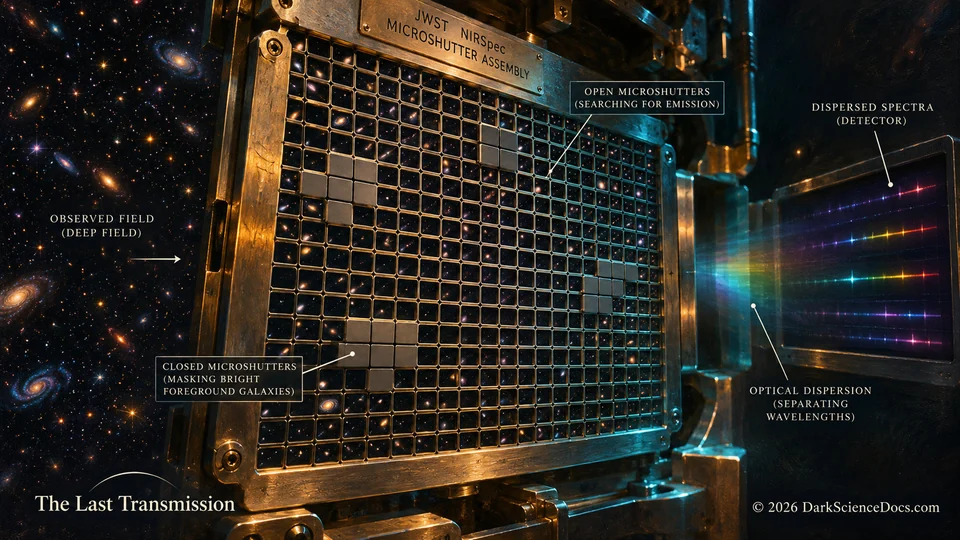
Webb’s NIRSpec instrument uses thousands of individually controlled microshutters to select astronomical light for spectroscopy. By leaving nearly the entire usable shutter area open while masking selected foreground objects, the MOCSS technique allowed researchers to search for emission from sources that had not previously been identified in images. Conceptual illustration. © 2026 DarkScienceDocs.com
THE OBSERVATION
What the evidence can show.
NIRSpec’s microshutters can select light for spectroscopy. The MOCSS approach described in the article uses much of the available shutter area while masking selected foreground sources, enabling a search that does not require every candidate to have been preselected from images. Understanding that observing method helps distinguish how a feature was detected from the later question of what produced it.
THE ILLUSTRATION
What the artwork imagines.
The enlarged shutter grid and luminous dispersion path make the observing principle tangible. They are not an engineering drawing or a measured depiction of the actual instrument configuration for the observations. The shutters, telescope and sky occupy incompatible scales for explanation. The illustration does not identify which individual detector pixels establish the reported signal or reproduce the calibration procedure.
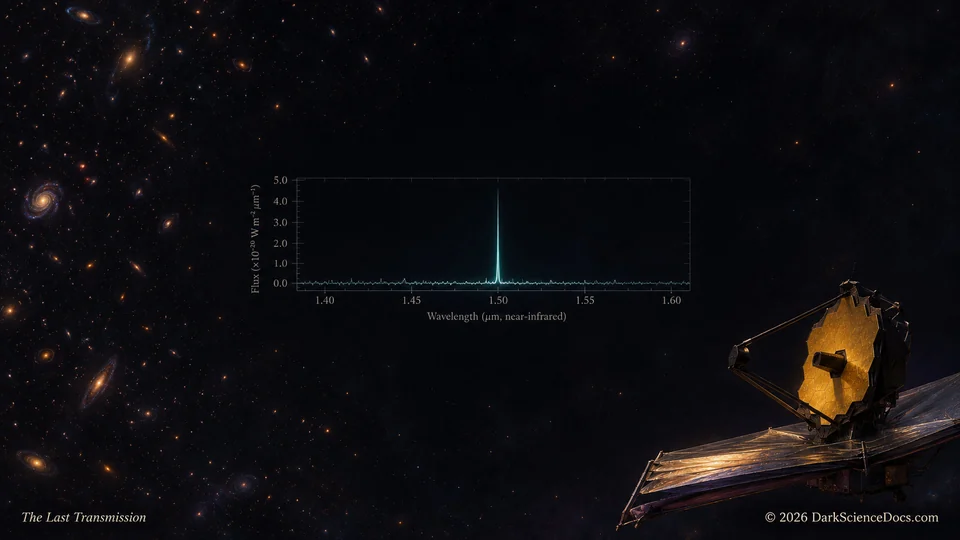 A Spectral Signal Without an Identified Source
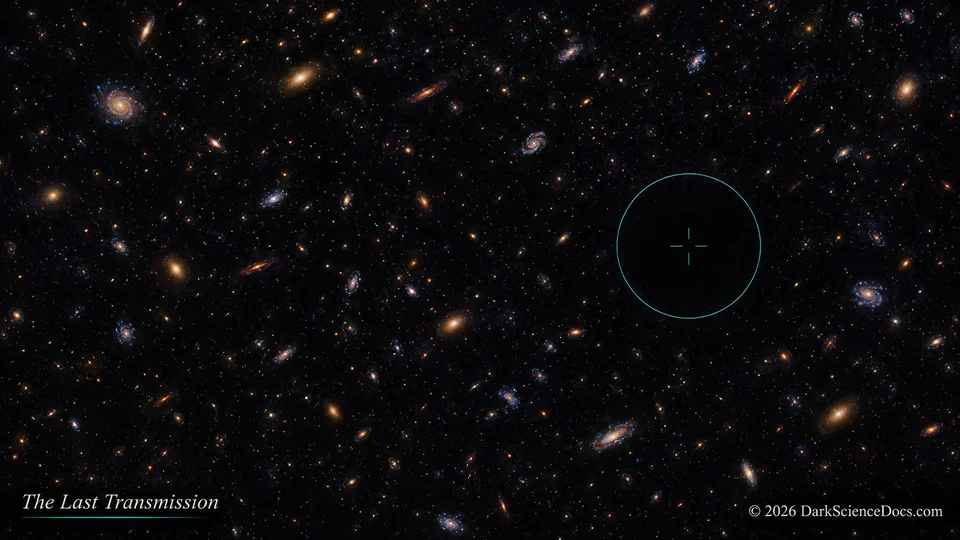 Where the Deep Images Show No Counterpart
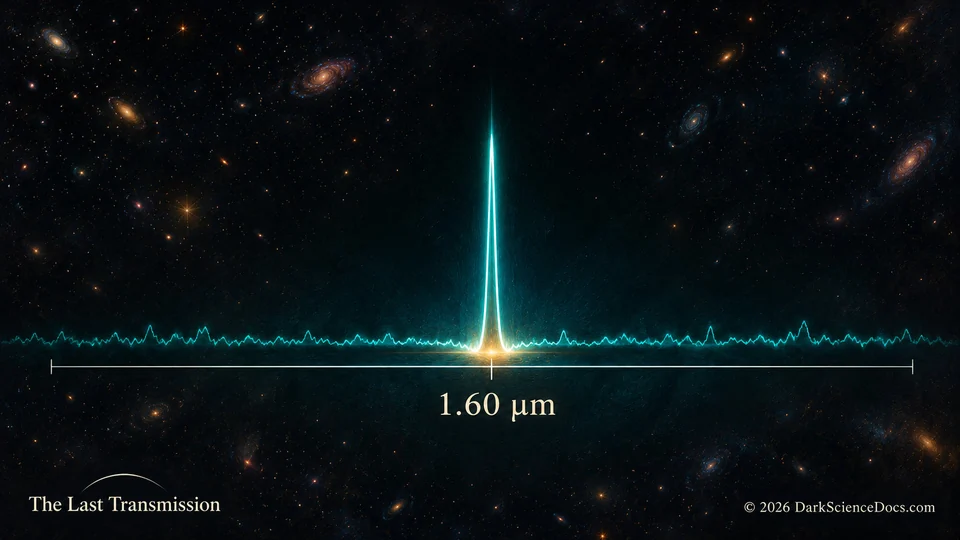 The Unidentified Line Near 1.60 Micrometers