
COSMIC MYSTERIES / AI-GENERATED SCIENTIFIC ART
The Unidentified Line Near 1.60 Micrometers
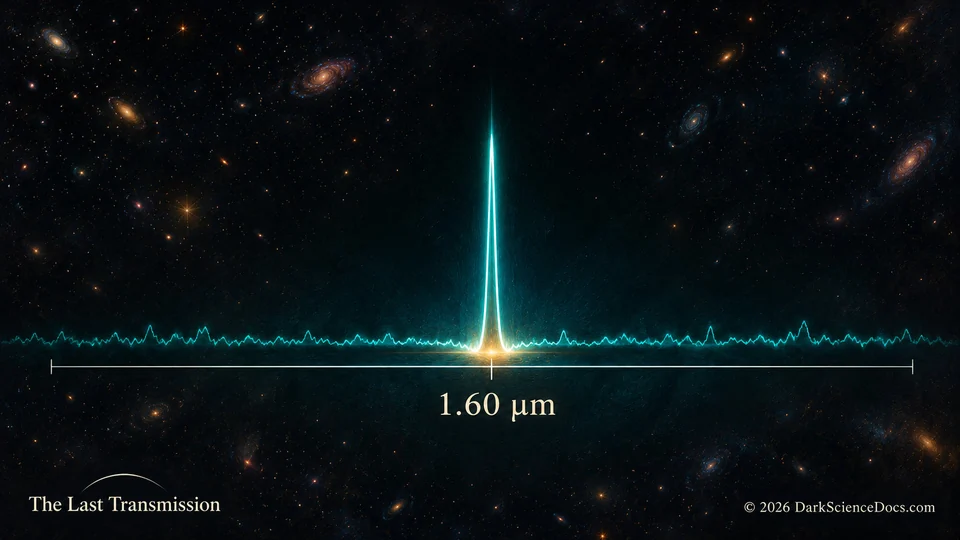
The unexplained signal appears near 1.60 micrometers in Webb’s near-infrared spectrum. Although astronomers can measure its wavelength, the absence of clearly detected companion lines prevents them from securely identifying the emitting material or determining the source’s redshift. Stylized scientific visualization rather than the original measured spectrum. © 2026 DarkScienceDocs.com
THE OBSERVATION
What the evidence can show.
The reported feature lies near 1.60 micrometers, but a wavelength by itself does not securely identify an emission process or redshift. Different line identifications can imply very different origins, and clearly detected companion features would help distinguish them. The scientific question therefore extends beyond whether a peak can be drawn: it concerns how confidently the feature can be interpreted.
THE ILLUSTRATION
What the artwork imagines.
The bright line and quieter spectral baseline are stylized rather than the original measured spectrum. The artwork invents the peak’s shape, noise appearance and luminous color for readability. Its wavelength label introduces the reported scale without providing an independent measurement. The scene does not establish a particular atom, galaxy distance or transient class from the displayed curve.
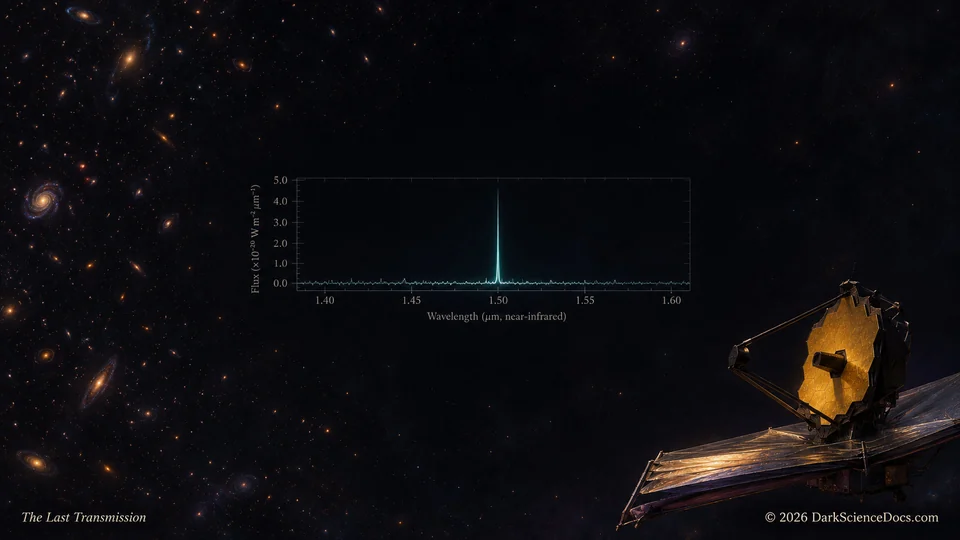 A Spectral Signal Without an Identified Source
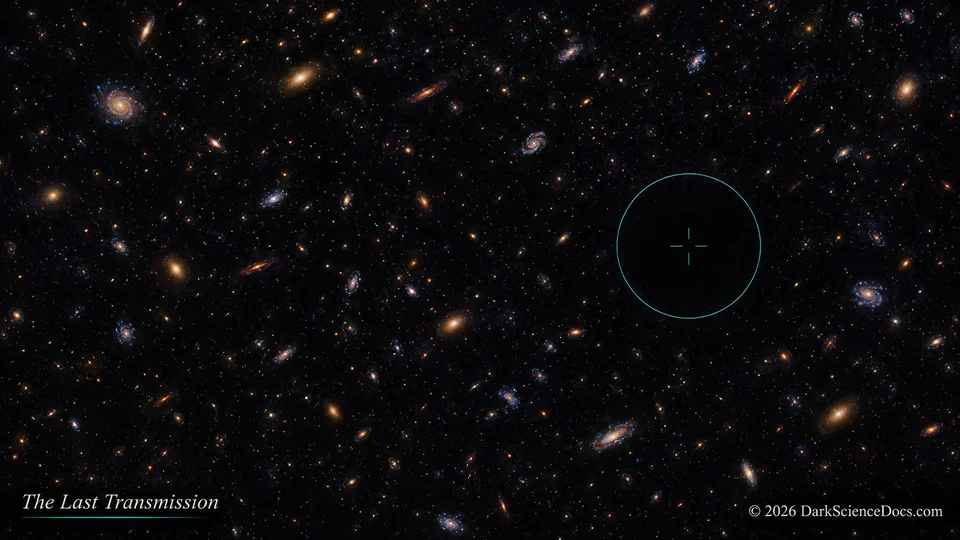 Where the Deep Images Show No Counterpart
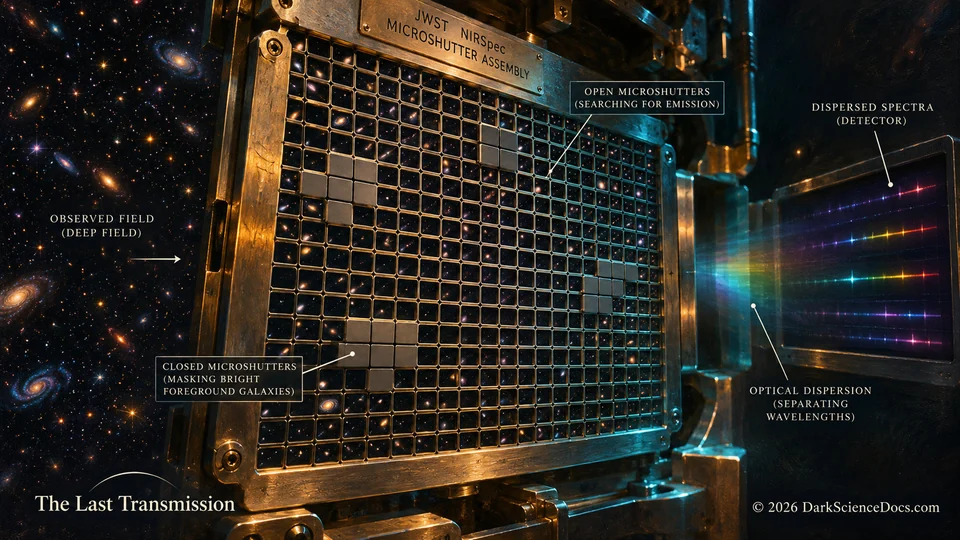 Searching With NIRSpec’s Microshutters