
EVIDENCE FILE 50 / OBSERVATION & INFERENCE
How Does Pa 30 Connect a Surviving Star to the Supernova of 1181?
Separate Gemini’s observed knot chains and central star from the inferred Type Iax history and the likely association with the medieval guest star.
THE SHORT ANSWER
What does the evidence support?
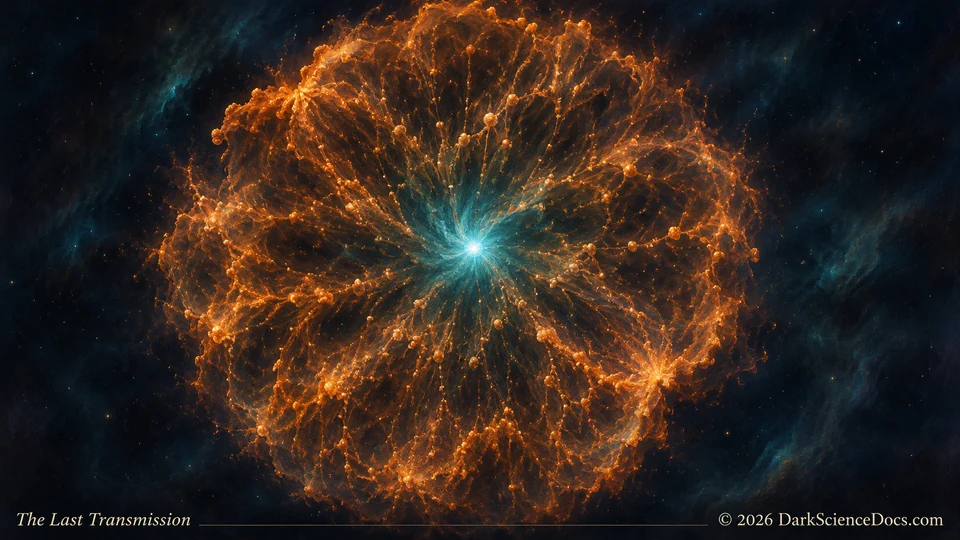
Pa 30 combines a hot central object with an expanding filamentary remnant whose properties support an association with SN 1181. Gemini resolves chains of knots within its filaments. These observations constrain an unusual explosion history, while the precise physical pathway remains a question for comparison with models.
MEASUREMENT / INTERPRETATION / LIMIT
Follow the chain of reasoning.
01 / 04
The historical event has written records
Measured or modeled
Medieval accounts describe a guest star appearing in 1181 and remaining visible for an extended interval.
What it suggests
Those records establish an event in a particular sky region and provide a historical age against which candidate remnants can be compared.
Where the claim stops
The records do not supply a modern spectrum or directly identify a particular present-day nebula without additional astronomical evidence.
Harvard–Smithsonian CfA: Gemini North observations and Pa 30 interpretation02 / 04
Gemini resolves the filament structure
Measured or modeled
GMOS observations show that Pa 30’s radial filaments contain chains of bright knots rather than uniformly smooth streaks.
What it suggests
Their arrangement can constrain how ejecta expanded through surrounding material and responded to variations in its physical conditions.
Where the claim stops
A knot pattern does not uniquely identify one density history or explosion mechanism; those interpretations require further analysis and model tests.
Cunningham et al. (2026): Detection of knots in the supernova type Iax remnant Pa 3003 / 04
A central object remains
Measured or modeled
Observations identify an exceptionally hot object within the nebula, close to the center of the surrounding remnant.
What it suggests
A surviving bound remnant fits an incomplete thermonuclear explosion and contributes to the Type Iax interpretation.
Where the claim stops
The object is not a preserved photograph of the progenitor. Its present properties must be related to the earlier system through physical models.
Harvard–Smithsonian CfA: Gemini North observations and Pa 30 interpretation04 / 04
Geometry constrains a large kick
Measured or modeled
Researchers compare the position of the central object with the center of the expanding filamentary structure.
What it suggests
The close alignment limits scenarios in which the survivor received a large displacement-producing kick and supports a comparatively symmetrical outcome.
Where the claim stops
The constraint depends on the remnant’s geometry, history and relevant motions; central placement alone cannot determine every stage of the explosion.
Cunningham et al. (2026): Detection of knots in the supernova type Iax remnant Pa 30METHOD / INDEPENDENT TESTS
What would make the case stronger?
Keep three layers distinct: historical testimony, measured properties of the present remnant and the explosion models that connect them. A likely identification can be strong without becoming a direct observation of the earlier event.
Read the telescope image with its instrument and wavelength context. Bright knots trace emitting gas under particular conditions. Their brightness does not, by itself, give a complete census of the ejecta or a literal picture of the original stellar interior.
Improved velocity measurements, monitoring of the central object and comparisons with explosion and circumstellar-interaction models can test how the knot chains formed and which surviving-remnant histories best match the complete system.