
ALIEN WORLDS & LIFE / AI-GENERATED SCIENTIFIC ART
Two Orbital Populations in the Kuiper Belt
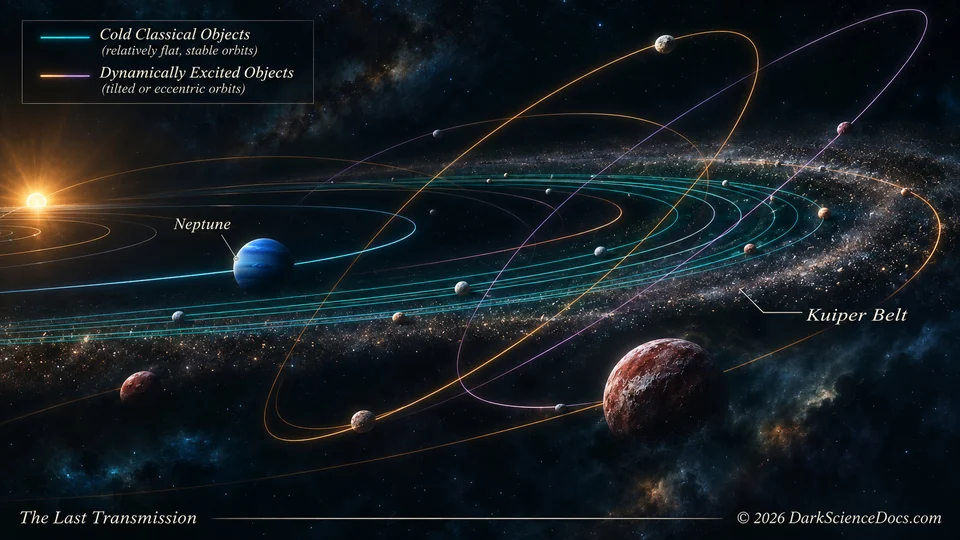
Cold classical Kuiper Belt objects occupy relatively undisturbed, low-inclination orbits, while dynamically excited objects follow a broader variety of paths shaped by the early evolution of the giant planets. Their distinct surface characteristics may retain evidence of different formation environments. AI-generated orbital visualization. © 2026 DarkScienceDocs.com
THE OBSERVATION
What the evidence can show.
Cold classical and dynamically excited Kuiper Belt objects occupy different kinds of orbits and can show different surface properties. Comparing those populations helps investigate formation environments and the later influence of the giant planets. Orbital classes organize measured dynamical information; they do not by themselves reveal every object’s complete past. The evidence requires both present properties and models of planetary history.
THE ILLUSTRATION
What the artwork imagines.
The colored paths provide a schematic contrast between orbital populations rather than an ephemeris or a measured distribution of individual bodies. Distances, inclinations and the pictured sizes of objects are adjusted for readability. The image does not locate all study targets or reconstruct their original paths. Its purpose is to show why grouping objects by dynamics can aid a surface comparison.
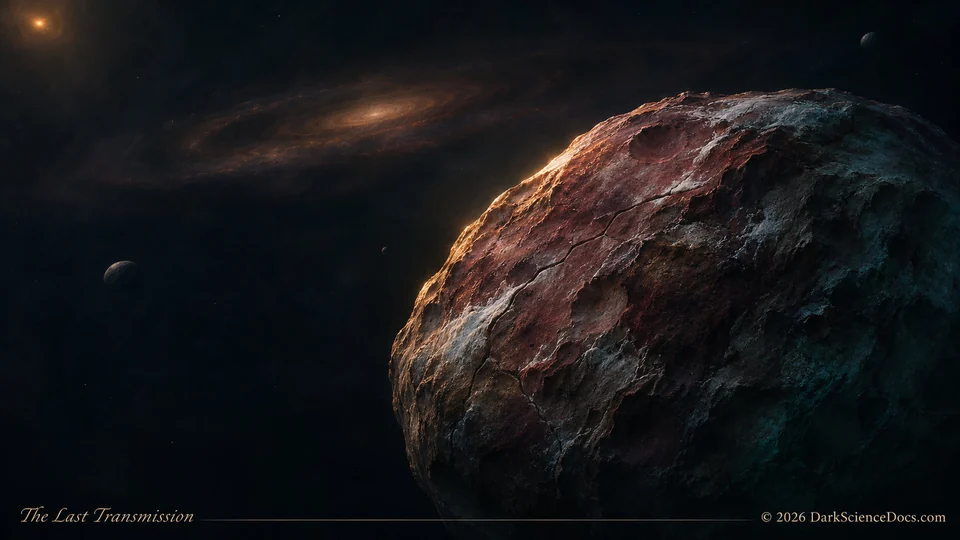 An Icy Body Beyond Neptune
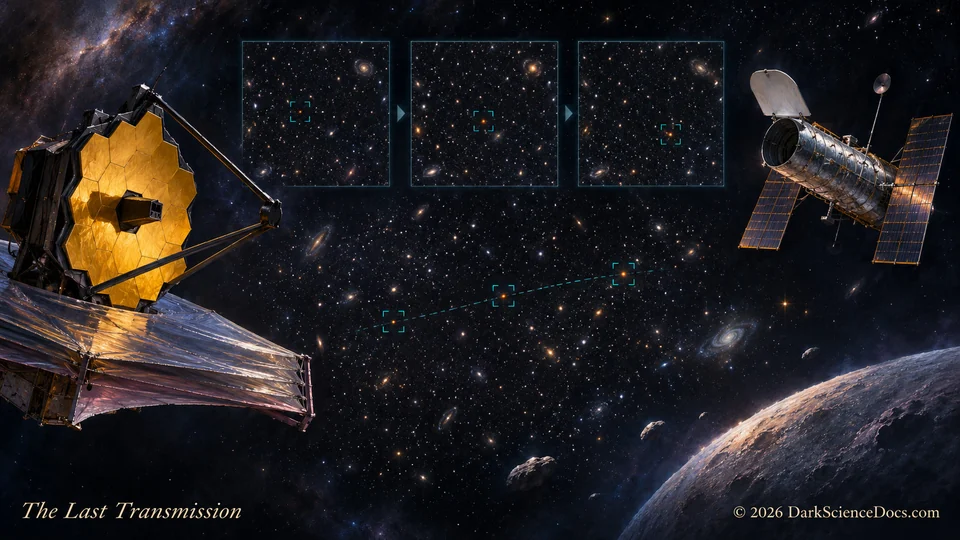 Webb and Hubble Examine Faint Outer Worlds
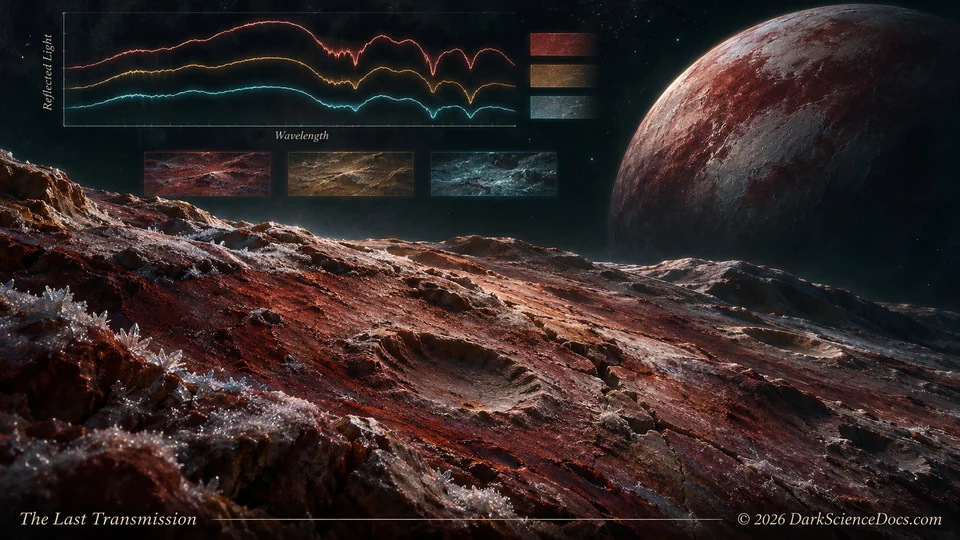 The Red Surfaces of Cold Classical Objects