
ALIEN WORLDS & LIFE / AI-GENERATED SCIENTIFIC ART
Webb and Hubble Examine Faint Outer Worlds
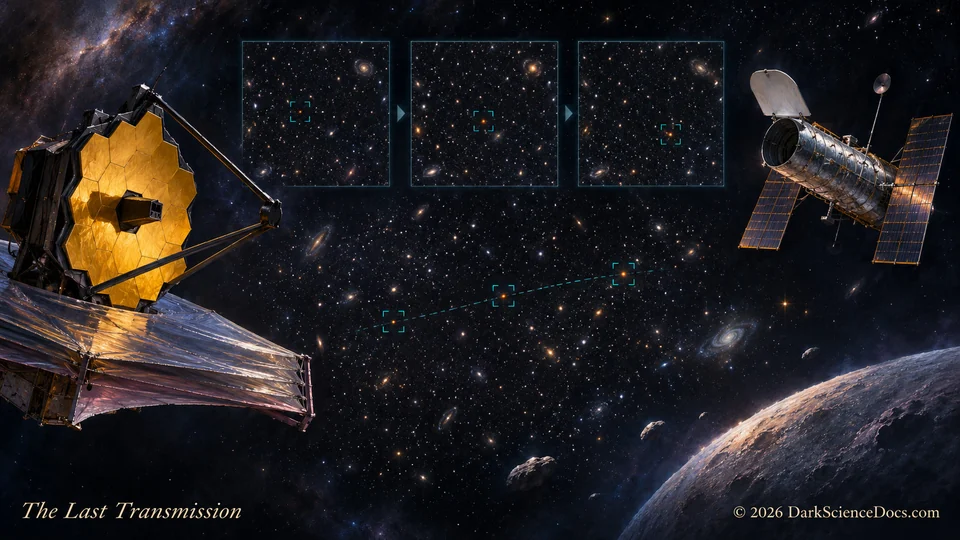
The James Webb and Hubble space telescopes combined infrared and visible-light measurements to investigate extremely faint objects beyond Neptune. Their observations allowed scientists to compare surface characteristics across wavelengths that reveal clues about ancient planetary materials. AI-generated scientific illustration. © 2026 DarkScienceDocs.com
THE OBSERVATION
What the evidence can show.
Webb and Hubble provide complementary infrared and visible-light measurements of faint trans-Neptunian objects. Comparing wavelengths helps researchers investigate surface properties and differences between populations. Combining telescopes expands the evidence but does not automatically remove model assumptions or observing limits. The important comparison is between measured light and predictions for possible surface materials, not between the two illustrated spacecraft.
THE ILLUSTRATION
What the artwork imagines.
The telescopes, small target and image panels form a conceptual observing scene. They are not shown at a common distance scale, and the panels do not reproduce the study’s measured images. The composition invents their relative positions to connect the instruments with a faint target. It does not imply that either telescope obtained a resolved close-up of the pictured body.
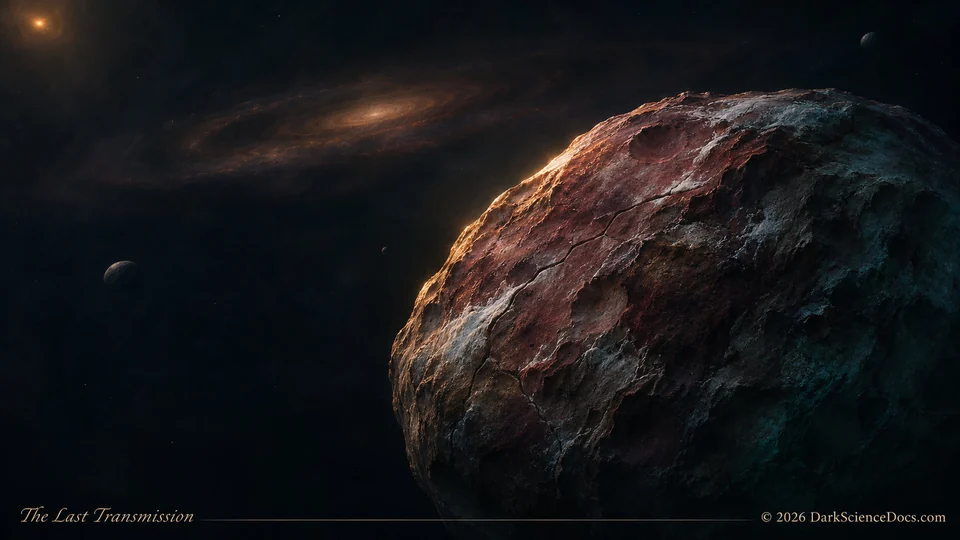 An Icy Body Beyond Neptune
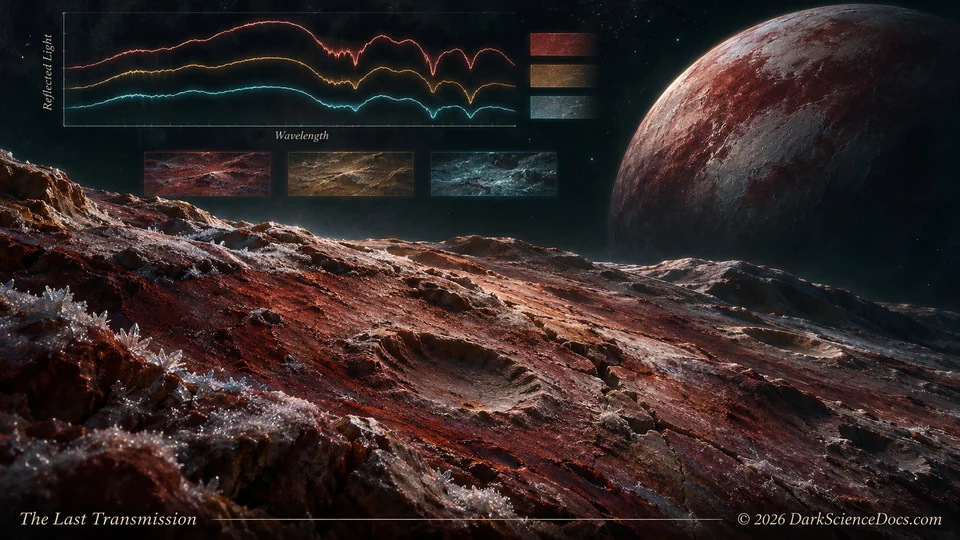 The Red Surfaces of Cold Classical Objects
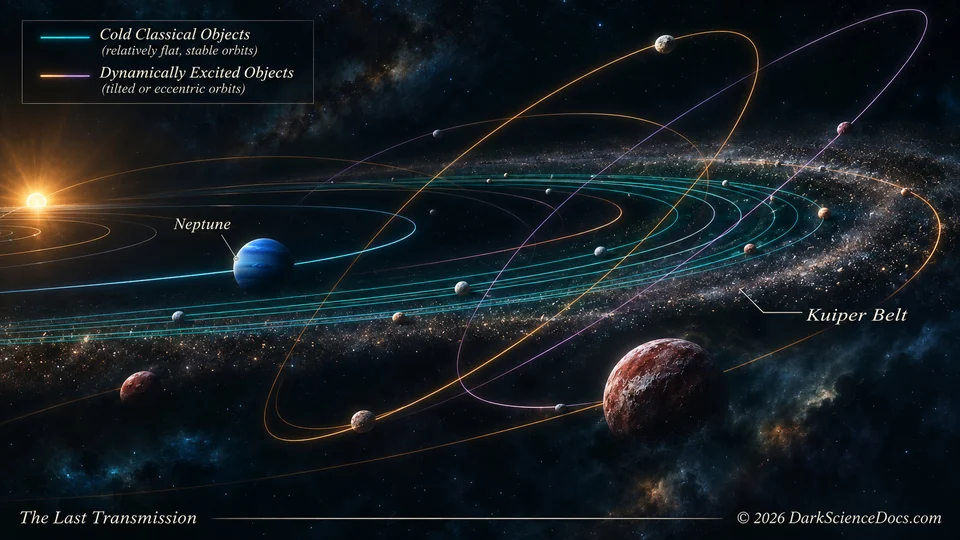 Two Orbital Populations in the Kuiper Belt