
ALIEN WORLDS & LIFE / AI-GENERATED SCIENTIFIC ART
The Red Surfaces of Cold Classical Objects
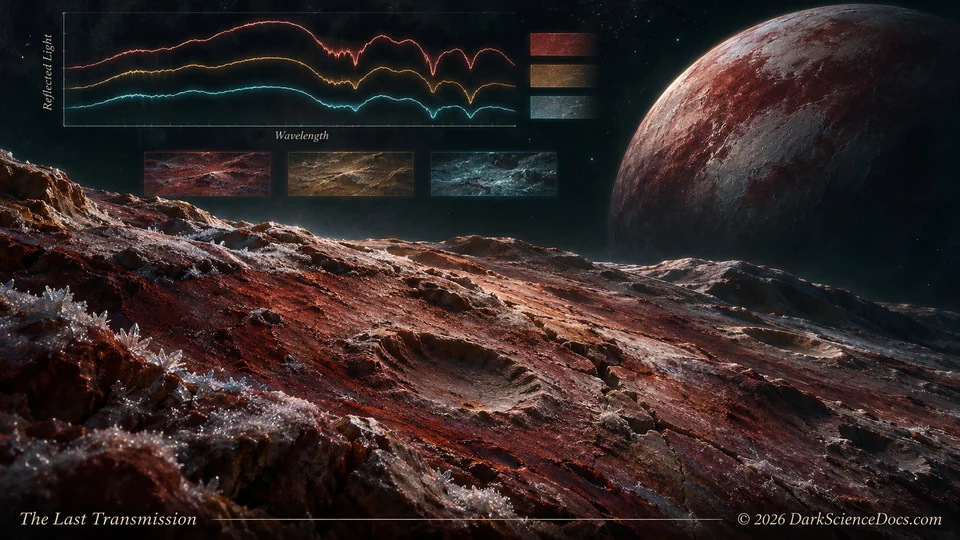
The reddish surfaces of many cold classical Kuiper Belt objects are consistent with complex organic-rich materials produced through the long-term processing of ancient ices. Observations suggest that these characteristic surface signatures persist even among much smaller objects. AI-generated artist’s interpretation. © 2026 DarkScienceDocs.com
THE OBSERVATION
What the evidence can show.
Reddish surface signatures in cold classical Kuiper Belt objects are consistent with complex organic-rich materials associated with long-term processing of ices. Their persistence among small objects can constrain explanations of formation and resurfacing. A color signature is indirect evidence rather than a complete chemical identification. The result should be assessed across the observed population, with sensitivity and interpretation kept explicit.
THE ILLUSTRATION
What the artwork imagines.
The close terrain and colored spectral lines make a surface-composition question visible. They are not measured spectra or a terrain map from the cited observations. The artist supplies textures, illumination and a particular red appearance to illustrate an interpretation. The scene does not establish the exact chemical mixture on the depicted world, nor does organic material imply the presence of life.
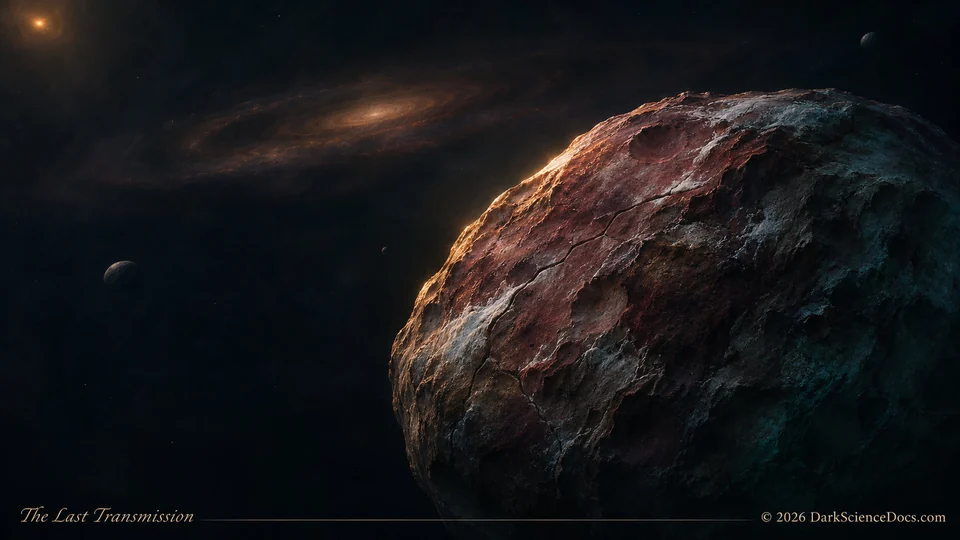 An Icy Body Beyond Neptune
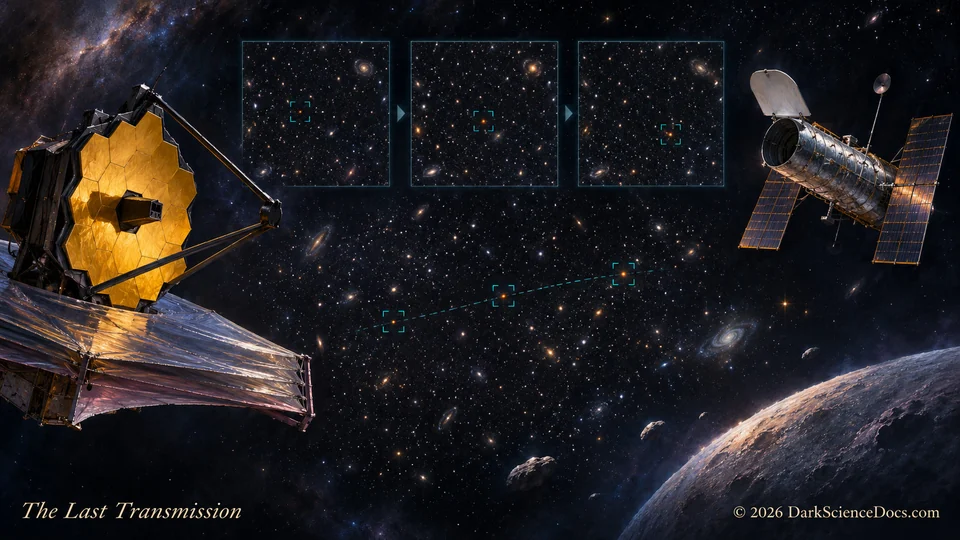 Webb and Hubble Examine Faint Outer Worlds
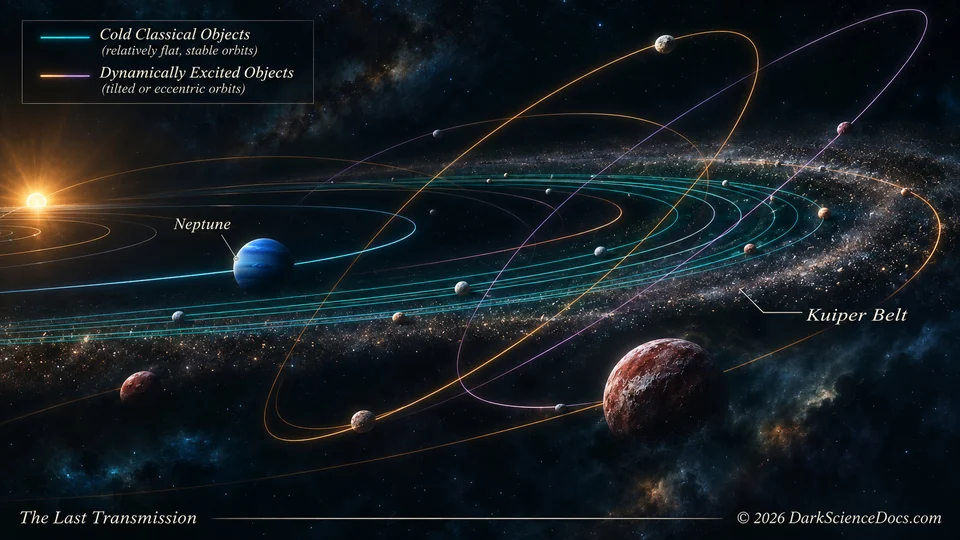 Two Orbital Populations in the Kuiper Belt