DOCUMENTARIES / THE LAST TRANSMISSION
Most “Habitable” Planets May Be Deathtraps
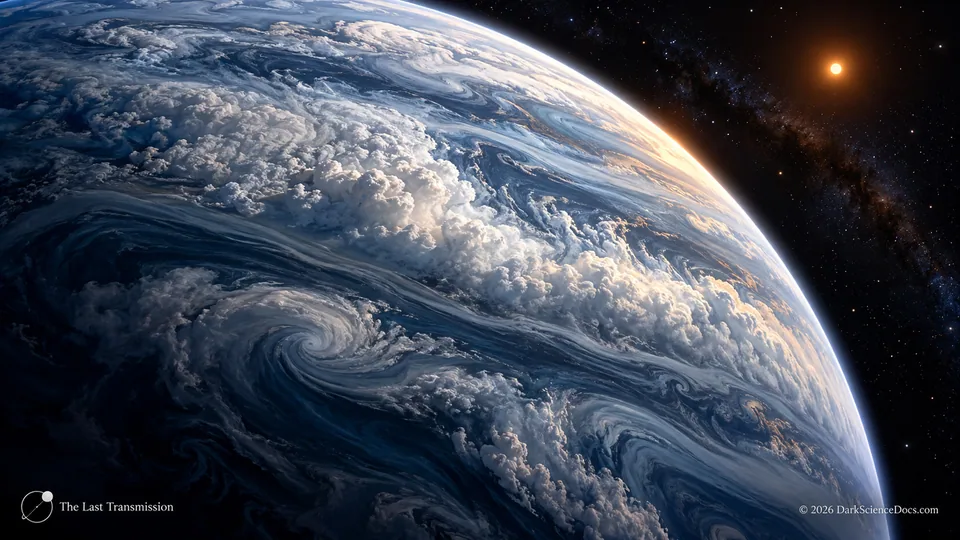
A planet can orbit at the right distance for liquid water and still face radiation, atmospheric loss, or a hostile surface.
On YouTube: The Illusion of a Second Earth: A Breakdown of Why Most 'Habitable' Planets Are Actually Deathtraps
If the player is unavailable, watch directly on YouTube ↗
THE QUESTION BEHIND THE FILM
What does the habitable-zone label actually tell us?
ORIGINAL VIEWING GUIDE
Look closer.
Distance is only the first filter
A habitable zone describes a range of stellar distances where surface liquid water might be possible under suitable conditions. It does not measure the planet’s air, oceans, magnetic environment, or life.
The star changes the problem
Stellar activity and the history of a planet’s atmosphere matter. A world that looks promising from its orbit may have followed a very different path at the surface.
Keep the word possible
The documentary asks what we would need to know before calling a planet welcoming. Spectra and models can narrow the possibilities; they should not turn a candidate into an inhabited world by headline.
THE EVIDENCE TRAIL / RESEARCH COMPANION
What the record says.
A planet can occupy a promising orbit while its surface is hostile. The habitable zone is a useful first filter, followed by questions about air, water, climate, and the star’s history.
CHOOSE A CLUE / FOLLOW THE RECORD
These are research waypoints, not video timestamps. Explore them in any order, then return to the film.
The orbital label has a narrow meaning
Observed or documented
NASA defines a star’s habitable zone as a range where liquid water could exist at a planet’s surface under suitable atmospheric conditions. Astronomers estimate it from the star and orbit.
What it suggests
An orbit in that range is a reason to investigate, not a measurement of surface water or biology. The term narrows a survey to candidates whose energy input is plausible.
Where the claim stops
A world with no atmosphere may have no surface ocean; a dense atmosphere may drive a radically different climate at the same distance.
Stellar activity can change the outcome
Observed or documented
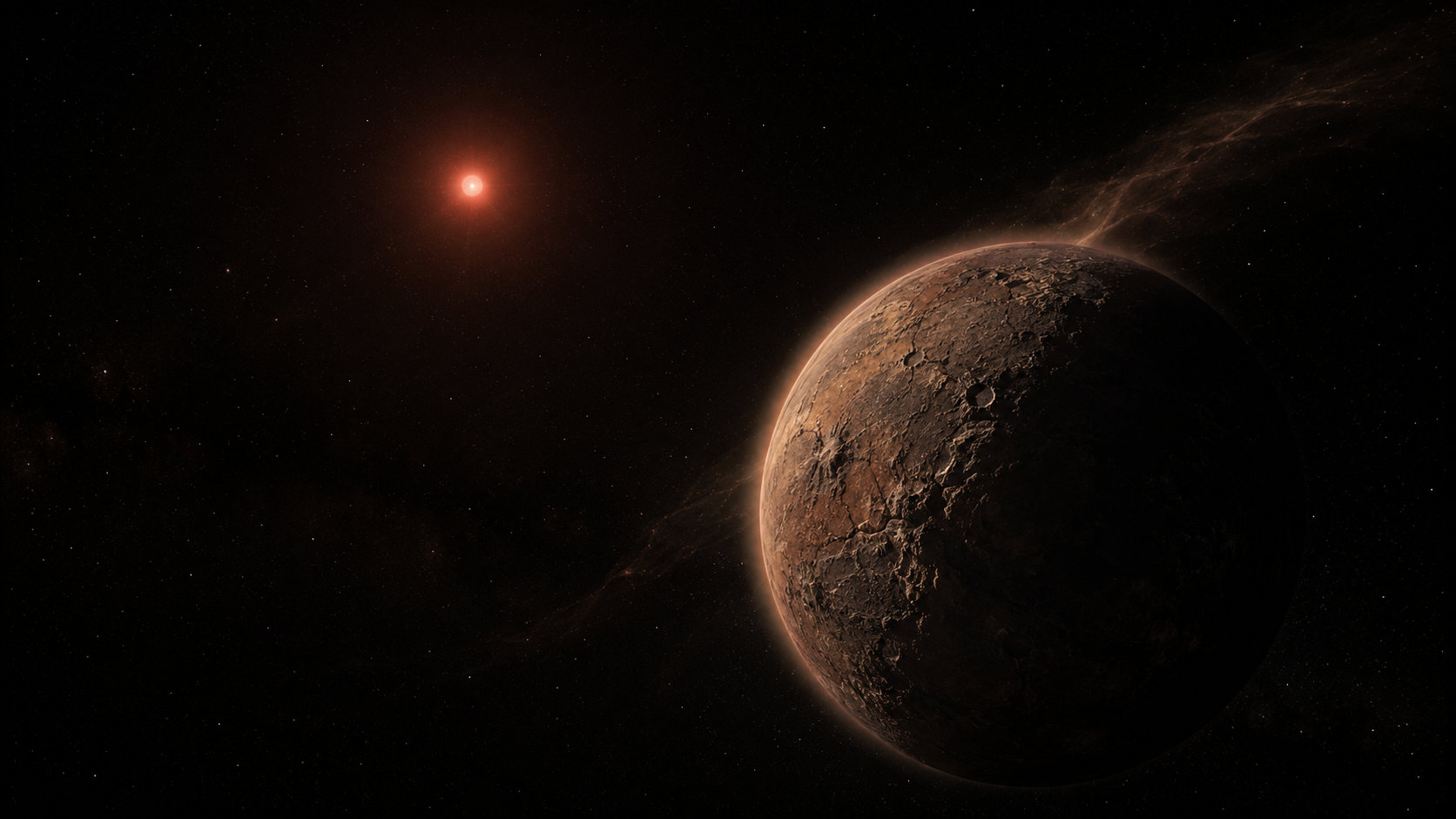
NASA has modeled how intense radiation and stellar wind from Proxima Centauri could erode an Earth-like atmosphere on a close-orbiting planet. The model follows a physical loss mechanism over time.
What it suggests
A world around an active star might struggle to retain the air needed for surface liquid water, even when its orbit earns the “habitable zone” label.
Where the claim stops
That atmospheric-loss model depends on magnetic protection, atmospheric supply, and planetary history. It is not a direct observation that Proxima b has become airless.
Size and distance leave composition uncertain
Observed or documented
Transit and radial-velocity measurements can constrain size, orbit, or mass, but many distant planets lack a directly measured surface or ocean. Similar bulk properties can hide different interiors and atmospheres.
What it suggests
Atmospheric spectroscopy and improved mass measurements can sort candidates into more informative groups. A rocky radius does not by itself disclose a familiar climate.
Where the claim stops
“Earth-sized” describes a scale, not a promise of Earth-like air, continents, or evolutionary history. Each added observation changes the strength of the inference.
Life is another evidentiary step
Observed or documented
NASA distinguishes a potentially water-friendly environment from a biosignature claim. Proposed atmospheric clues must be examined alongside the planet’s geology, star, and possible nonbiological chemistry.
What it suggests
A persuasive life detection would require multiple consistent measurements and strong tests against abiotic explanations, rather than a single promising gas or headline.
Where the claim stops
A dangerous surface for humans could still support microbes elsewhere, and a comfortable orbit could still be sterile. “Habitable” depends on what kind of life is being considered.
Which observation would most change a candidate planet’s status: an atmosphere, a stable ocean, or a chemical pattern that is hard to make without life?
EXPLORE IN 3D / MAP 05
Visit Earth’s inhospitable twin
Compare a rocky planet’s distance from the Sun with the atmosphere and surface revealed by the Venus map.
Open Venus mapFOLLOW THE EVIDENCE
Keep the question open.
Watch the documentary, check the research, and continue into the illustrated archive.
MORE DOCUMENTARIES
 The Silent Star and the Dark Forest Theory
 The Berserker Hypothesis: The Darkest Answer to the Fermi Paradox
 The Necrosignature Hypothesis: What If the First Aliens We Find Are Dead?