DOCUMENTARIES / THE LAST TRANSMISSION
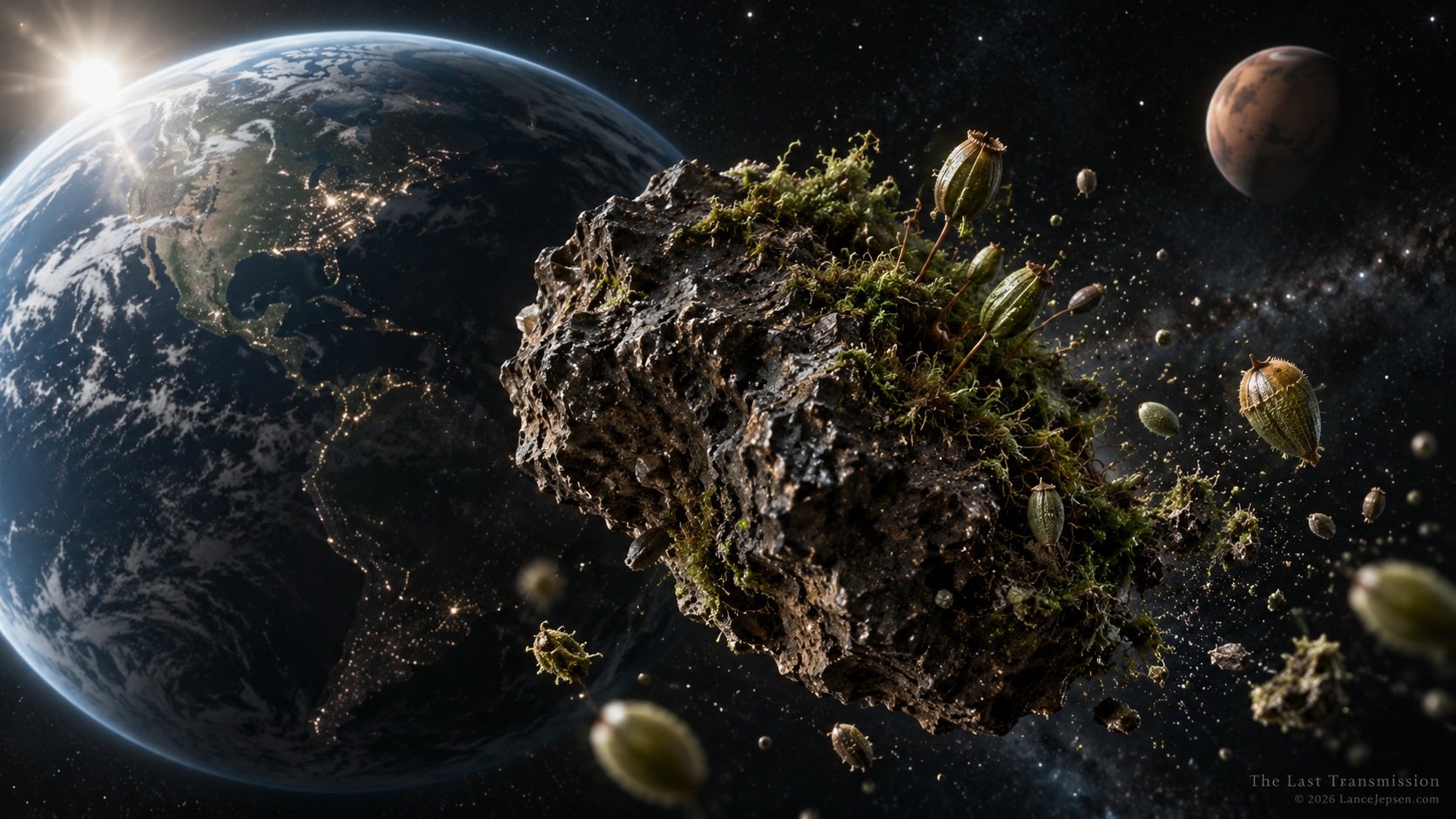
The Full History of Lithopanspermia: How Alien Life Travels on Asteroids
Impacts can throw rock from one world toward another. Whether viable organisms could make the entire journey remains an open question.
If the player is unavailable, watch directly on YouTube ↗
THE QUESTION BEHIND THE FILM
Could a living passenger survive launch, space, arrival, and a world?
ORIGINAL VIEWING GUIDE
Look closer.
The route is physically possible
Meteorites from Mars have reached Earth. Their existence demonstrates that impacts can eject material from a planet and that some fragments can travel between worlds.
The biological chain is harder
A microbe would need to survive ejection forces, radiation and temperature during transit, atmospheric entry, and conditions after landing. Laboratory survival of one step cannot establish survival of the entire route.
A shared origin would change the question
If life moved between nearby planets, finding it on Mars might not prove that life began twice. The film traces a mechanism for transfer while leaving the original emergence of life unresolved.
THE EVIDENCE TRAIL / RESEARCH COMPANION
What the record says.
Rocks can cross between planets, and some organisms survive pieces of space exposure. Lithopanspermia asks whether a living passenger can complete the whole journey and establish a population.
CHOOSE A CLUE / FOLLOW THE RECORD
These are research waypoints, not video timestamps. Explore them in any order, then return to the film.
A rock from Mars reached Earth
Observed or documented
Martian meteorites are identified by their geology and trapped gases, establishing that impacts can eject fragments from one planet and deliver them to another.
What it suggests
This demonstrates a physical transport route without requiring a spacecraft. Some fragments can traverse space and atmospheric entry while preserving analyzable material.
Where the claim stops
A Martian rock is not a Martian organism. Organic molecules in a meteorite can form through nonbiological processes and demand careful contamination checks.
Launch is a biological stress test
Observed or documented
Researchers have experimentally subjected organisms associated with rocks to hypervelocity impact conditions meant to probe the first phase of lithopanspermia.
What it suggests
Survival under a specified test shows that ejection need not be fatal in every case. Shielding inside rock may change pressure and heating exposure.
Where the claim stops
An impact experiment tests a subset of launch conditions, organisms, and rock geometries. It does not reproduce an entire interplanetary delivery.
Space exposure tests another phase
Observed or documented
Space-exposure studies place microbial samples outside the International Space Station and measure survival and DNA damage after prolonged exposure.
What it suggests
The results constrain how radiation, vacuum, and shielding affect particular organisms. A buried passenger could face a different environment from an exposed sample.
Where the claim stops
Survival near Earth for a few years is not proof of survival through every possible transit duration, impact, and landing environment.
Arrival must establish a lineage
Observed or documented
The full hypothesis requires a viable passenger to land in a suitable environment and reproduce. Those steps are not established by finding meteorites or by one survival experiment.
What it suggests
If life were found on Mars, comparing deep biochemistry could test whether both worlds share ancestry or represent separate origins.
Where the claim stops
Shared traits could arise from common ancestry, contamination, or convergent chemistry. Lithopanspermia moves the origin question; it does not explain how the first life began.
Which step in the rock-transfer chain most limits successful biological colonization: ejection, transit, landing, or adaptation after arrival?
EXPLORE IN 3D / MAP 04
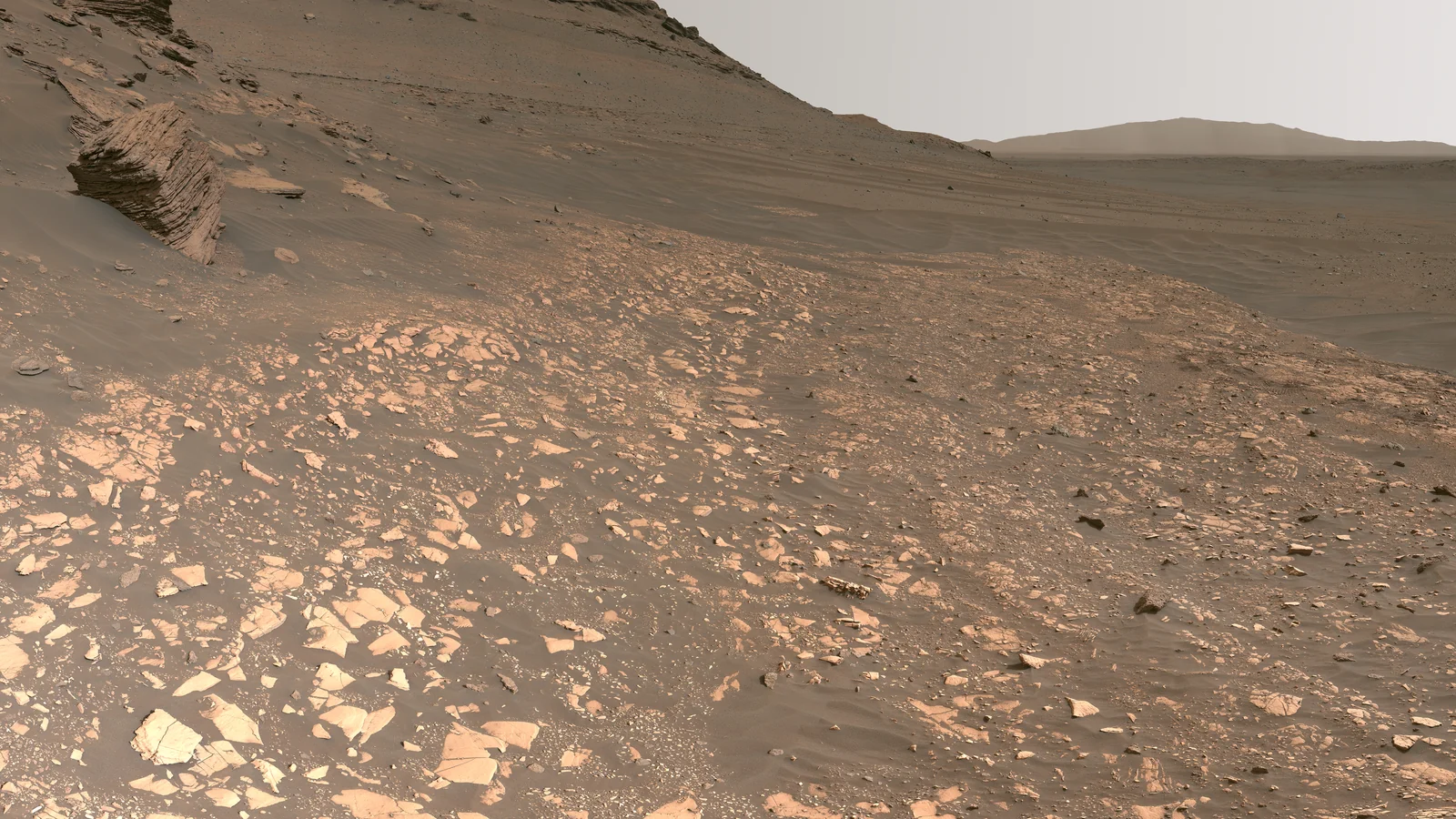
Inspect a possible departure world
Explore Mars and Phobos while testing the separate steps required for rock-borne life to travel between planets.
Open Mars mapFOLLOW THE EVIDENCE
Keep the question open.
Watch the documentary, check the research, and continue into the illustrated archive.
MORE DOCUMENTARIES
 The Ultimate Guide to the Desert Varnish Biological Origin
 The Comprehensive History of the Alien Silent Extinction Theory
 Most “Habitable” Planets May Be Deathtraps